A rare legal showdown between a top Parliament official and the Speaker signals deep cracks in governance, raising urgent questions about power, accountability, and institutional integrity.
The Court of Appeal on March 19 directed all parties to consider whether a settlement can be reached in the high profile writ petition filed by former Deputy Secretary General of Parliament Chaminda Kularatne. The case, which has drawn national attention, was taken up with submissions made by the Deputy Solicitor General representing the Attorney General.

The court encouraged both sides to explore mediation as a way to resolve the dispute, signaling a possible effort to avoid a prolonged legal battle that could further expose internal tensions within Parliament. All relevant parties were instructed to report back on whether a negotiated conclusion is feasible.
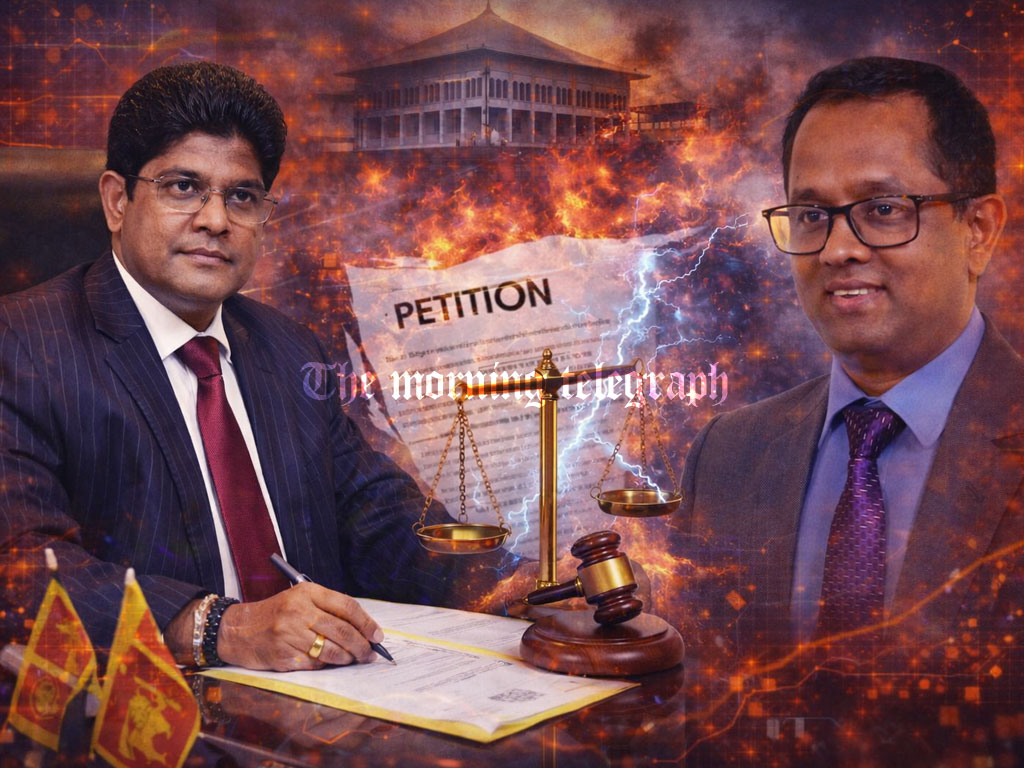
Barrister Chaminda Kularatne, who previously served as Chief of Staff and Deputy Secretary General of Parliament, has filed the petition under CA Writ No 109 of 2026 before the Court of Appeal of Sri Lanka. The respondents include Speaker Dr Jagath Wickramaratne, his private secretary Chameera Gallage, and retired Additional Secretary S K Liyanage, along with several others.
In his petition, Kularatne asserts that his appointment to the post was lawful, transparent, and merit based. He states that he met all required qualifications outlined in the official gazette and secured the highest marks during the interview process. The petition also emphasizes his legal entitlement to pension benefits by combining his previous public service with his later role in Parliament, citing key statutory frameworks such as the Parliamentary Staff Act and the Establishments Code.
The core of the dispute lies in serious allegations against the Speaker. Kularatne claims that S K Liyanage was unlawfully appointed to conduct an investigation into him following an incident on June 18, 2025. According to the petition, this move was driven by Kularatne’s opposition to what he describes as illegal and corrupt practices within the Speaker’s office.
The petitioner further alleges that the investigation report was fabricated with false and malicious claims, violating principles of natural justice and due process. Based on this report, he was suspended, a decision he now seeks to have declared null and void.
Adding to the controversy, Kularatne has already filed a complaint with the Bribery Commission outlining eight alleged acts of corruption involving the current Speaker. This case marks an unprecedented moment in Sri Lanka’s parliamentary history, as it is the first time a senior official has legally challenged a sitting Speaker at such a level.
As the case unfolds, it is set to test the boundaries of institutional accountability, legal governance, and political power in Sri Lanka.