While India fast tracks a historic trade deal with Europe that will reshape the global economy, Sri Lanka sits on the sidelines watching. The new India EU alliance isn’t just their opportunity. It could be our lifeline if we stop making stupid political mistakes.
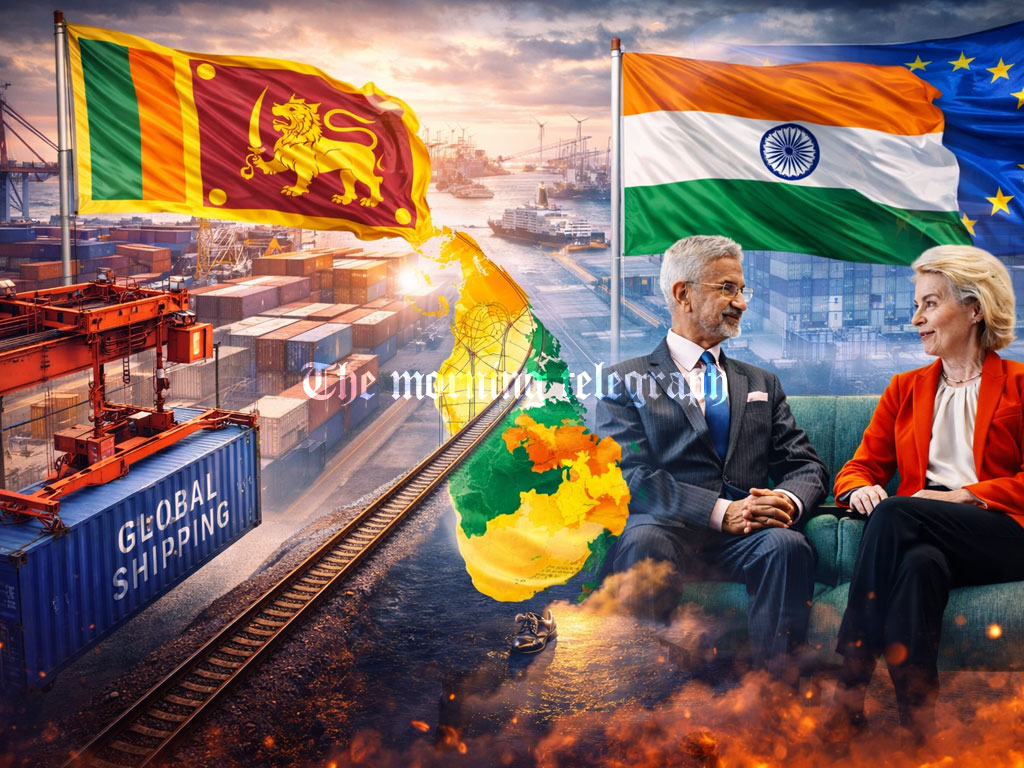
The global political map is being redrawn at breathtaking speed. As world powers scramble to forge new alliances amid the ongoing Ukraine war and the escalating Middle East crisis, a recent meeting between Indian Foreign Minister Dr. S. Jaishankar and European Commission President Ursula von der Leyen has quietly marked a turning point in international politics. This was no routine diplomatic handshake. It represented the beginning of a massive strategic realignment that will determine the course of the world economy for decades to come.

The Free Trade Agreement between India and the European Union has languished in negotiation purgatory for many years, caught in the slow grinding wheels of bureaucracy and competing national interests. But this time, something feels different. With Jaishankar’s arrival in Europe, the negotiations are showing unmistakable signs of entering a fast track that could conclude within months rather than years.
The core objective driving this renewed momentum is straightforward and urgent: reducing global supply chain dependence on China while integrating India into the world economy as a major manufacturing hub capable of rivaling Chinese dominance. Cooperation is now accelerating particularly in strategic sectors including semiconductors, artificial intelligence, and green energy technologies where both Europe and India recognize the danger of excessive reliance on Beijing.
What makes Jaishankar’s foreign policy approach under Narendra Modi so noteworthy is its skillful balancing act between seemingly contradictory positions. India has managed to maintain robust oil purchases from Russia despite Western pressure while simultaneously entering into advanced technical agreements with Europe. Through this careful calibration, India is positioning itself to challenge China’s Belt and Road Initiative through the India Middle East Europe Economic Corridor which offers an alternative vision of connectivity without the debt trap concerns associated with Chinese infrastructure lending.
Despite ongoing security threats in the Red Sea that have disrupted global shipping, India’s main objective remains establishing a direct and reliable trade route with Europe that bypasses traditional chokepoints. This ambition reflects a fundamental shift in how New Delhi views its role in the world no longer content to react to events but determined to shape them.
Europe and India are now actively working to minimize their manufacturing dependence on China through what analysts call the China Plus One strategy. This is where Sri Lanka enters the picture with an opportunity that could transform our economic fortunes. There is absolutely no obstacle to pursuing this opportunity while maintaining a genuinely non aligned foreign policy that serves our national ambitions rather than any particular power’s agenda.
By positioning ourselves as a subsidiary hub within the Indian manufacturing network, we gain direct access to European company supply chains without having to build those connections from scratch. The Colombo Port City project offers particular promise as a location for regional headquarters of international companies seeking proximity to the Indian market without the regulatory complexities of operating directly inside India.
We must repeatedly emphasize that the opportunities available to Sri Lanka within this expanding India Europe economic relationship are genuinely immense and possibly unprecedented. The potential to serve as a supply chain center or logistics hub deserves serious examination. Sri Lanka sits at the absolute center of the maritime route connecting India to Europe. Our ports can be developed as a back door to India, earning crucial foreign exchange as a goods transshipment center that captures value from the trade flowing past our shores.
Another dimension worth exploring involves joining the emerging Green Energy Alliance between India and Europe. Renewable energy development in Sri Lanka can be aligned with European Union Green Deal policies that prioritize sustainable sourcing. We possess genuine capacity to produce green hydrogen by utilizing wind power resources in Mannar and elsewhere, then entering international markets through Indian partnerships. This approach offers not just export earnings but a permanent solution to our chronic energy crisis. This is precisely why previous governments worked to open doors for projects like Adani, whatever one thinks of the specific arrangements. Even if those particular opportunities have been compromised by the current government’s misunderstanding and what appears to be irrational populist decision making, the underlying strategic logic remains sound and worth pursuing again through better structured deals.
By opening pathways for Indian companies to establish manufacturing facilities in Sri Lanka, we gain opportunities to export value added goods to Europe under the GSP Plus concession that reduces tariffs for qualified developing nations. Yet our rulers seem remarkably unaware of this potential, distracted by internal political theater while external opportunities slip away.
Without further delay, we must recognize that this emerging India Europe alliance represents far more than a trade agreement. It signals a fundamental shift in regional balance of power that will define Asian economic geography for the next generation. Sri Lanka must approach this reality not through narrow political lenses but through economic pragmatism focused on outcomes rather than ideologies.
Having supposedly escaped the old JVP mindset that viewed every international engagement through suspicious eyes, we should now be capable of moving beyond internal political debates that have historically threatened our development. This international opening demands diplomatic acumen capable of extracting maximum benefit from the India Europe opportunity while protecting our sovereignty and national interests.
As our giant neighbor grows stronger through strategic global engagement, it becomes the responsibility of both the current administration and future governments to channel some of that rising strength toward solutions for our dollar crisis and energy problems. The alternative watching opportunity pass while we argue among ourselves is simply unacceptable for a nation that has already wasted too many decades on ideological fantasies while the real world moved forward.
Sri Lanka faces a choice. We can continue our comfortable slumber while India conquers European markets and reshapes global trade. Or we can wake up, get our act together, and claim our place at the table. The India EU express is leaving the station. We can either scramble aboard or wave goodbye from the platform.