Sri Lanka’s top opposition leaders escalate concerns over rising violence, threats to lawyers, and controversial laws, calling on global watchdogs to step in before the country’s democratic fabric unravels.
Leaders of several opposition parties in Sri Lanka have jointly called for international intervention, raising alarm over growing threats to the safety of lawyers and the general public amid a deteriorating law and order situation.
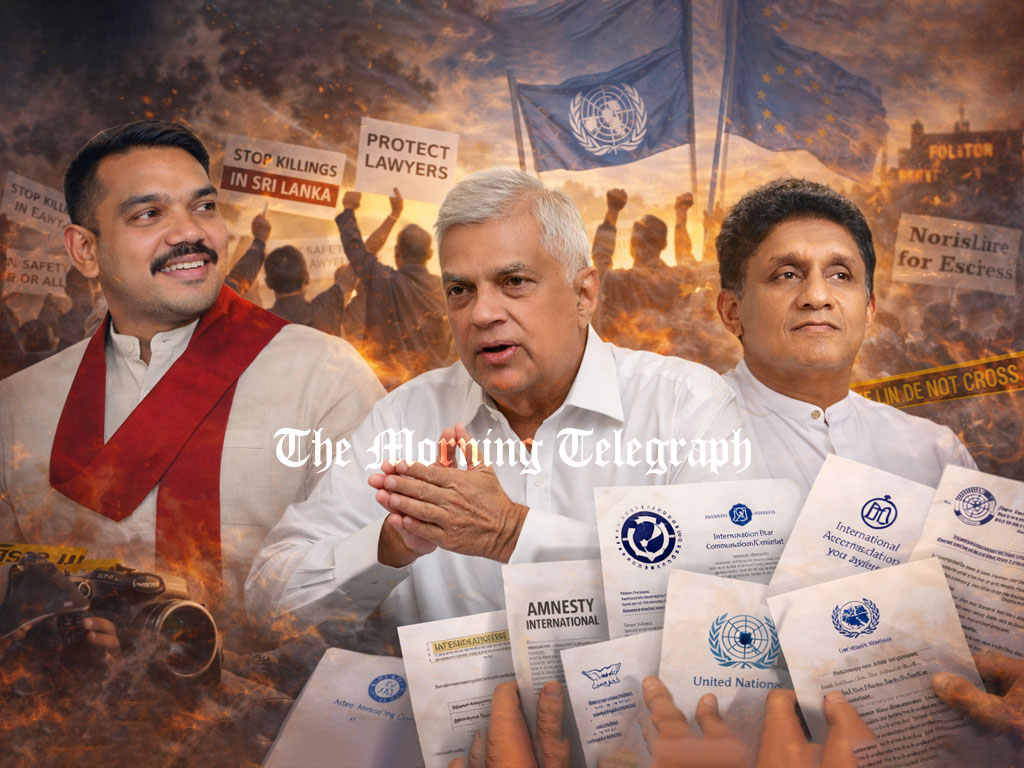
The joint statement was endorsed by prominent opposition figures including Sajith Premadasa, Patali Champika Ranawaka, Namal Rajapaksa, Ranil Wickremesinghe, Jeevan Thondaman, and Mano Ganeshan, reflecting a rare moment of political unity on a critical national issue.

According to the statement, there has been a disturbing rise in violent crimes involving modern firearms, with more than 60 deaths reported last year and nine additional killings recorded so far this year, signaling an escalating public safety crisis in Sri Lanka.
Particular attention was drawn to the killing of lawyer Buddhika Mallawarachchi and his wife near a high-security zone on February 13, 2026, an incident described as deeply shocking and alarming for the legal community and the wider public.
In response to the killing, the Bar Association of Sri Lanka organized a nationwide protest for the first time in 14 years. Lawyers across the island refrained from their professional duties on February 16, leading to the closure of courts at all levels, from the Supreme Court to Magistrate’s Courts, highlighting the seriousness of the situation.
The opposition leaders strongly criticized statements made by the police, which labeled the murdered lawyer as a drug dealer before any formal investigation had been completed. They described this as irresponsible and an attempt to undermine the gravity of the crime, while also alleging increasing politicization within the police force.
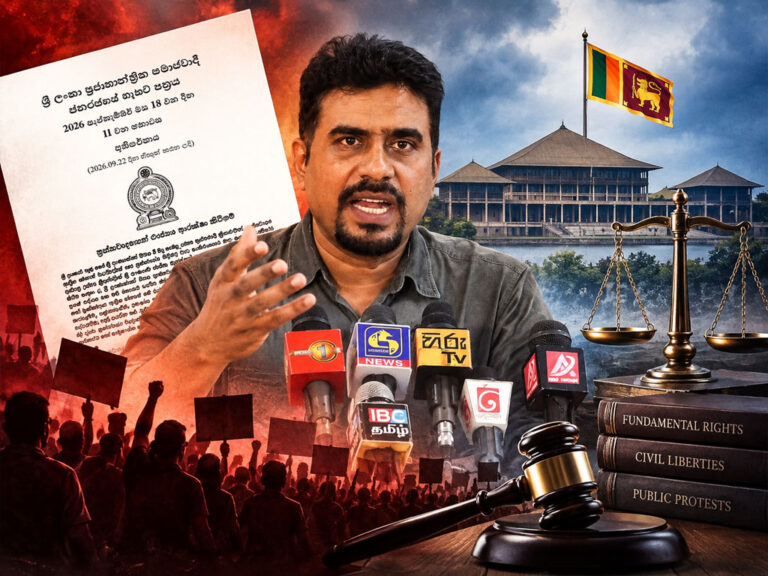
The statement also expressed deep concern over the proposed anti-terrorism bill, warning that it could be used to suppress dissent, restrict media freedom, and weaken democratic institutions under the pretext of national security.
Furthermore, the leaders accused Minister of Public Security and Parliamentary Affairs Ananda Wijepala of failing to uphold law and order and ensure the safety of citizens in an increasingly volatile environment.
They emphasized that the current version of the anti-terrorism legislation poses a direct threat to democratic values and may violate Sri Lanka’s commitments under international frameworks such as the International Covenant on Civil and Political Rights.
The opposition warned that the proposed law could directly target media organizations, including owners, editors, executives, and journalists, thereby creating a chilling effect on press freedom and public discourse.
Given the gravity of these concerns, the opposition leaders have formally appealed to international professional bodies and human rights organizations to intervene and safeguard the rights and safety of professionals in Sri Lanka.
The appeal has been sent to several global institutions, including the International Bar Association, Commonwealth Bar Association, International Commission of Jurists, International Association of Young Lawyers, International Democratic Lawyers Association, Amnesty International, Human Rights Watch, International Convention for Human Rights, World Organization Against Torture, Frontline Defenders, the Office of the High Commissioner for Human Rights, and the United Nations Special Rapporteur on Human Rights Defenders.