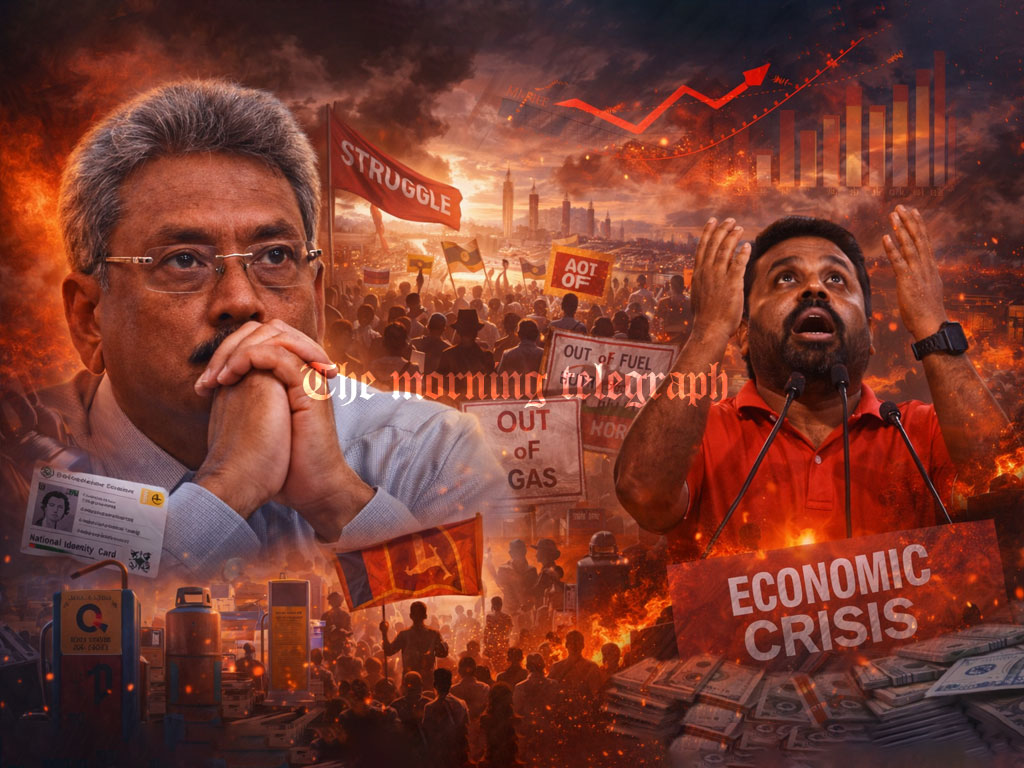
Fuel queues, economic pressure, and political tension are stirring memories of 2022, but does Sri Lanka truly stand on the brink of another uprising or is the storm still building beneath the surface?
It is, in many ways, a defining moment for the National Peoples Power government. Elected on a strong reform mandate built around clean governance and the promise of a thriving nation and a better life, it now faces a reality that feels far removed from those early expectations. Fuel queues, QR-based rationing, and controlled distribution systems are returning to public life, reviving concerns about economic stability and governance. For many Sri Lankans, this feels like a troubling echo of a crisis they have not yet forgotten.

There is a growing sense of déjà vu across the country. The memories of 2022 remain fresh, when long queues for gas and extended power cuts became daily hardships. Today, the fear is that a worsening Middle East conflict could once again trigger global fuel shocks, placing Sri Lanka in a vulnerable position. The economic recovery remains fragile, and any external disruption could quickly expose underlying weaknesses.
The political opposition appears quietly energized by these developments. A dissatisfied public, combined with shortages of essential services and perceived governance gaps, creates a familiar political opportunity. Some opposition voices have even gone as far as suggesting alternative leadership, highlighting figures like Ranil Wickremesinghe despite his current absence from active politics. Such rhetoric reflects the undercurrents of uncertainty that continue to shape the national discourse.
Comparisons between the present situation and the events of 2022 are unavoidable. At that time, the government cited the Covid pandemic as a major factor behind the economic collapse. While the pandemic did disrupt economies worldwide, Sri Lanka’s crisis went far deeper. Economic mismanagement, foreign reserve depletion, and policy failures compounded the global shock, leading to severe shortages and public unrest. The consequences were not just economic but political, reshaping the country’s leadership landscape.
Public dissatisfaction during that period was also driven by widespread concerns about corruption, nepotism, and governance failures. The erosion of institutional trust played a significant role in mobilizing citizens. The aragalaya movement became a symbol of collective frustration and a demand for systemic change. It was not merely a protest but a turning point that altered Sri Lanka’s political trajectory and brought the current leadership into power.
In the present context, the government too has its external justification. The ongoing Gulf conflict, like the pandemic before it, has the potential to disrupt global markets and drive up oil prices. For a country still recovering from economic collapse, such external shocks can have serious consequences. Added to this are recent challenges including international trade pressures, climate-related damages, and fiscal strain, all of which test the resilience of the current administration.
However, not all nations respond to crises in the same way. Some possess stronger financial buffers and better policy coordination. The critical question is whether the current leadership can manage these pressures effectively and avoid repeating past mistakes. Governance capacity, economic planning, and crisis management will determine whether Sri Lanka can navigate this period without slipping into instability once again.
There are, however, factors working in favor of the government. Having been in power for a relatively short period, it has not yet accumulated the level of public resentment seen in previous administrations. Many citizens believe that the government is making genuine efforts under difficult circumstances. There remains a degree of patience among the public, with people willing to give leadership more time to deliver on its promises.
One key reason for this relative tolerance is the absence of large-scale corruption scandals. There is no widespread perception of leaders enjoying excessive privilege while the public struggles. Instead, there is a sense that the ruling group is sharing the burden. This perception plays a crucial role in maintaining public confidence, even during periods of economic stress.
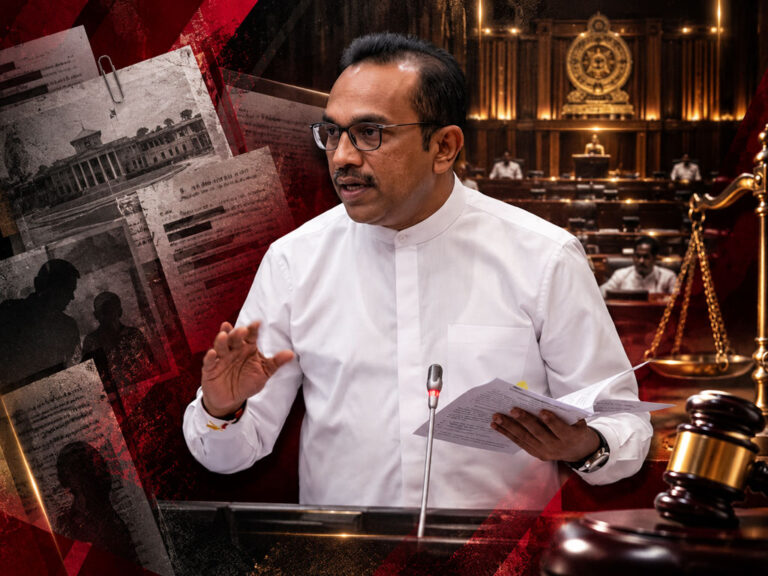
That said, concerns about accountability have not entirely disappeared. Allegations involving senior figures such as Energy Minister Kumara Jayakody have raised questions about the consistency of the government’s stance on transparency. While leadership has defended its position, critics argue that stronger action would reinforce credibility. Such issues, if not addressed carefully, could gradually erode public trust.
Another significant factor is the leadership appeal of Anura Kumara Dissanayake. Despite reduced expectations about rapid transformation, he continues to command respect and support among many citizens. His governance style, marked by simplicity and a departure from traditional political extravagance, has resonated with a public weary of excess and spectacle.
Taking all factors into account, the conditions for a second aragalaya are not fully present. While economic pressure and political tension exist, the level of public anger has not reached the tipping point seen in 2022. Equally important is the lack of a strong and credible opposition capable of mobilizing widespread support. Without a clear alternative, the likelihood of mass unrest remains limited in the near term.
In the final analysis, Sri Lanka stands at a delicate crossroads. The ingredients for unrest are partially present, but not yet fully aligned. Whether the country moves toward stability or renewed upheaval will depend on how effectively the government manages the current challenges. For now, the possibility of Aragalaya 2 remains more a question than an inevitability.