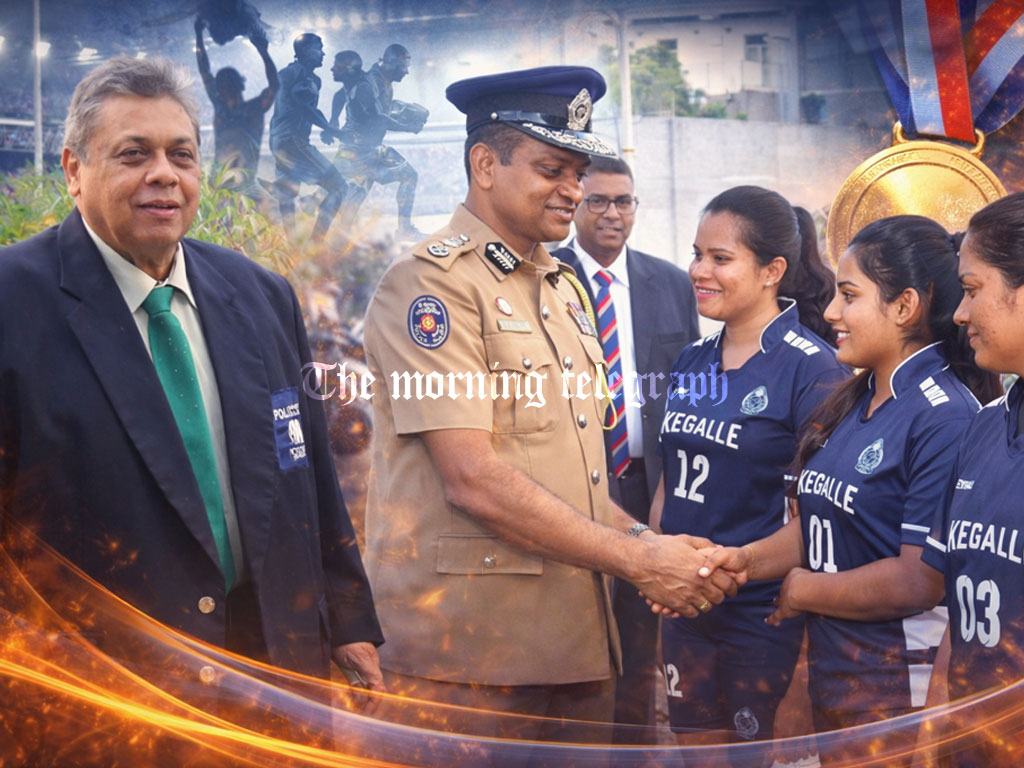
A former national athlete highlights the proud legacy of Sri Lanka Police sports while expressing confidence that with the right reforms, leadership, and vision, the institution can reclaim its place at the pinnacle of national sporting excellence.
DIG (Rtd) Hafeez Marso went on to say “Before I begin this narrative, there is something I must first share. After reading a note by a junior rugby colleague on this subject, I was inspired to present my own reflections and optimism about the future“
As a former national athlete who represented Sri Lanka in both rugby and basketball for over a decade at national and international levels, and later served as a technical official and sports administrator, I write this with deep appreciation for Sri Lanka sports and a strong belief in its potential. I trust that these views will be received in the spirit of constructive progress.

There have been many discussions about the future of police sports in Sri Lanka. It is important to begin by recognizing the remarkable legacy that has already been built. From the 1950s onwards, police sports teams consistently performed at the highest national standards and brought immense pride to the country.
The 1970s, 1980s, and early 1990s stand out as a golden era, where police teams achieved outstanding success across multiple disciplines. One of the finest moments came in 1987, when 11 police players were selected to represent Sri Lanka on a tour to Britain, a testament to the strength of the system and the quality of its athletes.
Police sports also made significant contributions in boxing, basketball, football, athletics, and lifesaving, establishing a strong foundation across a wide sporting spectrum. During the 1950s and 1960s, six police officers proudly represented Sri Lanka at Olympic, Commonwealth, and Asian boxing competitions, reinforcing the nation’s sporting reputation on the global stage.
In athletics, figures such as Senior Superintendent of Police Nimal Perera continue to inspire generations. His 1964 performance in the 400 meter hurdles, clocking 54.08 seconds, remains a benchmark in Sri Lanka athletics. This enduring record serves as a powerful reminder of what is possible with dedication and discipline.
Looking ahead, there is a clear opportunity to build on this legacy. With the right focus and strategic direction, police sports can once again rise to national prominence. The path forward is defined by several key areas of improvement.
- Strengthening knowledge and professional expertise
- Embracing modern sports science and technology
- Enhancing sports administration and governance
- Developing a clear long term vision and strategy
- Motivating players and officials to reach higher standards
- Improving supervision, monitoring, and performance systems
Progress will require a united effort from all stakeholders. From senior police leadership to sports committees, technical staff, team managers, and players, everyone has a vital role to play in this revival journey.
With focused action over the next two years, there is every reason to believe that police sports can regain its position at the national level. The foundation is already strong, and the potential for growth remains immense.
It is also essential that those involved in sports approach their roles with integrity, commitment, and a genuine desire to uplift standards. By prioritizing excellence over personal interests, meaningful and lasting progress can be achieved.
Ultimately, the future of police sports in Sri Lanka is filled with promise. With experienced leadership and a shared vision, this proud institution can once again become a driving force in national and international sport.