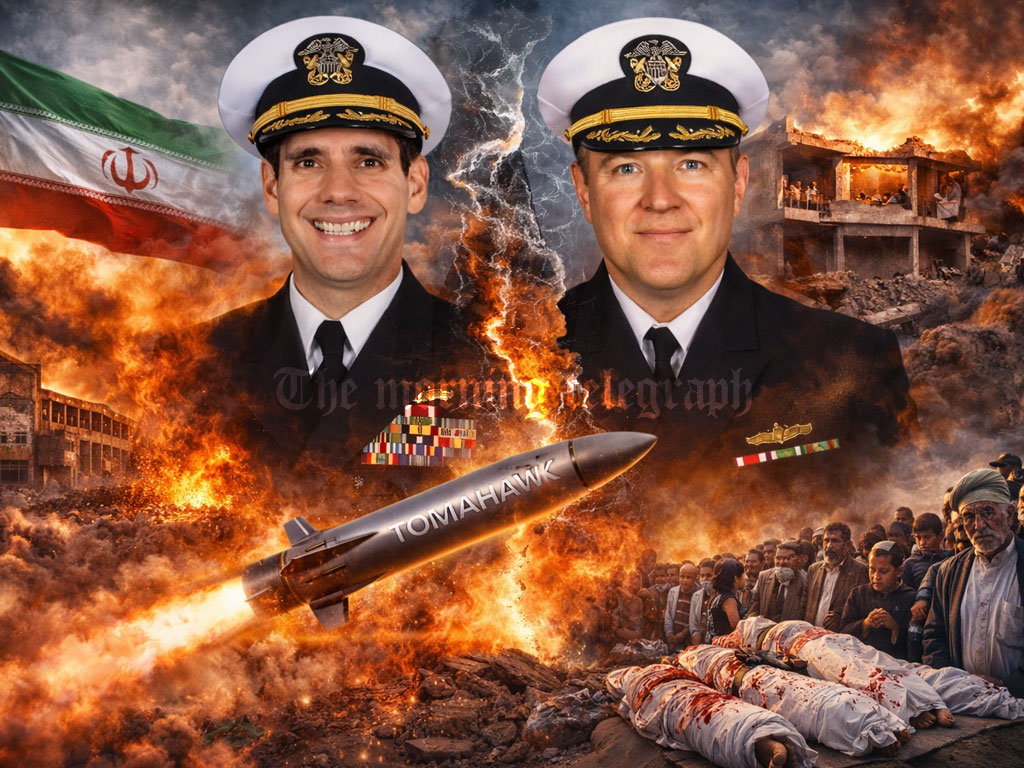
A devastating missile strike on a school in Minab has ignited global outrage, as Iran publicly names US Navy officers it holds responsible, raising serious questions about military accountability, civilian protection, and the human cost of modern warfare.
Iran on Sunday publicly identified two United States Navy officers as being responsible for a deadly missile strike on a school in Minab, an incident that has become one of the most controversial flashpoints in the ongoing Middle East conflict.
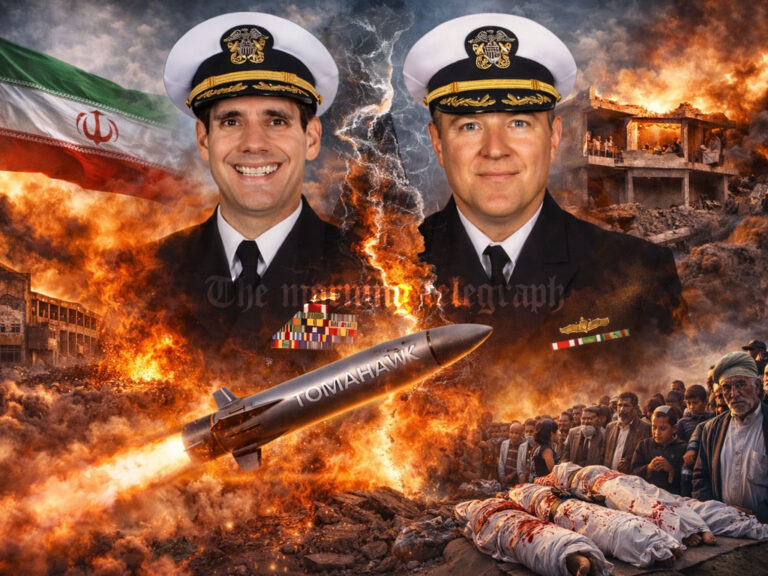
According to Iranian authorities, Commander Leigh R Tate and Executive Officer Jeffrey E York of the USS Spruance were directly involved in ordering the launch of Tomahawk missiles that struck the school, resulting in the deaths of 168 people, many of them children. The naming of specific officers marks a significant escalation in rhetoric and underscores the gravity of the accusations being made.

The allegation was amplified through a statement shared on social media, which urged the public to remember the two officers and accused them of authorizing three separate missile launches that led to the tragic loss of innocent lives. The post framed the incident as a deliberate act, intensifying tensions between Iran and the United States.
The strike itself occurred earlier this month during the opening phase of Operation Epic Fury, a coordinated military campaign reportedly conducted by US and Israeli forces. The school in Minab was hit alongside a nearby naval installation linked to the Islamic Revolutionary Guard Corps, making the area an active military target zone at the time.
Reports indicate that at least 165 people were killed in the attack, with many of the victims being schoolchildren attending morning classes. The scale of the casualties quickly transformed the incident into a humanitarian and political crisis, drawing widespread condemnation and scrutiny.
US media coverage has suggested that the school may have been damaged as part of a broader precision strike targeting military facilities in the vicinity. The operation was described as a coordinated effort aimed at strategic assets rather than civilian infrastructure, though the outcome has raised serious concerns.
According to reporting by The New York Times, official US statements referenced operations near the Strait of Hormuz, where the targeted IRGC naval base is located. These statements have been interpreted as indicating that American forces were likely responsible for the strike, even if the school itself was not the intended target.
Additional reporting by CBC News indicated that the damage resulted from a precision airstrike on a military complex adjacent to the school. The building was reportedly part of an IRGC installation, further complicating the narrative around whether the strike was an accident or a failure in target identification.
A preliminary US military investigation has suggested that the missile strike may have been the result of a targeting error. This finding points to the possibility of misidentification during operations against nearby military facilities, highlighting the risks involved in conducting strikes in densely populated areas.
From the outset, the incident became a focal point of controversy. Iranian state media reported funerals for at least 165 victims, including numerous children, emphasizing the human toll of the attack. Images broadcast across the country showed grieving families gathered around coffins draped in the Iranian flag, many bearing photographs of young victims.
Iranian President Masoud Pezeshkian directly blamed the United States and Israel for the strike, framing it as a clear violation of international norms. Israel, however, has denied any involvement in the incident. Military spokesman Lieutenant Colonel Nadav Shoshani stated that there was no connection between Israeli forces and the events at the school.
The controversy has also triggered political repercussions in Washington. The incident has drawn increasing scrutiny from US lawmakers, particularly among Democratic senators who are demanding greater transparency.
More than 45 senators have reportedly written to Defence Secretary Pete Hegseth, seeking clarification on whether the United States was responsible for the strike and what measures were taken to prevent civilian casualties during the operation.
Lawmakers have also raised concerns about recent reductions in Pentagon programs designed to protect civilians. These include initiatives at US Central Command and the Civilian Protection Center of Excellence, established in 2022 with the aim of minimizing harm to non combatants during military operations.
As the investigation continues, the Minab school strike remains a stark reminder of the complexities and consequences of modern warfare. It highlights the blurred lines between military objectives and civilian risk, and the urgent need for accountability in conflict zones where precision operations can still lead to devastating human loss.