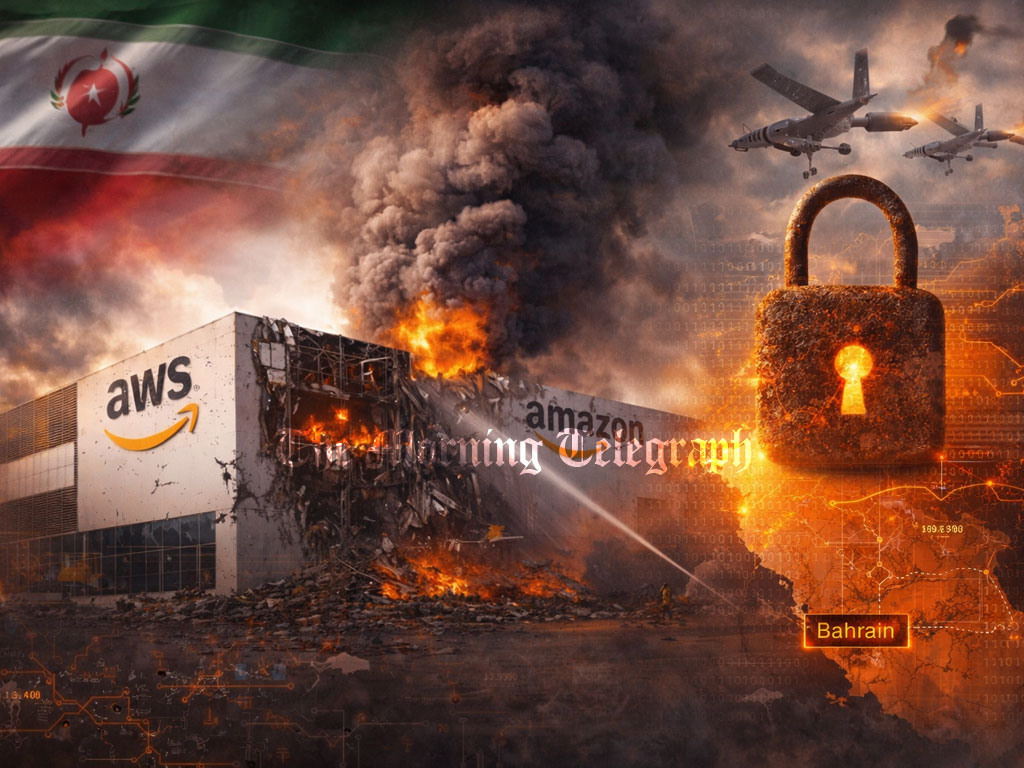
A suspected Iranian strike on Amazon’s cloud infrastructure in Bahrain has sparked fears of a dangerous new phase in cyber-physical warfare, where global tech giants and critical digital systems are becoming direct targets in escalating Middle East tensions.
Iran has reportedly struck a cloud computing facility linked to Amazon in Bahrain, raising serious concerns about the vulnerability of critical digital infrastructure in an increasingly volatile Middle East conflict.
The incident signals a growing risk that the ongoing geopolitical tensions involving the United States, Israel and Iran could expand beyond traditional military targets and directly impact global technology networks and commercial systems.

Bahrain’s Interior Ministry confirmed that civil defense teams were deployed to contain a fire that broke out at a private company’s facility, attributing the incident to what it described as Iranian aggression. However, officials stopped short of identifying the company involved or detailing the extent of the damage.
Amazon has also refrained from issuing a formal statement, maintaining silence as speculation intensifies over the scale and implications of the attack on its regional cloud infrastructure.
Security analysts suggest this development marks a significant escalation, indicating that the conflict is increasingly spilling into the digital economy. Experts warn that critical technology infrastructure in the Gulf region is now firmly within the crosshairs of strategic military objectives.
Iran’s Islamic Revolutionary Guard Corps has previously issued warnings about targeting major American technology companies operating across the Middle East, including Amazon, Microsoft, Google and Apple, highlighting a broader strategic intent.
Amazon confirmed that three of its data centers across Bahrain and the United Arab Emirates were impacted by drone-related incidents on March 2, reinforcing concerns about coordinated strikes on key digital assets.
Amazon Web Services had selected Bahrain in 2019 as a primary regional hub to enhance cloud computing capabilities and digital service delivery across the Middle East, making it a vital node in global data infrastructure.
Such attacks have intensified global scrutiny over the security of digital ecosystems, raising urgent questions about how nations and corporations can safeguard economic and technological assets in an era where warfare increasingly intersects with cyberspace and critical infrastructure.