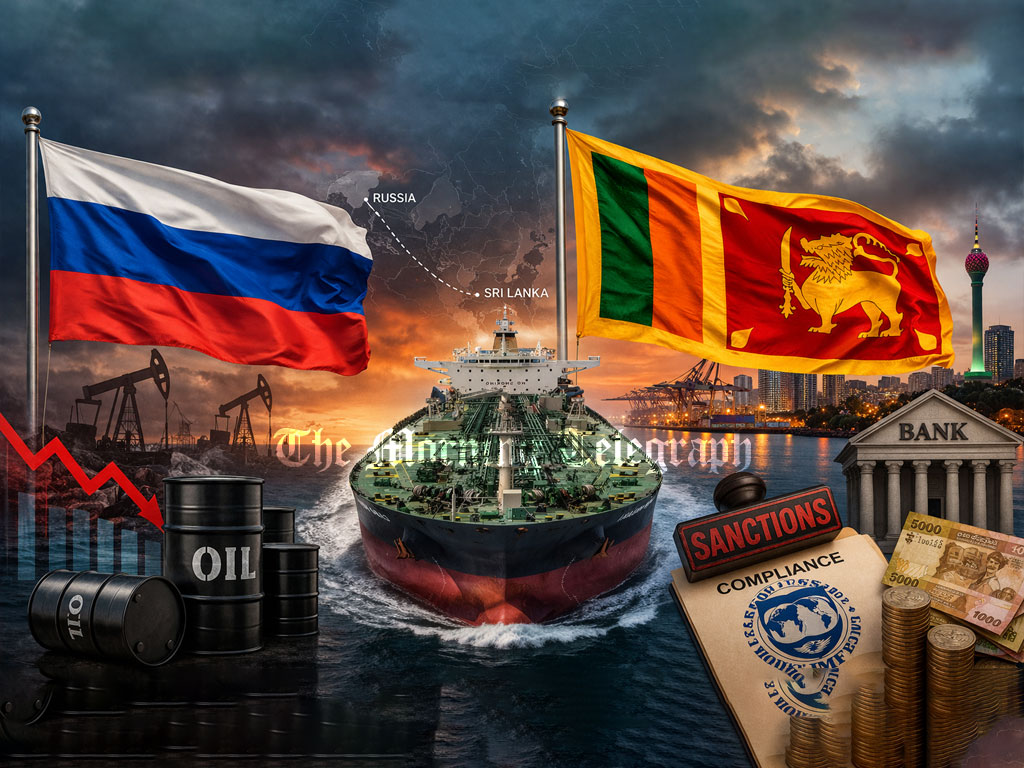
Moscow’s firm rejection of short-term oil sales exposes Sri Lanka’s economic constraints, as sanctions, IMF-linked banking rules, and geopolitical pressure collide in a high-stakes energy negotiation.
Russia has made it clear that it is not interested in spot oil purchasing arrangements, instead prioritizing long-term strategic energy partnerships, according to statements made in Colombo by Deputy Foreign Minister Andrey Yuryevich Rudenko. Speaking at a roundtable organized by the Pathfinder Foundation, led by former Minister Milinda Moragoda, Rudenko emphasized that temporary opportunities created by sanctions dynamics should not replace stable and sustained cooperation, particularly with nations in the Global South seeking long-term energy security.

The visit of the Russian delegation comes at a critical time, as negotiations between Sri Lanka and Russia over a potential secured oil agreement continue to face serious institutional and regulatory challenges. Sources familiar with the discussions indicate that progress has slowed due to financial restrictions and compliance barriers, with Sri Lanka showing caution in easing sanctions tied to Russian trade. Domestic banks remain bound by strict International Monetary Fund related compliance frameworks, limiting their ability to process or support such transactions within the global financial system.
“It is far more complex than it appears, and certain ministers are carefully navigating the situation,” a source revealed, highlighting internal government divisions and mounting external geopolitical pressure. The situation reflects a broader dilemma faced by emerging economies trying to balance urgent energy needs with international financial commitments and diplomatic alignments.
During the discussions, Rudenko outlined Russia’s wider geopolitical outlook, including its support for a Eurasian security architecture proposed by President Vladimir Putin and its stance on reforming global governance systems. He stressed that changes to the United Nations framework must be approached cautiously, warning that existing international mechanisms are already under strain and becoming increasingly fragile.
Addressing ongoing regional conflicts, Rudenko described Iran as a victim of what he termed an illegitimate attack and reiterated Moscow’s support for Tehran’s right to self-defense. He contrasted Russia’s position with that of Western nations such as the United States and the United Kingdom, accusing them of sharing intelligence with Ukraine for strikes targeting Russian civilian infrastructure.
The Russian official also pointed to Moscow’s advancements in peaceful nuclear energy, highlighting the deployment of floating nuclear power stations in Siberia as evidence of Russia’s technological capability and leadership in alternative energy solutions. These remarks signal Russia’s intent to deepen long-term strategic partnerships while rejecting short-term transactional oil deals, even as countries like Sri Lanka grapple with economic pressure, sanctions risk, and complex diplomatic realities.