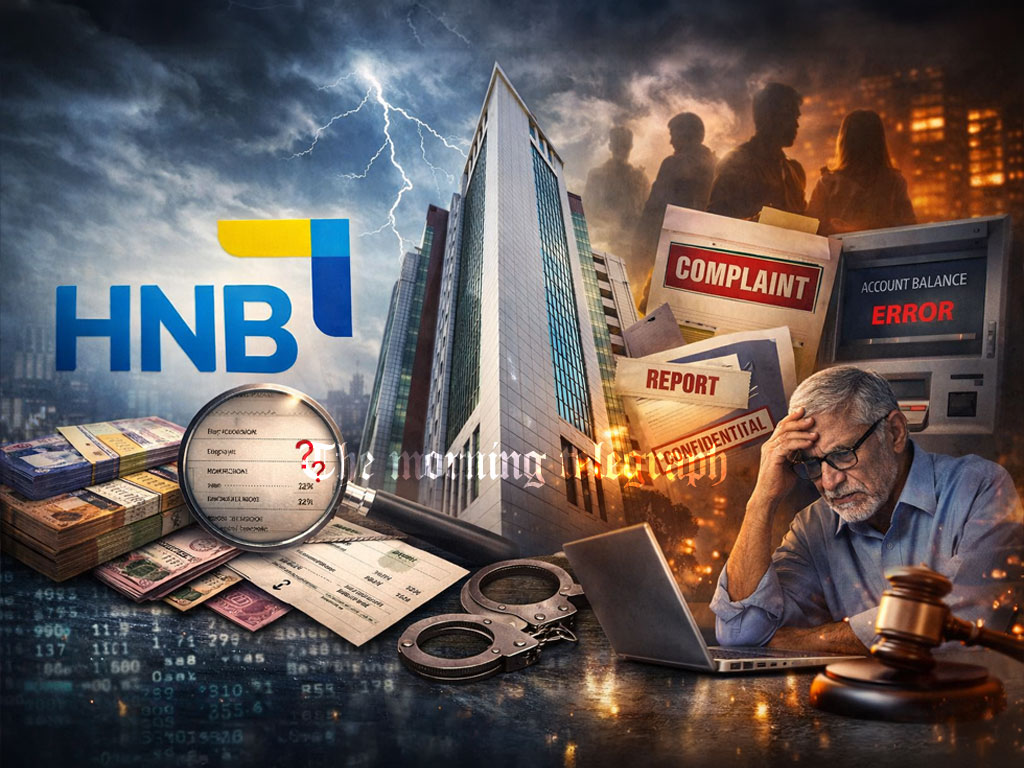
Fresh claims against Hatton National Bank have triggered concern among customers who say money continues to be deducted or retained even after full credit card settlements, raising urgent questions about banking transparency, accountability, and consumer protection in Sri Lanka.
Serious concerns are now swirling around Hatton National Bank in Sri Lanka, after several customers alleged that the leading private sector bank has continued to deduct or hold back funds even after their credit card dues were fully paid. According to affected account holders, these unexplained deductions are easy to miss unless statements are checked closely and consistently. That growing pattern has sparked wider public concern about transparency, customer rights, and the reliability of internal banking systems. As more voices come forward, the issue is beginning to look less like an isolated complaint and more like a matter demanding closer scrutiny.

Customers say that even after clearing their outstanding credit card balances in full, further amounts have continued to appear as deductions without a clear explanation or a timely remedy. Many allege that the burden of discovering the discrepancy falls entirely on the customer, rather than the bank taking proactive steps to identify and correct the issue. For many account holders, that is where frustration deepens. These claims suggest possible weaknesses in internal oversight, transaction monitoring, or complaint handling, all of which are critical to maintaining public trust in a modern financial institution.
Some of those affected have described the situation as deeply disturbing, with a number of customers openly characterizing it as fraud. They argue that whether the issue stems from negligence, weak systems, or something more serious, the result is the same: confidence in the bank is damaged. Financial institutions are expected to uphold high standards of accuracy, accountability, and fairness. When customers believe money is being retained or deducted after full repayment, the reputational cost can be severe. The lack of swift corrective action, according to those raising concerns, has only intensified dissatisfaction and suspicion.
Financial observers and consumer-focused experts say this situation is a reminder that customers must stay vigilant by regularly checking credit card statements, payment histories, and transaction records. They advise account holders to report irregular deductions immediately, keep written evidence, and escalate unresolved complaints through the proper regulatory and banking channels when needed. Such steps are increasingly viewed as essential for protecting consumer rights, improving financial accountability, and preserving confidence in Sri Lanka’s banking sector at a time when trust is under pressure.
As these allegations continue to attract attention, there are growing calls for tighter scrutiny and a possible investigation into the bank’s practices. Regulatory authorities in Sri Lanka may soon face increasing pressure to examine the complaints carefully and determine whether existing banking safeguards are being properly enforced. For customers, this is no longer just about a disputed transaction or a billing issue. It is about transparency, fair treatment, and the assurance that funds paid in full should not quietly disappear without explanation.