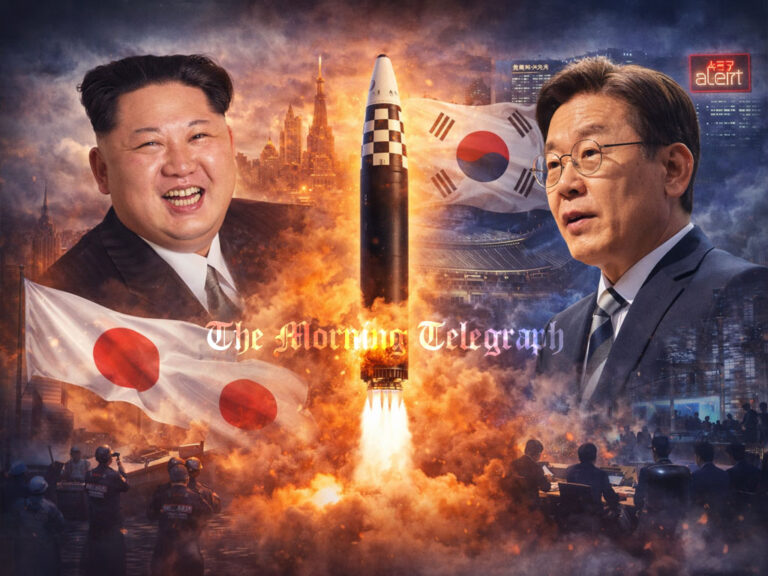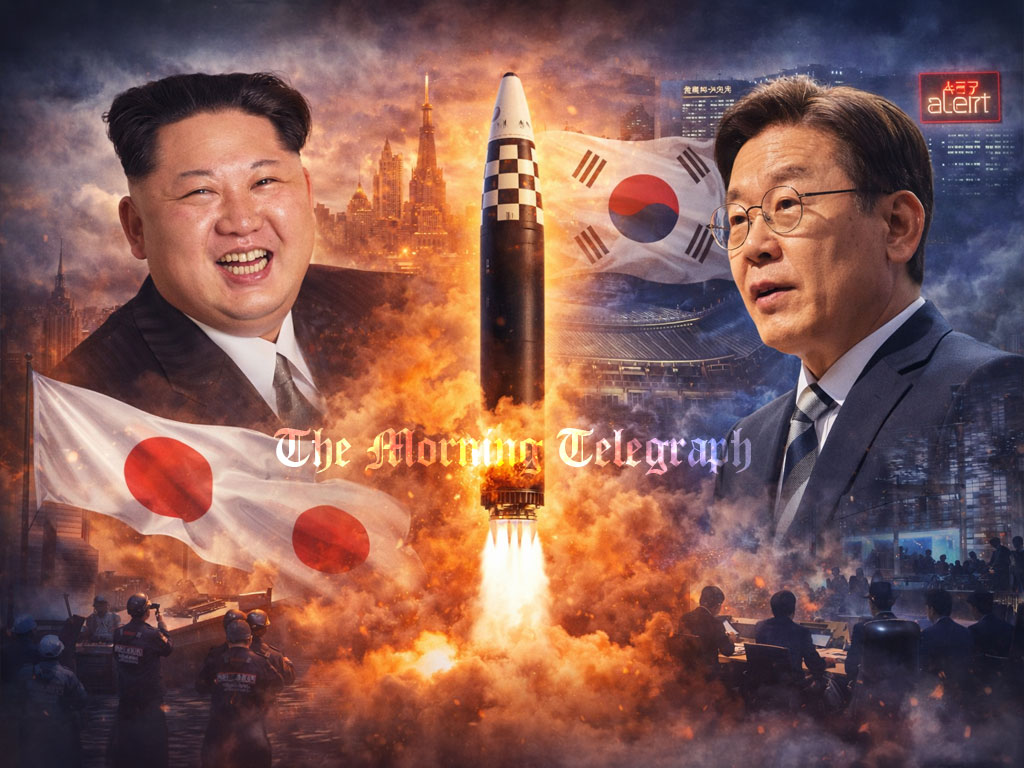
Fresh ballistic missile launches by North Korea send shockwaves across the region, undermining South Korea’s diplomatic outreach and raising global security concerns amid rising geopolitical tensions.
North Korea fired multiple short range ballistic missiles in two separate rounds on Wednesday, according to South Korea’s military, following an earlier report of an unidentified projectile launched from the Pyongyang area the previous day.
South Korean President Lee Jae Myung has been attempting to rebuild strained relations with the North since taking office last year, openly criticising his predecessor for allegedly authorising drone operations that dropped propaganda leaflets over Pyongyang.

Earlier this week, Seoul publicly expressed regret over civilian drone incursions into North Korea that took place in January, with President Lee calling the move irresponsible and acknowledging that state actors had been involved.
Despite these conciliatory efforts, the latest missile launches mark the fourth and fifth confirmed ballistic missile tests by North Korea this year, widely interpreted by analysts as a direct rejection of South Korea’s peace initiatives.
The South Korean military reported early Wednesday that it had detected an unidentified projectile launched from the vicinity of Pyongyang a day earlier, raising initial alarm across defense agencies.
Roughly an hour later, authorities confirmed that multiple ballistic missiles had been launched from the Wonsan area toward the East Sea, also known as the Sea of Japan, escalating tensions in the region.
Military officials stated that the missiles, identified as short range ballistic weapons, were fired at approximately 8:50 am and travelled a distance of around 240 kilometres. At least one additional missile was launched later in the afternoon at around 2:20 pm.
“Our military has strengthened surveillance and vigilance in preparation for further launches, while maintaining a state of full readiness,” South Korea’s military said in a statement, emphasizing heightened alert levels.
Japan’s Coast Guard also confirmed that an object believed to be a ballistic missile had been launched from North Korea, urging vessels in nearby waters to remain cautious and vigilant.
In response, South Korea’s National Security Office convened an emergency meeting at the presidential Blue House, calling on Pyongyang to immediately halt what it described as provocative actions.
Referencing ongoing instability in the Middle East, officials stressed the need for increased readiness and directed all relevant agencies to maintain heightened security measures.
The office further condemned the missile launches as clear violations of United Nations Security Council resolutions and urged North Korea to cease all such activities without delay.
Following President Lee’s earlier apology over drone incidents, Kim Yo Jong, the influential sister of North Korean leader Kim Jong Un, described the move as wise and beneficial.
However, the tone quickly shifted when a senior North Korean foreign ministry official labelled South Korea as the most hostile enemy state, reinforcing Pyongyang’s hardened stance.
Jang Kum Chol, a senior official in North Korea’s foreign ministry, dismissed South Korean media interpretations of Kim Yo Jong’s remarks as friendly, calling such claims absurd and misleading.
He added that such interpretations would be remembered as astonishingly foolish, according to statements carried by the state run Korean Central News Agency.
Experts believe the consecutive missile launches serve as a clear message from North Korea that it has no intention of engaging in reconciliation, despite repeated diplomatic overtures from Seoul.
Lim Eul chul, a North Korea expert at Kyungnam University, noted that the missile tests and accompanying rhetoric highlight Pyongyang’s determination to ignore South Korea’s efforts to improve bilateral relations.
Meanwhile, US President Donald Trump has weighed into the situation, recently criticising South Korea’s role during the Middle East conflict while emphasizing his personal rapport with North Korean leader Kim Jong Un.
Trump remarked that South Korea did not provide sufficient support during the conflict, while also noting that the United States maintains a significant military presence in the country to counter threats from the North.
He stated that approximately 45,000 US troops are stationed in South Korea to ensure its security, though official figures place the number closer to 28,500 personnel.
Trump, who met Kim Jong Un three times during his first term, has hinted at the possibility of renewed diplomatic engagement, especially ahead of a potential visit to China next month.
However, despite Trump’s earlier statement expressing full openness to meeting Kim again, there has been no response from North Korea, leaving the future of negotiations uncertain.