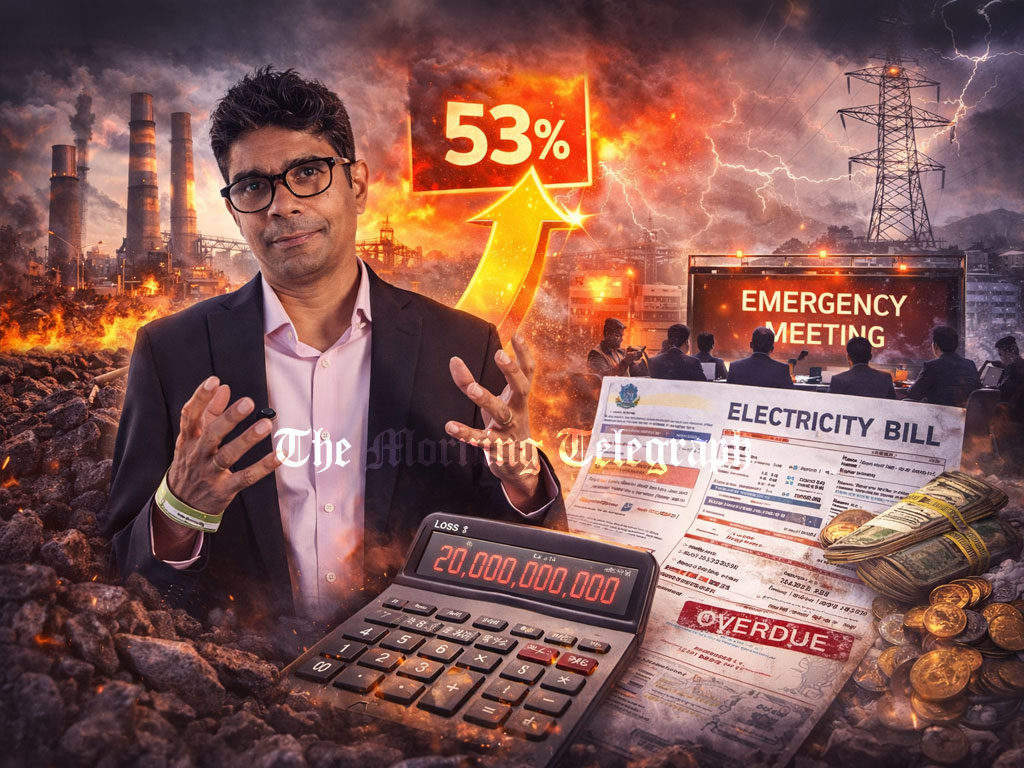
A deepening energy crisis threatens Sri Lankan households as massive coal deal losses and fuel costs push authorities toward a steep electricity tariff hike, raising serious questions about accountability and transparency.
Dr. Vidura Ralapanawa has revealed that a staggering loss exceeding Rs. 20 billion has been incurred within just three months from April to June 2026 as a direct result of the controversial coal procurement deal.
According to him, the National System Operations Unit has already submitted proposals for a significant electricity tariff revision, suggesting an increase of up to 53 percent on top of the current electricity pricing structure in order to recover these losses.

He further explained that the broader financial impact linked to coal fraud and disruptions in fossil fuel supply has driven total additional costs to nearly Rs. 42 billion, placing immense pressure on the national energy sector.
Electricity generation from coal powered plants has dropped by approximately 250 gigawatt hours, forcing authorities to rely on expensive diesel based power generation to bridge the gap, at a cost estimated at Rs. 25 billion.
Even after accounting for savings of Rs. 4.5 billion due to reduced generation, the net financial burden placed on the public due to the coal crisis alone stands at around Rs. 20.5 billion.
In this context, proposals have been put forward to increase electricity tariffs by Rs. 40.5 billion, with more than half of this adjustment directly attributed to the fallout from the coal deal controversy.
Dr. Ralapanawa has openly challenged the President’s claim that the losses from the coal issue amount to only Rs. 7 billion, as well as assurances that the burden would not be passed on to consumers.
He argues that the actual losses are far greater than officially stated and that the proposed tariff revisions clearly indicate that ordinary citizens will ultimately bear the financial consequences.
He also cautioned that the situation could worsen further with rising diesel prices after April and the increasing need to import high priced fuel oil, further intensifying the cost pressures.
The government, he noted, has yet to present a viable strategy to recover the losses from the responsible supplier, especially given that the scale of the loss exceeds the financial capacity of the supplier involved.
Dr. Ralapanawa concluded by stressing that instead of ensuring transparency and accountability, authorities appear to be withholding critical information, thereby deepening the ongoing energy crisis and eroding public trust.