Sri Lanka’s political landscape is rattled as corruption allegations, explosive audit findings, and internal party pressure push Energy Minister Kumara Jayakody toward resignation amid a deepening national crisis.
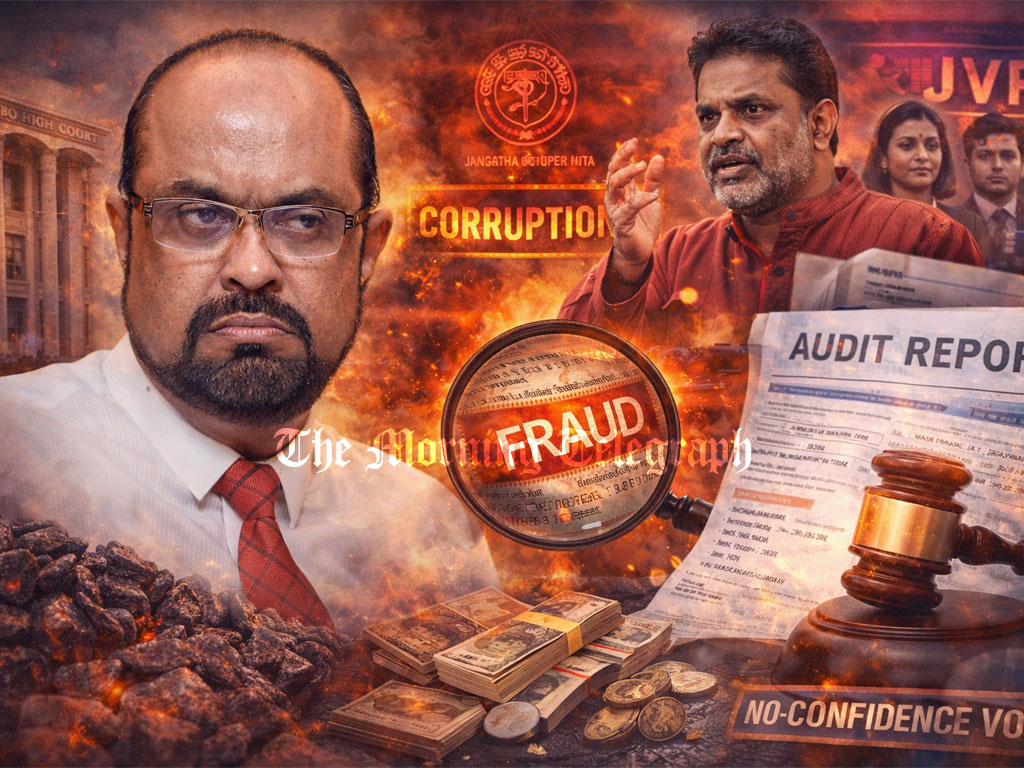
Sri Lanka is currently facing an intensifying political crisis as Energy Minister Kumara Jayakody prepares to step down from his position, citing ongoing legal proceedings filed against him. The decision comes at a time of growing internal unrest within the government, particularly among senior figures of the Janatha Vimukthi Peramuna, following his indictment by the Colombo High Court on corruption related charges.

Sources indicate that tensions reached a critical point during a heated discussion involving President Anura Kumara Dissanayake, Prime Minister Harini Amarasuriya, and several senior members of the ruling coalition. Reports suggest that key party figures refused to defend the minister despite pressure from the President to justify the allegations. After intense deliberations, it is understood that the President agreed that Jayakody should step down until the legal proceedings are concluded.
The minister is expected to make a formal statement in Parliament announcing his resignation, which is likely to occur just ahead of a scheduled no confidence motion against him. This timing has further heightened the political stakes, as the debate surrounding his conduct is set to unfold in Parliament shortly thereafter.
The Bribery Commission of Sri Lanka has initiated legal action under Case No. HCB 481/2026 at the Colombo High Court, charging Jayakody under Section 70B of the Bribery Act. The case relates to his tenure at the Fertilizer Corporation in 2015, where he is accused of facilitating financial advantages to a private company while serving as Chairman of the Tender Board overseeing a contract already under investigation. Following a review of written submissions from his legal team, the Commission proceeded with formal charges.
At the same time, a separate controversy has surfaced following the release of a critical audit report by the National Audit Office concerning coal imports. The report, presented to Parliament soon after the President publicly denied any irregularities, highlights substantial financial losses and systemic failures in the procurement process.
According to the audit findings, substandard coal imports resulted in losses estimated at approximately Rs. 224 million, with certain shipments causing damages exceeding Rs. 300 million. The report also points out that the coal supplied consistently failed to meet the required calorific value of 6150 kcal per kilogram, significantly reducing the efficiency of power generation.
Further analysis reveals that due to the inability to fully utilize the intended 300 megawatt capacity, Sri Lanka may need to generate an additional 76 million kilowatt hours of electricity from alternative sources, placing additional strain on the already fragile national grid.
The audit also estimates that penalties exceeding Rs. 233 crore could potentially be recovered from suppliers due to quality failures. However, it criticizes the Lanka Coal Company for failing to take timely corrective measures, including neglecting opportunities to re test shipments and address quality related concerns.
In addition, the report exposes serious breaches in procurement procedures, noting that a supplier was allowed to participate without completing mandatory registration requirements or paying the necessary fees, while other qualified bidders were denied equal opportunity. These findings have intensified concerns regarding fairness, transparency, and governance within the energy sector.
As the crisis unfolds, the combination of corruption allegations, audit revelations, and internal political divisions continues to deepen uncertainty, raising critical questions about accountability and the future direction of Sri Lanka’s energy policy.