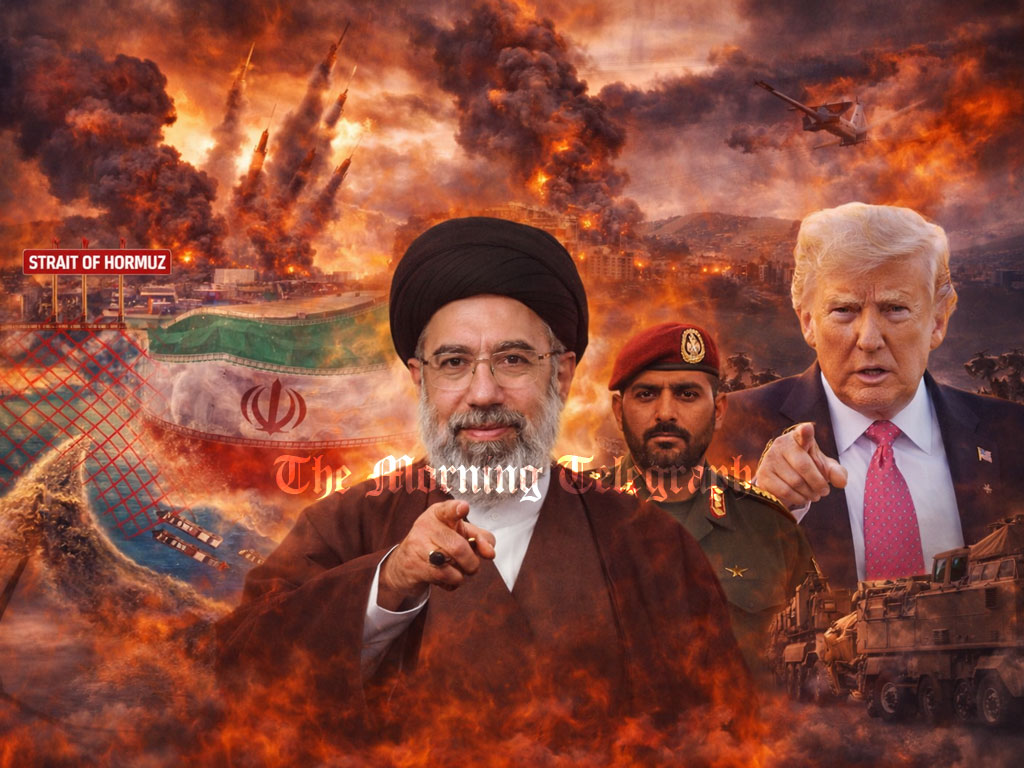
A rapidly spiraling Middle East crisis is now threatening global stability as Iran escalates by targeting oil routes and warning of full-scale retaliation, Israel intensifies deadly strikes on Lebanon, and the United States signals military readiness amid fears of a global energy shock and wider war.
In a dramatic escalation of Middle East tensions, Iran has launched a series of large-scale missile and drone attacks targeting the Fujairah oil terminal in the United Arab Emirates, a key global oil transit hub. Iranian officials confirmed the strikes were carried out in retaliation for earlier attacks on its oil infrastructure, particularly on the islands of Lavan and Sirte. The Iranian government has warned the Abu Dhabi leadership against acting as a proxy for external powers and has threatened further missile strikes if similar incidents occur again, signaling a dangerous rise in geopolitical confrontation.

Iranian military sources have directly accused the United Arab Emirates of being involved in the initial strikes on Iranian oil facilities. This development has triggered widespread concern among global economists and energy analysts, who warn that any sustained disruption to Fujairah could significantly impact global oil supply chains and fuel prices. Despite growing tensions, United States authorities have officially denied any involvement in the attacks, even as military movements in the region suggest heightened preparedness.
At the same time, Israel has launched one of the most intense aerial offensives in its history against Lebanon, just hours after a two-week ceasefire agreement was announced between the United States and Iran. According to reports, the strikes killed at least 254 people and injured over 1,160, marking one of the deadliest escalations in recent memory. The Israeli military stated that it hit approximately 100 targets within just 10 minutes, focusing on Beirut, the Bekaa Valley, and southern Lebanon.
Eyewitnesses described the bombardment as a devastating ring of fire that engulfed entire neighborhoods, flattening residential buildings, damaging schools, and destroying commercial centers. The attacks came shortly after Pakistan’s prime minister publicly announced a temporary ceasefire involving the United States, Iran, and Israel. However, Israeli Prime Minister Benjamin Netanyahu clarified that the ceasefire does not extend to Lebanon, and military operations against Hezbollah would continue without pause.
Hospitals across Lebanon are now overwhelmed, struggling to cope with the surge of casualties. Medical professionals on the ground have described the situation as a massacre, with no prior warning given in many of the targeted areas. Civilians remain in shock, and emergency services are stretched to their limits as rescue operations continue amid the destruction.
The United Nations High Commissioner for Human Rights, Volker Turk, strongly condemned the scale of the attacks, stating that it is unthinkable for such large-scale violence to occur at a time when ceasefire agreements are being discussed. The humanitarian situation in Lebanon continues to deteriorate, with more than one million civilians already displaced due to ongoing conflict and instability.
Meanwhile, United States President Donald Trump has issued a stern warning regarding the situation in the region. He stated that US military assets, including ships, aircraft, and ground troops, will remain in position until the terms of the ceasefire agreement with Iran are fully enforced. In a social media statement, Trump emphasized that American forces are on high alert and prepared to respond if the situation escalates further.
He cautioned that failure to uphold the agreement could lead to a renewed and potentially more violent conflict, raising concerns of a broader war involving multiple nations. This stance underscores the fragile and volatile nature of the current geopolitical environment in the Middle East.
Lebanon has declared a national day of mourning following the deadly Israeli airstrikes. Prime Minister Nawaf Salam stated that the country is mobilizing all available political and diplomatic resources to halt what he described as a relentless and destructive war campaign. He urged the international community to intervene urgently to prevent further loss of life.
However, Israeli leadership maintains that Lebanon is not covered under the ceasefire agreement negotiated between the United States and Iran. US Vice President J.D. Vance supported this position, confirming that no assurances were given regarding Lebanon during ceasefire discussions.
Iranian Foreign Minister Abbas Araghchi responded by asserting that the agreements involving the United States and Iran clearly addressed regional tensions, including Lebanon. He emphasized that Washington must make a decisive choice between supporting a ceasefire or continuing a proxy conflict through Israel, warning that both approaches cannot coexist without consequences.
Lebanon’s Health Minister Rakan Nasiruddin warned that the country’s healthcare system is nearing collapse under the strain of continuous attacks and mass casualties. He appealed to the international community for immediate humanitarian assistance, stressing the urgent need for medical supplies, personnel, and support to treat thousands of injured civilians.
As tensions continue to escalate, Iran has now signaled a further dangerous shift by announcing that it is prepared to withdraw from the US-brokered ceasefire agreement if Israel continues its military operations in Lebanon. Iranian officials have warned that continued violations will trigger direct retaliation, raising fears of a broader regional war.
In a move with potentially severe global consequences, Iran has taken steps to suspend oil shipments through the Strait of Hormuz, one of the most critical chokepoints for global energy supply. Iranian state media reported that this measure is intended as a strategic response to ongoing hostilities, particularly if Israeli attacks persist.
The Islamic Revolutionary Guard Corps has declared that it stands ready to punish Israel for what it described as ongoing atrocities in Lebanon. This rhetoric signals a sharp escalation in military posture and raises the likelihood of direct confrontation.
Despite these warnings, Israel has maintained that its operations in Lebanon are justified and not restricted by the ceasefire terms. Consequently, its military has continued extensive air campaigns across Lebanese territory, further intensifying the crisis.
Meanwhile, Pakistan’s Prime Minister Shehbaz Sharif has taken a contrasting position, stating that the ceasefire should apply across the entire region, including Lebanon. He also expressed Pakistan’s willingness to facilitate diplomatic engagement between the United States and Iran in an effort to de-escalate tensions.
The partial closure of the Strait of Hormuz has already begun to impact global markets, with oil and gas prices rising after an initial dip following the ceasefire announcement. Analysts warn that any prolonged disruption could trigger a severe global fuel crisis, affecting economies worldwide.