A growing legal and procedural crisis puts Sri Lanka’s long-delayed Provincial Council elections on hold, raising serious questions about governance, electoral reform, and constitutional readiness.
The long-awaited Provincial Council elections in Sri Lanka have once again been pushed into uncertainty, as legal and procedural barriers continue to block progress. A Parliamentary Select Committee appointed to examine the feasibility of conducting these elections recently convened under the leadership of its Chairman, Minister Vijitha Herath, to assess the situation.

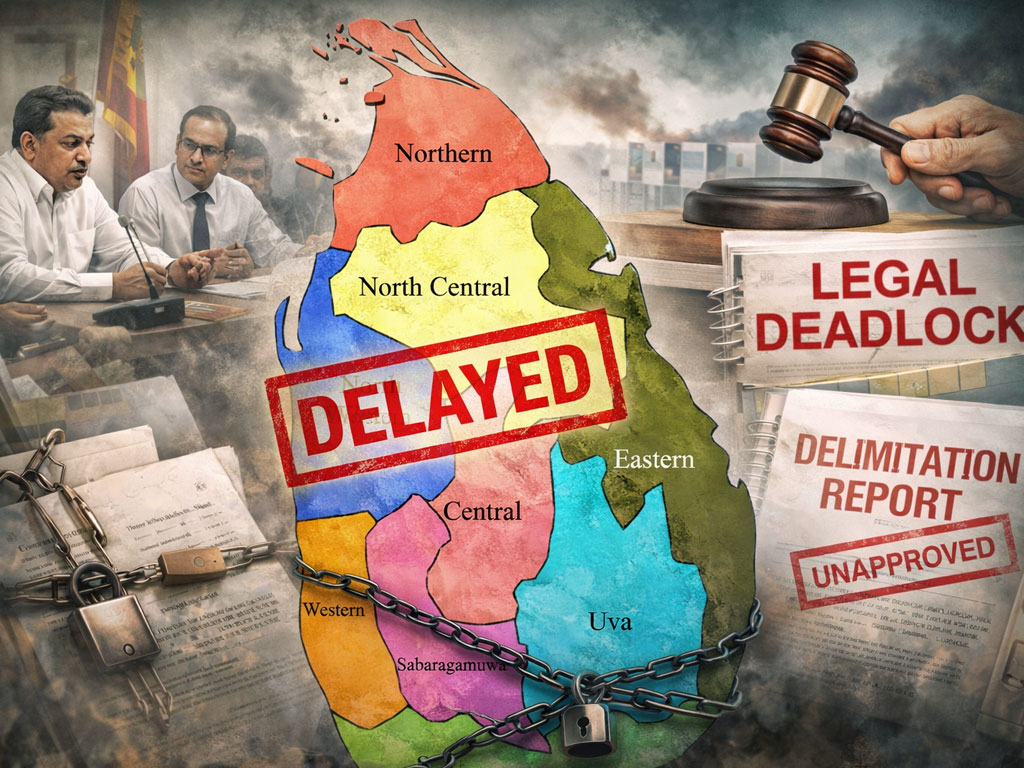
During the meeting, officials from the Elections Secretariat highlighted critical challenges linked to the implementation of the mixed proportional representation electoral system. They pointed out that the delimitation of constituencies, a key requirement for conducting elections under the new system, remains incomplete, creating multiple legal complications that prevent the election process from moving forward.
Further complicating matters is the delay in approving the delimitation report. As per the relevant legal framework, a five-member review committee chaired by the Prime Minister is required to submit its recommendations to the President within a two-month period. However, this report has yet to be submitted, adding to the administrative and legal uncertainty surrounding the Provincial Council elections.
Given these unresolved issues, officials expressed the view that the current legal environment does not support the immediate conduct of elections. The absence of approved reports and the lack of clear legal provisions have effectively stalled the entire electoral process, leaving the future of Provincial Council governance in limbo.
The meeting, which brought together representatives from the Attorney General’s Department and the Elections Secretariat, focused on identifying a viable path forward. The primary objective was to determine the most appropriate legal and procedural framework required to conduct the elections and to prepare recommendations that could help break the ongoing deadlock.