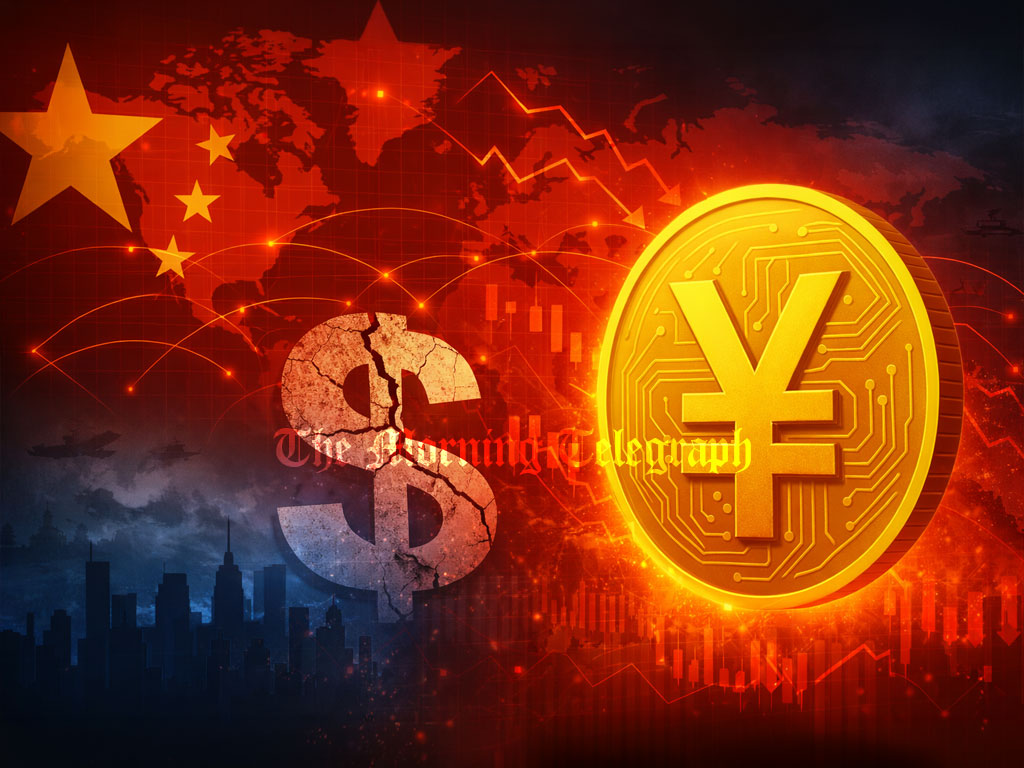
A deepening global debt crisis driven by war, rising defense spending, and geopolitical instability is reshaping financial power, with the US dollar under pressure as alternative currencies and digital assets gain ground.
The world is increasingly being pushed into a dangerous debt trap as war, geopolitical tensions, and economic instability begin to redefine global financial power.
According to a recent Reuters economic analysis, the growing burden of government debt fueled by military conflicts and international unrest is set to become a decisive factor in determining the strength of global superpowers in the years ahead.

Historically, after the Napoleonic Wars, Britain managed to reduce its debt levels and build a strong financial base, allowing it to navigate future challenges effectively. In contrast, today’s geopolitical environment, marked by tensions between the United States and China and conflicts involving Ukraine and Iran, is unfolding at a time when global government debt has reached unprecedented levels.
As nations respond to rising global threats, many have significantly increased defense spending while attempting to reduce economic dependence on neighboring countries. This shift has led to a sharp rise in debt relative to gross domestic product GDP, creating a serious obstacle for countries trying to maintain or expand their global influence.
The United States alone is planning to raise its defense budget by between 500 billion and 1.5 trillion dollars next year. Meanwhile, European NATO members are targeting defense spending levels of up to 5 percent of GDP by 2035. Over the past five years, interest rates on US government bonds have surged, tripling to approximately 4.3 percent, further intensifying the cost of borrowing.
Major economies including the United States, China, France, Britain, and Japan are now carrying government debt levels that exceed their annual economic output. Russia continues to draw down its national wealth funds to sustain its war in Ukraine, while Arab nations are increasing defense expenditure in response to regional threats linked to Iran.
At the same time, structural economic pressures are mounting. Countries like China and Japan are grappling with aging populations and rising pension obligations, while the United States faces declining economic momentum due to tighter immigration policies and policy uncertainty affecting workforce growth and productivity.
Some analysts suggest that countries with more centralized or strong government systems, such as China and Russia, may hold an advantage in managing debt and taxation. In the ongoing economic rivalry between the United States and China, current indicators suggest that China may be slightly ahead in managing its debt dynamics.
The report also warns that the long standing dominance of the US dollar could come under increasing pressure. The gradual rise of alternative currencies such as the euro and yuan, along with the rapid growth of cryptocurrencies, could accelerate a shift in the global financial system and intensify the unfolding debt crisis.