
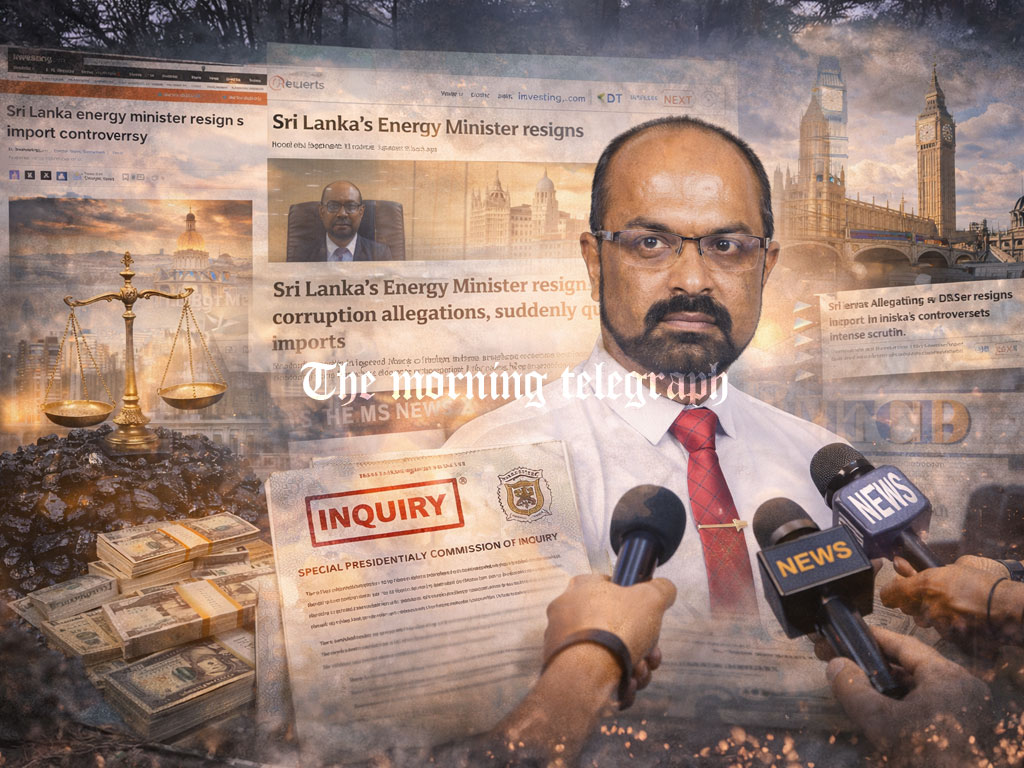
Sri Lanka’s coal scandal spills into the international spotlight as mounting pressure forces a ministerial resignation, raising serious questions about governance, accountability, and anti-corruption promises.
Sri Lanka’s Energy Minister Kumara Jayakody has stepped down from his position amid serious corruption allegations, marking a significant escalation in the country’s ongoing political and energy sector crisis.
International media outlets have highlighted that the resignation, which took place on Friday, April 17, 2026, came under intense internal pressure within the government, despite earlier attempts to politically shield the minister.

Although the administration successfully defeated a no-confidence motion against Jayakody in Parliament, global coverage began to question the government’s commitment to its anti-corruption pledges and its moral responsibility to uphold transparency.
The resignation follows the appointment of a Special Presidential Commission by President Anura Kumara Dissanayake to investigate alleged irregularities in coal imports linked to the Lanka Coal Company.
According to an official statement from the Presidential Secretariat, both the minister and the ministry secretary resigned from their posts to enable a fair and independent investigation by the Special Presidential Commission of Inquiry.
The commission has been tasked with examining alleged corruption, procurement irregularities, and possible illegal activities associated with coal imports and electricity generation processes in Sri Lanka.
Further complicating the situation, the Bribery or Corruption Commission has already filed legal action against Jayakody, accusing him of causing a financial loss exceeding Rs. 8.8 million to the state by improperly benefiting a private entity during his tenure at the Lanka Fertilizer Company in 2016.
Foreign reports also indicate that the minister was granted bail by the Colombo High Court in late March in connection with this case, adding to the growing scrutiny surrounding his political and legal standing.
The National People’s Power government, which campaigned strongly on an anti-corruption platform, has come under increasing criticism from opposition parties and civil society groups for initially defending the minister despite the allegations.
A no-confidence motion was brought against Jayakody in Parliament last week, but the government managed to defeat it using its two-thirds majority, further intensifying public debate on political accountability.
However, continued pressure from both local and international media, along with rising public dissatisfaction, appears to have ultimately forced the minister’s resignation in an effort to preserve the government’s credibility and international image.

Get rid of the corrupt bureaucrats who are cemented on their positions. Ministers come and go, they go on forever. Applying their skill and knowledge.