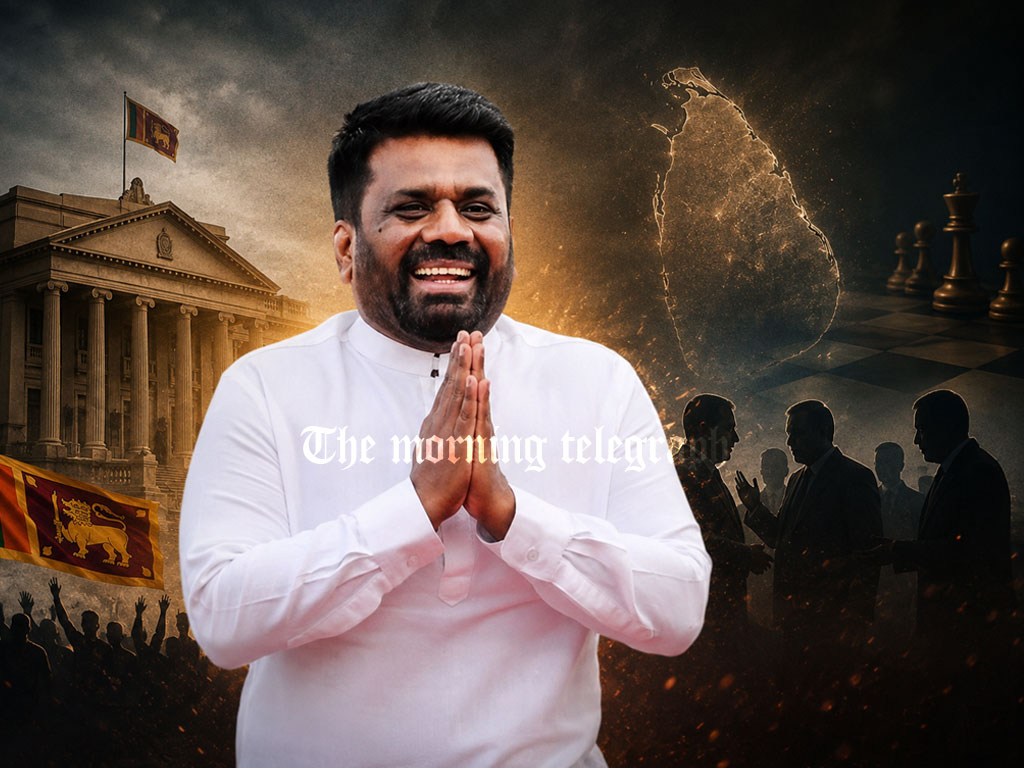
Anura Kumara Dissanayake faces criticism over inviting opposition MPs after campaigning against defections and promising principled politics.
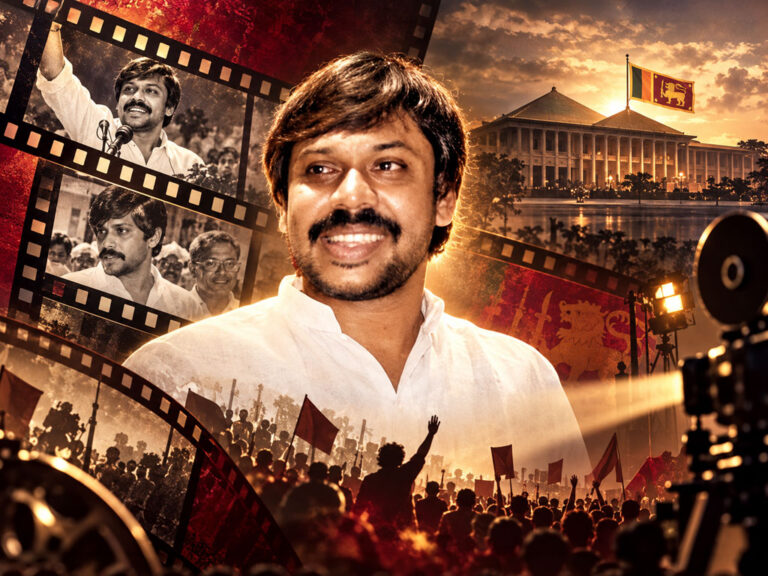
Anura Kumara Dissanayake’s government is facing sharp criticism over its reported moves to invite opposition MPs into its ranks, despite his strong campaign promise to end party-switching politics.
During the presidential election campaign on August 10, 2024, Dissanayake strongly condemned political defections, describing the practice as farcical, ugly, and destructive to the country’s future.
“Breaking news is constant these days. What is this breaking news? Some MPs support him. This minister supports him. But these are the same people who supported others before. G.L. Peiris stood with Chandrika for a while. Then, in 2011, he stood with Ranil Wickremesinghe. After that, he stood with Mahinda Rajapaksa. Then with Gotabaya Rajapaksa. Now he stands with Sajith Premadasa. You people are changing governments; they are changing sides. How is this happening? Do we want such farcical politics? Will such ugly politics build our country?” he asked at the time.

He said many people had knocked on the door of the National People’s Power before joining other political camps.
“What did we do when they knocked on our door? We opened the door as usual. We even greeted them. We looked at them carefully. When we did, we saw the same old politics. We said, ‘Thank you very much, but you cannot enter our house,’” Dissanayake said.
He added that there had been pressure around the NPP, but insisted that the country needed principled politics.
“Some people jump for money. Some stay for money. They strangely say that our party is like a saloon door. These are not political parties; they are dens of swindlers. People come in and go out freely. This culture of party-switching politics must end,” he said.
Dissanayake further pledged that once the National People’s Power came to power, laws would be introduced to abolish the parliamentary seats of MPs who switch parties.
He said the country needed a political movement that rejected defections in order to end the culture of party-switching.
Those words now sit uncomfortably against the current political situation.
Dissanayake became President promising to end the culture of political crossovers and build a new political culture. During the 2024 general election, the National People’s Power campaigned under the slogan of uprooting weeds and planting flowers through a national Shramadanaya.
Nearly 6.8 million people supported that vision.
At the time, Dissanayake declared that the opposition had been destroyed. Yet today, he is reportedly inviting MPs from that same “ruined opposition” to cross over and join the government in the name of building the country.
When Chandrika Kumaratunga came to power in 1994, she faced a similar situation.
She governed with only a narrow parliamentary majority. The crucial extra vote came from MP Chandrasekara of the Kandurata Janatha Peramuna.
Kumaratunga knew that if Chandrasekara withdrew support, the government would collapse. She also depended on the support of Ashraf’s Muslim Congress. If Ashraf withdrew support, the government would fall.
Therefore, in 1999, she invited 10 UNP MPs from the opposition to join the government and stabilise it.
When Mahinda Rajapaksa became President in 2005, he also lacked a stable parliamentary majority. Half of the ruling coalition consisted of JVP MPs.
Rajapaksa knew that if the JVP withdrew support, his government would collapse. As a result, he brought 17 UNP MPs from the opposition into the government to stabilise it.
Similarly, when Gotabaya Rajapaksa became President in 2019, he needed a two-thirds majority and encouraged defections from the Samagi Jana Balawegaya to secure it.
But Dissanayake does not face such a crisis.
After the introduction of the proportional representation system, this is the first time the people have given a government such a decisive two-thirds majority.
That mandate was given specifically to end party-switching politics and allow the government to make decisions independently, without depending on MPs from other parties.
So why, despite holding a two-thirds majority, is Dissanayake now seeking opposition MPs?
The move suggests that the government itself may have admitted its own incompetence. It also suggests that the government recognises that the Samagi Jana Balawegaya has capable individuals who can govern.
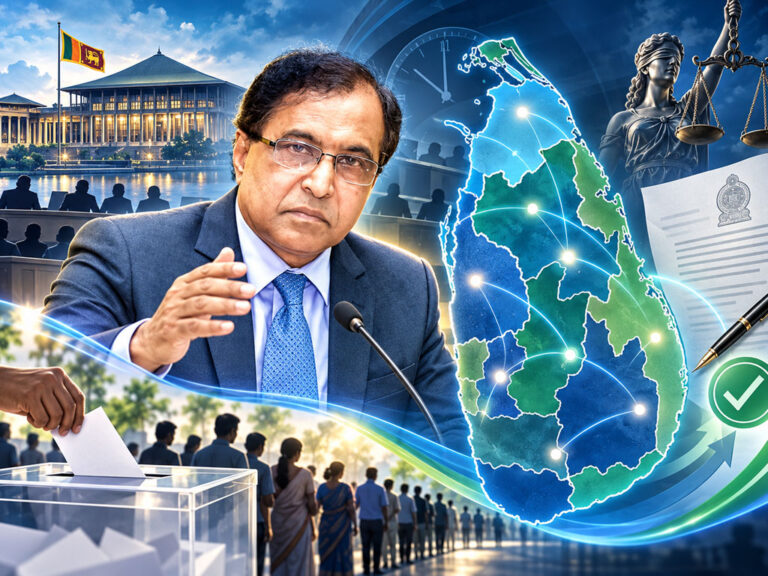
During the 2024 presidential election, Sajith Premadasa appointed an economic committee that included Harsha de Silva, Eran Wickramaratne, and Kabir Hashim.
In response, Dissanayake appointed an economic committee consisting of Professor Anil Jayantha, Professor Harshana Suriyapperuma, and Sunil Handunnetti.
When the NPP announced its economic committee, the SJB challenged them to a public debate on rebuilding the economy. The challenge was formally communicated in writing.
However, the NPP economic committee avoided participating in that debate.
People should have realised at that moment that Dissanayake’s economic team was not prepared to lead the country’s economy.
A similar warning sign appeared during Gotabaya Rajapaksa’s rise to power.
At the press conference where Mahinda Rajapaksa and Gotabaya Rajapaksa appeared together after Gotabaya was announced as the presidential candidate, a journalist asked Gotabaya a question about the economy.
Instead of answering, Gotabaya looked toward Mahinda, who answered on his behalf.
Sri Lankans should have understood then that Gotabaya could not manage an economy. But they did not realise it. Believing he could lead the country, 6.9 million people voted for him.
In the end, Gotabaya bankrupted the country and fled abroad. He eventually had to hand power to Ranil Wickremesinghe because the SLPP lacked the expertise to manage the economy.
Is the same thing now happening with Dissanayake?
That increasingly appears to be the case.
After coming to power, Dissanayake did not appoint the head of his previously announced economic committee as Finance Minister or Deputy Finance Minister.
Later, Harshana Suriyapperuma, a member of that committee, was appointed Deputy Finance Minister, only to be removed later and appointed Secretary to the Ministry of Finance.
Today, allegations are being raised regarding the disappearance of foreign loan records under his tenure as Finance Ministry Secretary.
Is this the fate of Dissanayake’s economic committee?
In reality, Dissanayake knew that Sajith Premadasa’s 2024 economic team was competent.
Yet he misled the public by claiming that Harsha, Eran, and Kabir had also been part of Ranil Wickremesinghe’s economic team from 2015 to 2019 and were therefore responsible for destroying the country.
“Eran was in Ranil Wickremesinghe’s economic committee. Harsha was there too. The same people who formed Ranil’s economic committee then are now part of Sajith’s economic committee. These are the people who destroyed the country,” Dissanayake said.
The very members of Sajith’s economic committee, once accused of destroying the country, are now being invited by Dissanayake to help run the government.
Dissanayake, who was elected on a promise to end political defections, is now openly inviting Samagi Jana Balawegaya MPs to cross over and “work for the country.”
But that was not the mandate given to him.
If the government cannot run the country, then it should hold a general election and return power to the people.
That is the view expressed by a former JVP member, saddened by a government now searching for “weeds” from the Samagi Jana Balawegaya to keep its broken vehicle of governance running.