By Roy Denish
A corruption case involving alleged misuse of public funds has taken a dramatic turn, with former political allies now facing mounting legal pressure. Investigators allege Rs. 7.8 million earmarked for tourism promotion was diverted to produce election campaign material, raising fresh questions about accountability, public trust, and the use of state resources for political gain.
The relationship dynamic between political figures and state officials often shifts under the weight of legal accountability, and a clear example of this is unfolding around the Sri Lanka Tourism Promotion Bureau financial misuse case.

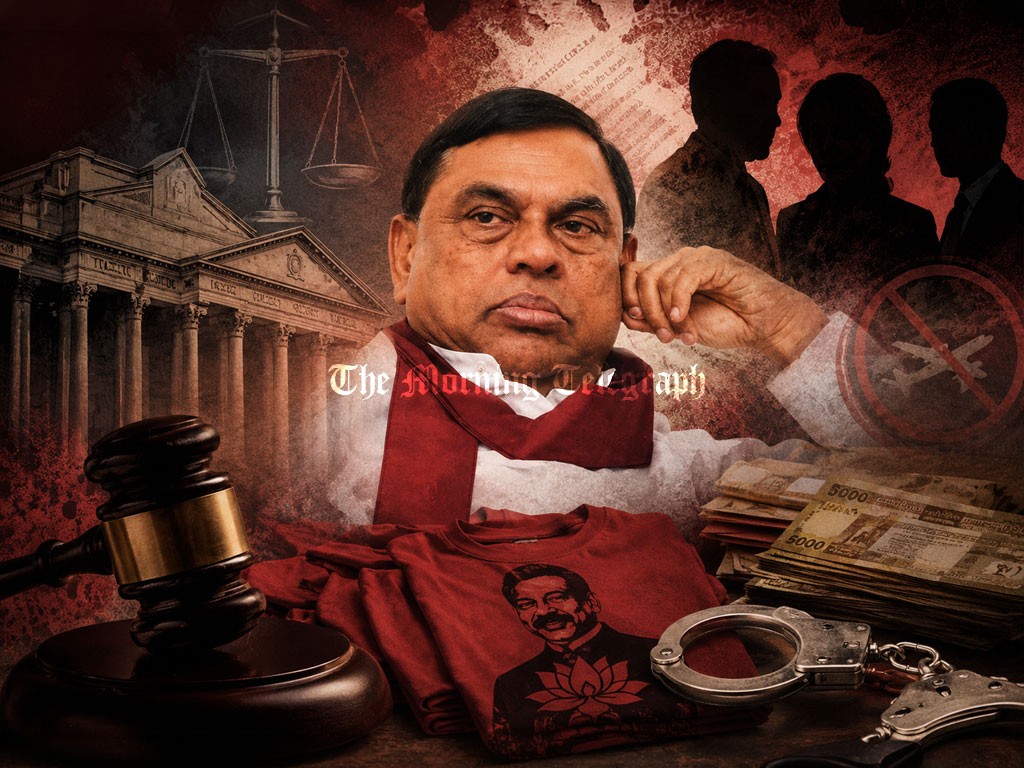
The Colombo Fort Magistrate Court recently issued an arrest warrant for former Minister Basil Rajapaksa alongside former Sri Lanka Tourism Promotion Bureau Chairman Bhashwara Gunaratne and former Managing Director Rumi Jauffer. The Criminal Investigation Department named these individuals under the Public Property Act following direct instructions from the Attorney General regarding the alleged misappropriation of 7.8 million rupees.
The core of the legal battle stems from the 2014 Uva Provincial Council election campaign. Investigators revealed that state funds earmarked for national tourism promotion were instead utilized to manufacture approximately 12,000 T-shirts. While the procurement was officially masked as a promotional drive for the tourism sector, the physical evidence presented to the court showed that the merchandise carried distinct political messaging, featuring the image of former President Mahinda Rajapaksa on one side and political party branding on the other, before being distributed at a campaign rally in the Monaragala District.
As the Criminal Investigation Department intensifies efforts to locate the suspects and enforces a strict foreign travel ban through the Controller General of Immigration and Emigration, the shared legal jeopardy is altering long-standing alignments. When state executives face severe statutory penalties under public property laws, the unified front between political strategists and bureaucratic appointees frequently fractures, transforming close institutional allies into legal adversaries as individuals seek to mitigate their own accountability before the courts.