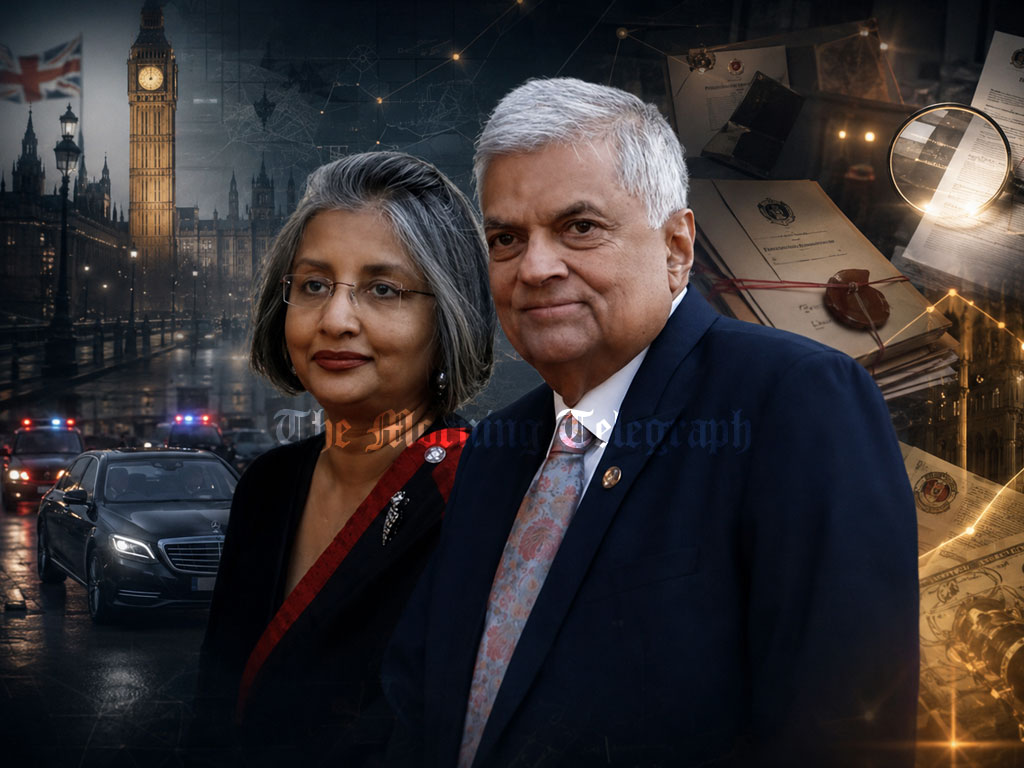
Ranil Wickremesinghe London vehicle bill controversy deepens as CID probes Rs. 16 million spending and public fund misuse claims.
Ranil Wickremesinghe London vehicle bill allegations have become a major political flashpoint after the Criminal Investigation Department began probing the Rs. 16 million expenditure linked to his visit to Britain.
The controversy surrounding the former President’s overseas visit has now turned into one of the most discussed issues in Sri Lanka’s political arena. At the centre of the debate is whether diplomatic traditions were followed properly, or whether public funds were misused during the visit.
Vehicle Payments And Diplomatic Facilities
The dispute focuses mainly on the money reportedly spent on vehicles used during the London visit.
According to reports, the British Government had already provided official vehicle facilities for the former President’s internal transportation during the visit.
The emerging question is why, despite those official vehicle facilities being made available by the British authorities, the Sri Lanka High Commission in London moved to pay Rs. 16 million to a private vehicle company.

Two Sides Of The Dispute
Those representing Ranil Wickremesinghe’s position argue that the Rs. 16 million figure may not reflect the actual final expenditure. They claim it may have been only an allocation made for the visit.
They also argue that since official expenditure records have not yet been made public, the allegation may be politically motivated and designed to damage the former President.
Investigative authorities, however, maintain that a formal audit is required to properly verify the difference between allocated funds and the bills that were actually paid.
CID Visit To London Draws Criticism
The decision to send a five-member CID team to London to gather evidence has created a separate wave of criticism.
Critics and Opposition voices say the overseas trip itself may be an unnecessary waste of state funds, especially if the same documents and evidence could have been obtained from Sri Lanka through official legal channels.
One option would have been to investigate from Sri Lanka using the Mutual Legal Assistance process, allowing evidence to be obtained through British authorities at a lower cost.
The alternative chosen by investigators was to send the CID team directly to London, creating additional travel and logistical expenses for five officials.
Why Was MLA Not Used?
Critics argue that Mutual Legal Assistance is the accepted method for obtaining evidence in international investigations and that the authorities should have relied on that route.
However, investigative officials argue that the seriousness of the case required a direct field investigation to ensure complete accuracy and proper verification.
Presidential Privileges And Public Spending
At the time of the visit, Wickremesinghe was serving as the Executive President of Sri Lanka.
During an official foreign visit by a head of state, costs linked to security personnel, medical staff, personal secretaries and official delegations are normally borne by the Government as part of standard international practice.
This is the main argument being advanced by Wickremesinghe’s side. They say it is politically unfair to portray the full cost of an official state visit as a personal responsibility of the former President.
The CID’s position is that it has a duty to investigate whether public funds were misused and whether transparency was maintained.
The former President’s side argues that traditional privileges applied because the visit was official, and that the figures have been politically distorted.
The dispute now sits at the intersection of presidential privilege, diplomatic practice and public financial accountability. Until an official audit report or court ruling is produced, the Rs. 16 million London vehicle bill is likely to remain a heated issue in Sri Lankan politics.