By Roy Denish.
Modara Fisheries Harbour case exposes a 2014 lease scandal, hidden ownership questions, and delayed accountability in Sri Lanka.
More than twelve years later, the Modara Fisheries Harbour case still carries the smell of corruption in Sri Lanka.
The dispute centres on a controversial 2014 leasing agreement involving a valuable state asset in Colombo 15. It shows how a historic fishing hub became contested state-owned maritime infrastructure.
Located where the Kelani River estuary meets the Indian Ocean, the harbour has long held strategic value. Before colonial rule, the area served regional traders and small-scale fishing communities. Under Portuguese and Dutch control, Modara and Mutuwal changed from semi-rural coastal villages into outer trading posts.
By the nineteenth century, British administration had helped shape a permanent Catholic fisherfolk community along the coast. These families used outrigger canoes, beach seine fishing, and other traditional methods to supply Colombo with fresh seafood.
Modara Fisheries Harbour and Its Historic Value
After independence, the state modernised the fishing industry. In 1964, it established the Ceylon Fisheries Corporation and selected Mutuwal as a key commercial anchor because of its access to central markets and shipping routes.
In 1972, the government created the Ceylon Fishery Harbours Corporation as a specialised apex body. This brought the Mutuwal harbour under its management. Over time, the facility expanded into nearly twenty acres of high-value waterfront land.
That infrastructure included cold storage, anchorages, berthing space, and support facilities for multi-day fishing boats and larger mechanised trawlers. As a result, the harbour became a crucial base for Sri Lanka’s offshore fishing fleet.
The site supports multi-day vessels ranging from 28 to 60 feet in length. These boats stay at sea for 9 to 30 days. They target high-value deep-sea pelagic species, including tuna, yellowfin, skipjack, billfish, and sharks.
It also provides industrial services, including deep-water berthing, large-scale ice production, fuel bunkering, freshwater loading, and dedicated cold storage.

A Working Harbour With Hundreds Dependent On It
Although numbers change with the season and fish migrations, the harbour supports hundreds of fisherfolk and crew members. Many rely directly on Mutuwal harbour for daily work and income.
The active fleet includes multi-day deep-sea boats, single-day mechanised trawlers, and traditional outrigger canoes. Scientific landing surveys show fishermen mainly use three methods.
Drift gill nets account for the largest share of the catch. Trawling nets and selective hook-and-line fishing also remain important to deep-sea and coastal operations.
However, by the start of the twenty-first century, the harbour faced serious environmental and political pressure. In 2021, the MV X-Press Pearl disaster worsened the crisis. The container ship released chemicals and microplastics into waters off the Modara coast.
That contamination hit fish stocks and damaged the livelihoods of a historic community. Yet the harbour’s strategic value had already made it vulnerable to institutional exploitation years earlier.
The 2014 leasing scandal now sits at the centre of that concern. The Modara Fisheries Harbour case has become more than a legal dispute. It has become a test of whether public assets can be protected from political influence.
2014 Lease Deal Draws Criminal Indictments
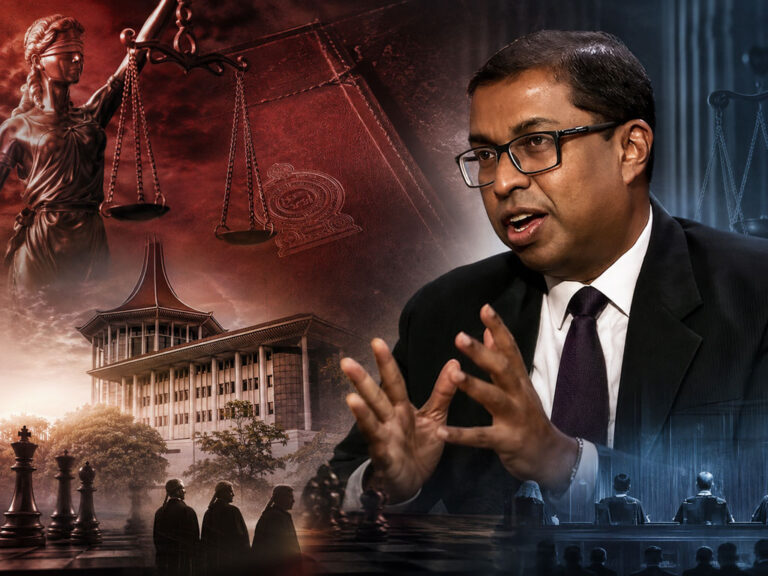
The Commission to Investigate Allegations of Bribery or Corruption filed criminal indictments in the Colombo High Court against Dr. Rajitha Senaratne. He served as Fisheries Minister under the Mahinda Rajapaksa administration.
The Bribery Commission also indicted Upali Liyanage, former chairman of the Ceylon Fishery Harbours Corporation, and Neil Ravindra Munasinghe, the corporation’s former managing director.
According to state prosecutors, Senaratne used his ministerial influence between August 1 and November 1, 2014. They allege he motivated and persuaded the corporation’s board of directors to lease the Modara Fisheries Harbour to Sea Gulf UK Private Limited.
Despite the international suggestion in its name, investigative reports and court briefs stated that Sea Gulf UK was registered locally as a private proprietary company in Sri Lanka.
The public court indictments and state investigative files have not disclosed the specific identities, names, or professional backgrounds of the company’s internal board directors or ultimate beneficial owners.
Because Sea Gulf UK operated as a locally registered private proprietary company, and not as a publicly traded corporation, its shareholder records and leadership structure stayed beyond general public view during the long-running judicial process.
Prosecutors described the firm as a paper-thin corporate shell with no established maritime expertise. They alleged politically connected individuals used it as a proxy, while the identities of its board directors and ultimate beneficial owners remained hidden from public registry files.
State Asset Leased For Rs.125,000 A Month
Under the 2014 terms, roughly twenty acres of valuable capital-city waterfront infrastructure went to the private firm for just 125,000 Sri Lankan rupees a month.
Authorities later recognised the scale of the financial loss to the state and moved to raise the monthly lease rental to 450,000 Sri Lankan rupees. However, prosecutors argue that the original underpriced rental exposed the real purpose of the deal.
They allege the low rate aimed to grant an unlawful financial advantage to the private company at the expense of the state. The prosecution also argues that the process bypassed mandatory public tendering and official valuation protocols.
The Bribery Commission filed five distinct counts against Senaratne, Liyanage, and Munasinghe under Section 70 of the Bribery Act. It also invoked Sections 113 and 102 of the Penal Code for conspiracy and abetment.
All three defendants have maintained their innocence throughout the proceedings. But twelve years after the lease, the case still hangs over the Modara waterfront as a warning about public assets, hidden interests, and the slow grind of accountability.
#ModaraFisheriesHarbour #SriLankaNews #SriLankaPolitics #BriberyCommission #RajithaSenaratne #SeaGulfUK #MutuwalHarbour #PublicAssets #CorruptionCase #ColomboHighCourt #TheMorningTelegraph