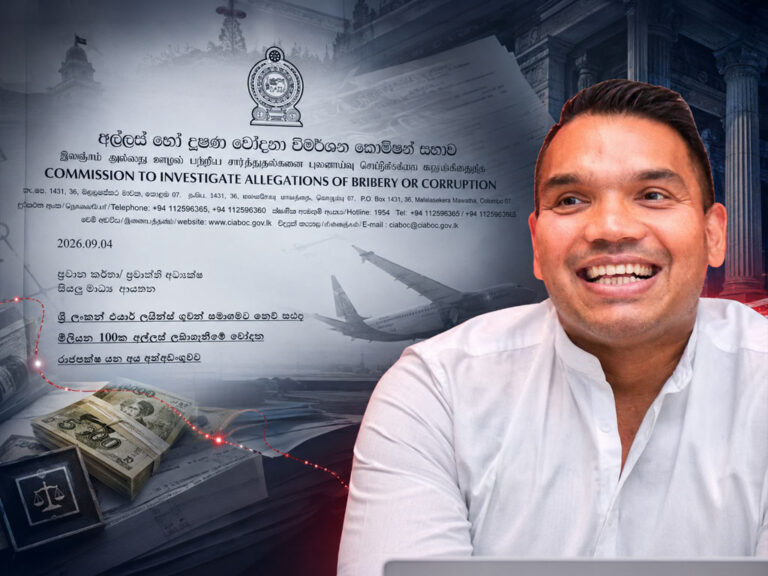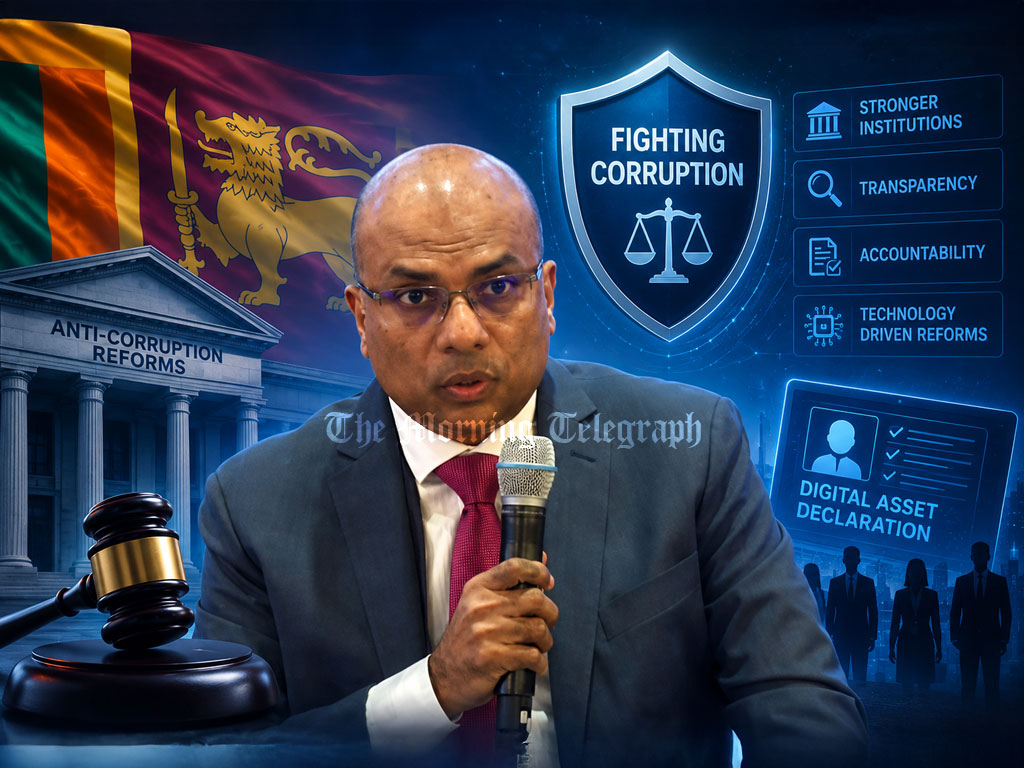
Sri Lanka anti-corruption reforms enter full implementation with special High Courts, digital asset declarations and institutional changes.
Sri Lanka anti-corruption efforts have moved beyond policy reforms and entered a full implementation phase, with major institutional, legal and technological changes now underway.
Ranga Dissanayake, Director General of the Commission to Investigate Allegations of Bribery or Corruption, said the country is now focused on turning anti-corruption reforms into practical action.
Addressing the International Anti-Corruption Conference in South Korea, Dissanayake said Sri Lanka’s programme has focused heavily on implementation since early 2025. He said this approach reflects a clear public mandate for practical results.
Authorities are also taking steps to strengthen investigative operations and improve case management systems. The aim is to achieve faster and more effective outcomes in corruption cases.
As a major step, Sri Lanka has established three special High Courts. These courts will prioritise anti-corruption cases and speed up hearings without unnecessary delays.

Sri Lanka Anti-Corruption Reforms Expand
The Commission to Investigate Allegations of Bribery or Corruption is also undergoing restructuring to improve its operational performance.
The reforms include strengthening staff capacity and streamlining services. The Commission is also decentralising operations to make its services more accessible to the public.
Meanwhile, Sri Lanka introduced an electronic asset declaration system this year. Authorities expect the system to strengthen transparency, efficiency, accountability and oversight across the public sector.
Dissanayake said the “National Anti-Corruption Action Plan 2025-2029” and the Commission’s “Strategic Action Plan” provide a comprehensive roadmap for the country’s campaign.
The plans cover corruption prevention, law enforcement, public awareness and institutional coordination.
He also highlighted growing cooperation between the Bribery Commission and South Korea’s Anti-Corruption and Civil Rights Commission (ACRC). According to Dissanayake, the partnership has steadily moved towards practical implementation.
One key result is the development of a “methodology for evaluating anti-corruption initiatives.” South Korea and the United Nations Development Programme supported the development of the methodology.
The system draws on South Korea’s state integrity assessment model. However, authorities have adapted the methodology to suit Sri Lanka’s legal and administrative framework.
Dissanayake said corruption remains a global challenge. However, he stressed that countries can achieve meaningful progress through continuous and practical cooperation focused on implementation.
The latest measures signal a shift from planning reforms to putting them into operation. Sri Lanka’s anti-corruption programme now centres on faster investigations, stronger institutions, improved public access and technology-driven transparency.