By Roy Denish.
Sri Lankan aircrew rescue saves 14 wounded personnel after a UN helicopter mission in a fierce Central African Republic combat zone.
The Sri Lankan aircrew rescue in the Central African Republic has drawn global praise after a Mil Mi-17 crew pulled 14 critically wounded people from a fierce combat zone.
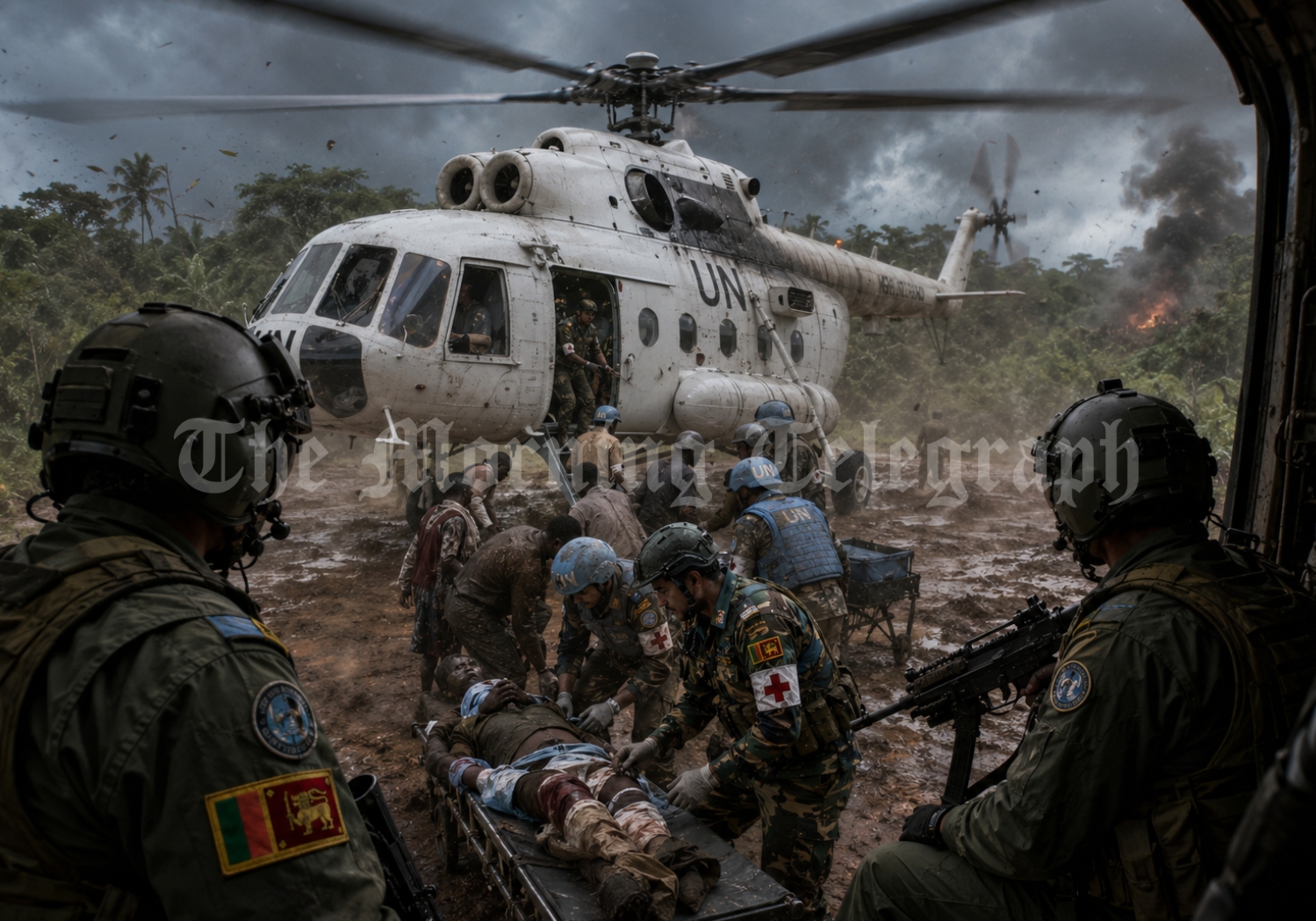
Operating under the United Nations call sign UNO 325P, the Sri Lankan crew carried out the emergency medical evacuation on June 30 after an unidentified armed group ambushed a Zambian peacekeeping battalion in the remote Am Dafok region. The wounded included Zambian soldiers, local civilians, and Central African security forces.

UN Peacekeeping Force commanders said the mission marked a historic first for UN deployment. They confirmed that no previous UN peacekeeping aviation operation had extracted such a large number of battlefield casualties at the same time using a single aircraft during an active emergency.
Sri Lankan aircrew rescue makes UN history
The rescue mission first hung in doubt after a Pakistan Air Force helicopter unit tried to reach the area but turned back because of blinding weather and the danger of the active firefight. With casualties bleeding out, the Force Commander handed the critical mission to Group Captain Asiri Pathirage and his crew.
Pathirage and his team prepared for takeoff from Bria Airport without hesitation. Instead of waiting for standard tactical troop escorts, they chose to fly straight into the storm and toward the combat zone.
At 07:30 AM, the twin Klimov turbines of the stark white Mi-17 whined to life. Its fuselage carried the bold black lettering of the United Nations. In the cockpit, Pathirage and co-pilot Flight Lieutenant Dilhash Athapaththu pulled down their heavy flight helmets and clicked their integrated Head-Up Display visors into position.
The glass visors flickered awake, casting green telemetry across their field of vision. Those HUDs helped the pilots fly low over the jungle canopy through a thick grey wall of weather, without constantly looking down at the instrument panel.
Crew flew into fire without escort
Inside the belly of the aircraft, air gunners Flight Sergeant Manoj, Corporal Wijetunga, and Leading Aircraftman Abeysinghe braced themselves at the open cabin doors. Their hands gripped the spades of 7.62mm PKM machine guns, ready to fire if a muzzle flash appeared from the bush below.
After a punishing two-hour and ten-minute flight, UNO 325P flared over the blood-soaked landing zone. Pathirage kept the engines screaming at full combat RPM, keeping the aircraft ready for an immediate escape if the ground threat worsened.
While the gunners watched the tree lines for an RPG strike, the aeromedical team moved into the smoke. Flight Lieutenant Yadeesha Ratnasiri, Warrant Officer Sumathipala, and Flight Sergeant Ruwankumara rushed forward to recover the wounded.
Fourteen battered bodies crossed the threshold of the helicopter. Blood quickly slicked the Kevlar-armored floorboards. As the Mi-17 clawed back into the turbulent sky, the medical team fought inside the cramped, moving cabin to stabilize the survivors.
The extraordinary Sri Lankan aircrew rescue has received the highest commendation from the UN Peacekeeping Force Commander. The mission has also strengthened the international credibility and reputation of the Sri Lankan Armed Forces. All 14 rescuees are now listed in stable condition.