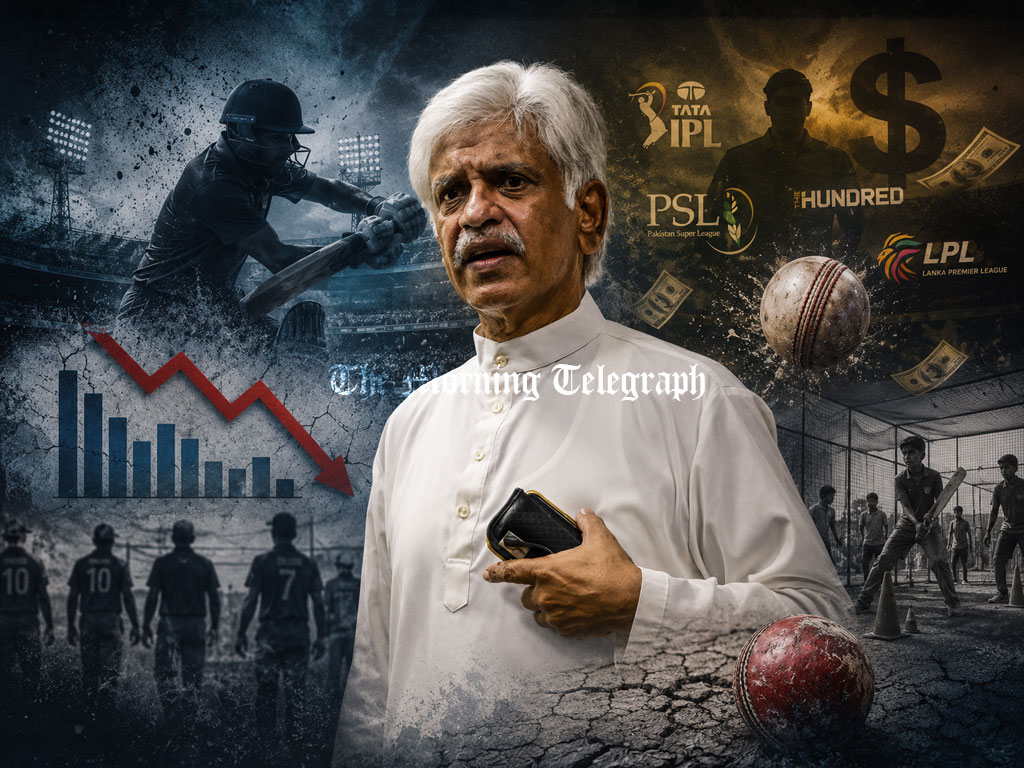
T20 cricket skills are declining across South Asia, Arjuna Ranatunga warns, as power-hitting and franchise leagues reshape the game.
Former World Cup-winning captain Arjuna Ranatunga has warned that T20 cricket skills and natural talent are being damaged across the region, including in India, Pakistan and Sri Lanka.
His comments come ahead of the Indo-Sri Lanka Test series scheduled to begin in August. Ranatunga offered direct views on modern cricket and those he believes are responsible for its direction.

“T20 cricket has, in many ways, destroyed the natural talents and skills of players across the entire region, including in every country such as India, Pakistan, and Sri Lanka,” Ranatunga said.
“Today, everything is determined by fast and powerful hitting, because that’s what the spectators want.”
He argued that the current generation lacks the technique needed to survive at the crease in red-ball cricket. As a result, Ranatunga said the game no longer produces batters of the calibre of Sunil Gavaskar, Gundappa Viswanath, Sachin Tendulkar or Mohammad Azharuddin.
He also questioned whether today’s stars would guide younger players in the same way previous generations supported them.
Ranatunga said the franchise era had changed player commitment. In the past, he said, players represented their countries even with broken fingers. Today, he argued, some play through pain for club contracts but withdraw from national duty over minor injuries.
Despite praising the current Sri Lankan team as more talented than his 1996 side, Ranatunga identified one major exception.
“No one can even come close to Aravinda [de Silva]. He is the greatest talent Sri Lanka has ever produced.”
Discussing the current Indian team without Virat Kohli and Rohit Sharma, Ranatunga remained characteristically blunt. He said he believed his former bowling attack could dismiss both players twice.
However, when asked about young player Vaibhav Suryavanshi, Ranatunga took a protective approach rather than a critical one.
“Above all, let him be a child. He is still a small boy.”