
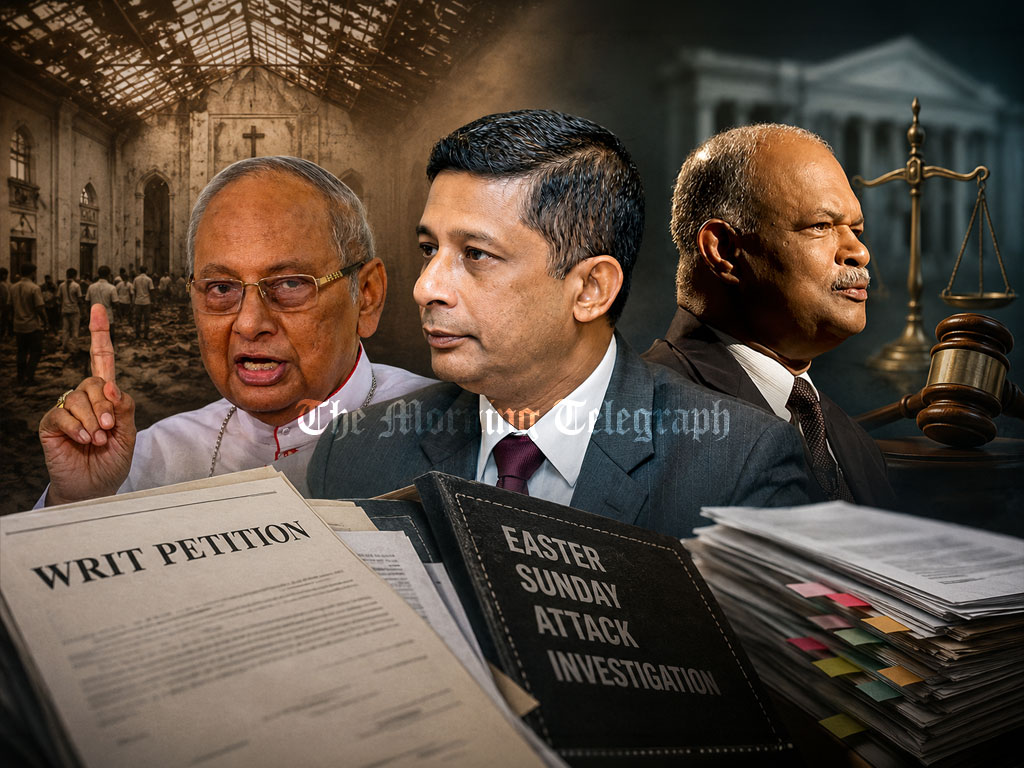
Suresh Sallay writ petition returns on July 10 amid claims over CID failures, sworn testimony and alleged hidden agendas.
The Suresh Sallay writ petition is set for further hearing on July 10, as debate grows over justice, evidence and alleged hidden agendas.
The Writ Application was filed on behalf of retired Major General Suresh Sallay, who is currently hospitalized and receiving treatment. The case has now moved beyond legal circles. It has also become a major political and social discussion.
Ahead of the next hearing, the legal process has gained more attention. Legal and media critics argue that the matter now reflects a deeper conflict between truth and alleged concealed motives.

600 Pages Filed in Suresh Sallay Writ Petition
The lawyer representing Major General Sallay has submitted more than 600 pages of additional documents to court in support of the Writ Petition.
These documents include sworn statements and documentary evidence presented by investigators and key witnesses before the Presidential Commission of Inquiry that examined the Easter Sunday attack. Justice Janak de Silva chaired that Commission.
According to the petitioner, the material gives a detailed account of the background to the Easter Sunday attack. It also covers the investigations that took place before the incident.
The petitioner argues that the most important part of the evidence concerns senior Criminal Investigation Department officers during the relevant period. The documents allegedly highlight serious investigative failures and dereliction of duty.
Furthermore, the petitioner says the evidence sheds light on those alleged to be truly responsible for the attack.
Sworn Testimony and Changing Public Statements
A notable part of the additional documents includes sworn testimony given before the Commission by His Eminence Cardinal Malcolm Ranjith.
In that testimony, His Eminence strongly emphasized the need for fully independent investigations into the Easter Sunday attack. He also stressed that such investigations must remain free from political interference.
However, the petitioner argues that this principle of independence has not been upheld under current circumstances.
This raises a key issue that now demands scrutiny. It concerns the alleged contradiction between statements made by certain parties over time and sworn testimony given under oath.
Sworn testimony before the law cannot be avoided or altered. Therefore, the petitioner argues that narratives built before the media and on social platforms create serious contradictions when compared with evidence given before the Presidential Commission.
Is Easter Being Used for Personal Vendettas?
The Suresh Sallay writ petition has raised a serious question before society.
When reviewing the extensive evidence submitted by Major General Sallay’s side, the petitioner argues that the real perpetrators and alleged lapses by senior CID officers have been overshadowed.
Therefore, the central question remains: what is truly happening through the actions of certain parties, including Cardinal Ranjith?
Is this a genuine pursuit of justice? Or is the Easter attack, a tragedy that shocked the entire nation, being used as a tool to settle personal vendettas?
The petitioner also asks whether the law is being abused to target a specific individual. The written evidence and sworn statements are expected to help reveal the answer.
Intervenient Petitions Show Public Interest
The complexity of the case and the alleged hidden motives have created wider public discussion.
After the additional documents were filed, several parties sought permission from court to intervene in the Writ Petition.
The intervenient petitioners include Ven. Dimbulagala Rahulalankara Thero of Dimbulagala Maha Vihara and Ven. Dapane Sumanawansa Thero of Gangodawila Sri Bodhimalu Vihara, Nugegoda.
The Global Sri Lanka Forum and the Patriotic National Front have also filed petitions.
Other intervenient petitioners include Ven. Bengamuwa Nalaka Thero of Sri Pradnyananda Dharmayatana, Kelaniya, Railway Station Road, and Ven. Angulugalle Siri Jinanda Thero of Isurupura Sri Vimalarama, Malabe.
The involvement of these civil and religious parties shows the level of public interest in the case. It also highlights the national importance of the questions now before court.
The Suresh Sallay writ petition is scheduled for further hearing on July 10. In addition to the issues raised in the main petition, court will also consider the intervenient petitions.
That day will not be only another court hearing. It may become a decisive point in the conflict between changing public statements and written sworn testimony.
The hearing could also help the country confront a sensitive question: whether the Easter attack has been turned into a platform for personal revenge and vendettas.


It’s interesting the FBI Report which was carried out with 33 Opratives who spent 75 days in SriLanka spending several hundred thousand dollars was rejected by this Government and the US Is yet to make any comment.