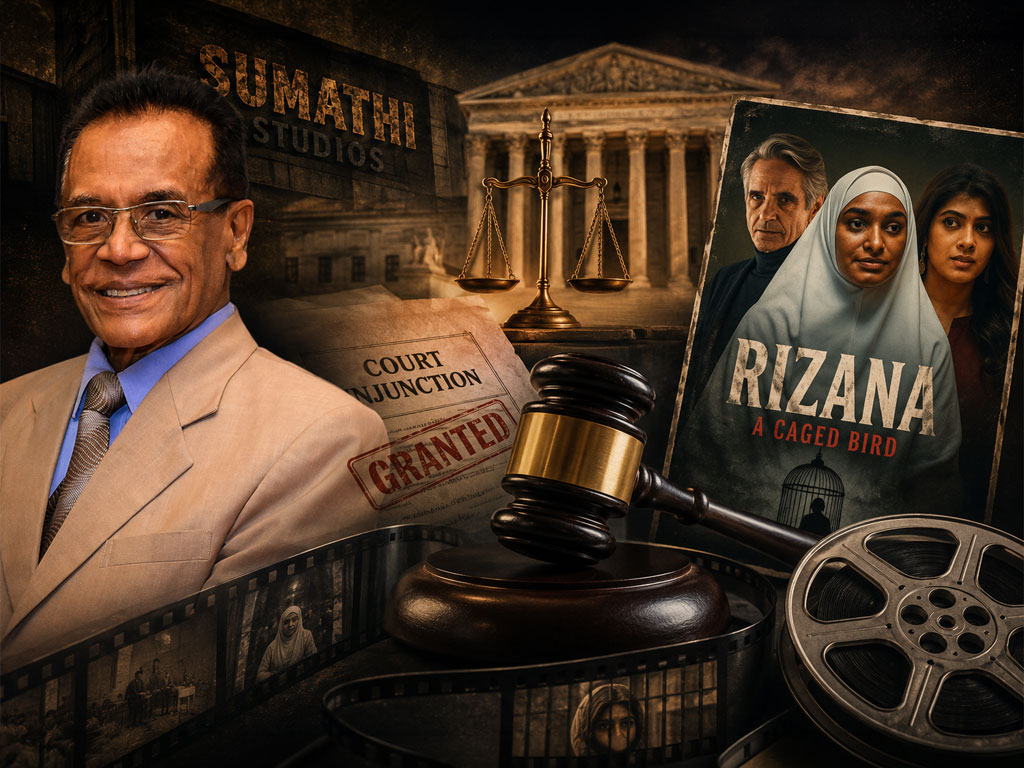
The Chandran Rutnam lawsuit has secured a court injunction protecting the filmmaker’s rights over Rizana and preventing unauthorized alterations.
The Chandran Rutnam lawsuit has become a landmark legal battle for Sri Lanka’s creative industry after the Colombo Commercial High Court issued an injunction protecting the veteran filmmaker’s rights over his film Rizana: A Caged Bird. The case has reignited debate over artistic ownership, copyright and the moral rights of creators when their work is allegedly altered without their consent.
Cinema is far more than a commercial enterprise. It is an art form that reflects a creator’s vision, values and social responsibility. The latest court ruling has once again highlighted how the law protects filmmakers when attempts are made to modify their work in ways that allegedly depart from its original purpose and artistic intent.

Court Dispute Over Rizana
Veteran filmmaker Chandran Rutnam conceived and directed Rizana: A Caged Bird, inspired by the true story of Rizana Nafeek, the Sri Lankan domestic worker who was executed in Saudi Arabia. Rutnam created the film with the stated objective of drawing international attention to the hardships and human rights challenges faced by migrant workers.
However, allegations have been made that Jagath Sumathipala and Sumathi Studios attempted to change the film’s title to Rihana, alter portions of its content and attribute authorship and production credits to other parties without Rutnam’s approval.
Those allegations prompted legal action before the Colombo Commercial High Court.
Court Protects Creator’s Rights
Colombo Commercial High Court Judge Amali Ranawcera granted an injunction preventing the exhibition, distribution or commercial use of the film without the plaintiff’s approval.
President’s Counsel Upul Jayasuriya argued that both copyright and a creator’s moral rights receive direct protection under Sri Lanka’s Intellectual Property Act.
The court order reinforces the legal principle that a production company or any third party cannot alter a creator’s original artistic vision or claim authorship without lawful authority.
The decision has therefore become an important reference point for intellectual property protection within Sri Lanka’s film industry.
Artistic Vision Versus Commercial Interests
Throughout his career, Chandran Rutnam has earned both local and international recognition through productions including A Common Man, According to Matthew and The Pilgrimage. His decision to bring Rizana Nafeek’s story to the screen reflected what supporters describe as a commitment to creative integrity and social responsibility.
The successful legal challenge against the alleged attempt to commercially alter the production is therefore viewed as a victory extending beyond a single filmmaker. Many within the creative sector see it as a broader affirmation that artistic expression deserves legal protection.
As commercial interests increasingly influence the entertainment industry, the ruling demonstrates that producers cannot simply override a creator’s original concept or moral rights for commercial purposes alone.
A Landmark for Sri Lankan Intellectual Property
The Colombo Commercial High Court’s injunction reaches beyond the future of one film.
Instead, it strengthens legal protections for Sri Lankan writers, filmmakers, artists and other creators who devote years of work, creativity and personal commitment to developing original content.
The ruling serves as an important reminder that meaningful artistic works can flourish only when creators retain control over their intellectual property, moral rights and creative independence.
For Sri Lanka’s creative community, the Chandran Rutnam lawsuit may ultimately become one of the country’s most significant recent judicial affirmations of artistic ownership and intellectual property rights.