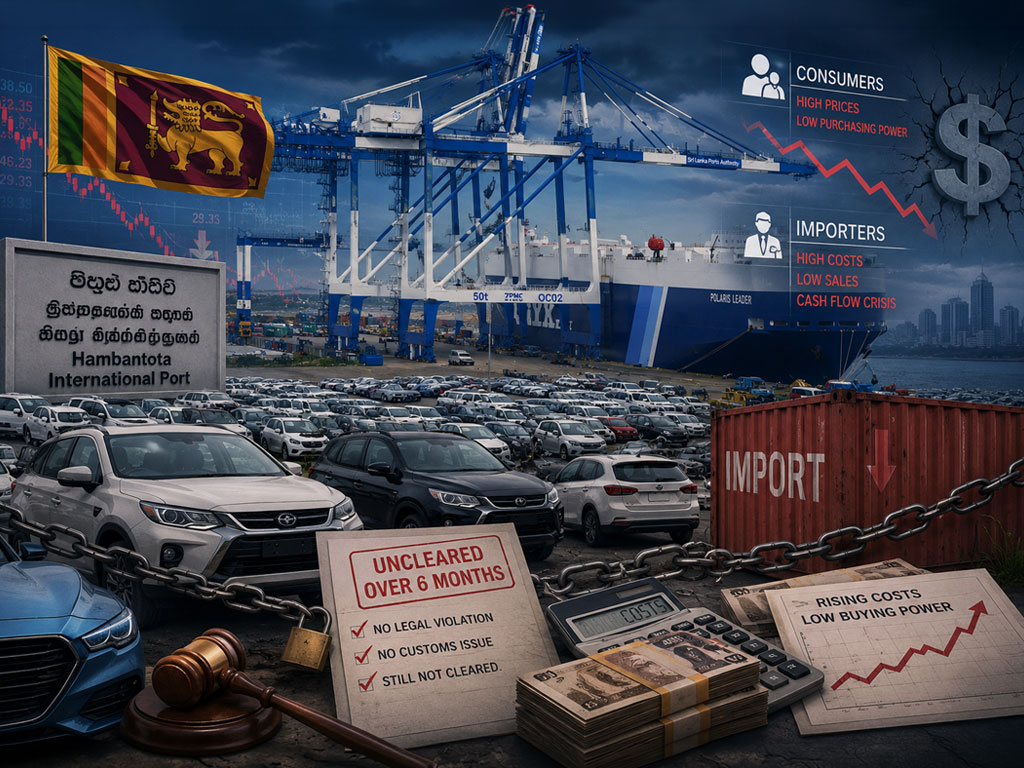
Sri Lanka vehicle market pressure grows as Customs prepares to auction 1,025 uncleared vehicles held at Hambantota Port.
The Sri Lanka vehicle market faces renewed pressure as Customs prepares to auction or sell 1,025 imported vehicles that remain uncleared at Hambantota Port.
This is more than an administrative delay. The growing stock of vehicles highlights the financial strain confronting importers and consumers across the country.
Customs Media Spokesman Chandana Punchihewa said 625 vehicles had remained at the port for more than six months after their arrival. He also clarified that Customs had not detained them over legal disputes or import violations.
Instead, their owners had failed to complete the required clearance procedures. Customs is consequently preparing to dispose of the vehicles through auctions or tenders under the relevant provisions of the Customs Ordinance.

Sri Lanka Vehicle Market Traps Buyers and Importers
At first glance, the backlog may appear to result from delays by individual importers. However, it also reflects the severe financial pressures shaping the wider market.
Consumers face extremely high vehicle prices. Import duties, taxes and other costs can push the final price far above a vehicle’s original value.
As a result, many prospective buyers cannot afford the vehicles now entering the country. Their purchasing power remains weak despite the easing of import restrictions.
Importers face the opposite side of the same crisis.
They must purchase vehicles overseas, transport them to Sri Lanka and then pay substantial duties before completing clearance.
However, weak demand makes it difficult to sell vehicles at prices high enough to recover those costs. Importers without sufficient sales or cash flow may therefore struggle to release their shipments.
Hundreds of vehicles have consequently remained at Hambantota Port for months. Some importers now risk losing their stock through Customs auctions before finding buyers.
Import Relaxation Alone May Not Solve the Crisis
The uncleared vehicles send a clear warning to policymakers and the market.
Relaxing import restrictions alone will not necessarily make vehicles affordable.
Without a fairer tax structure, better financing options or measures that reduce final prices, imported vehicles could remain beyond the reach of most consumers.
Meanwhile, importers may continue facing storage expenses, weak sales and the possibility of losing vehicles through compulsory disposal.
The Sri Lanka vehicle market could therefore become a financial trap for both sides. Consumers may see their vehicle ambitions pushed further away, while sellers face rising costs and threats to business survival.