An RTI corruption investigation appeal asks whether CIABOC can withhold basic updates on alleged civil aviation licensing irregularities.
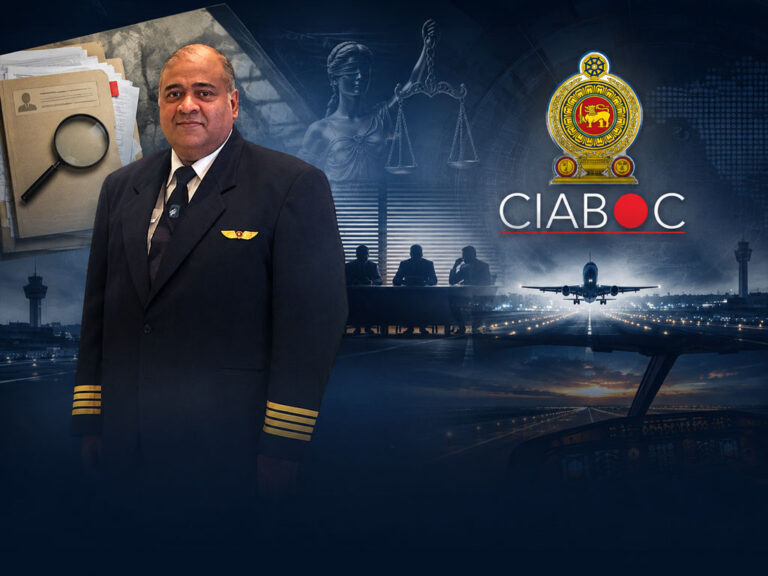
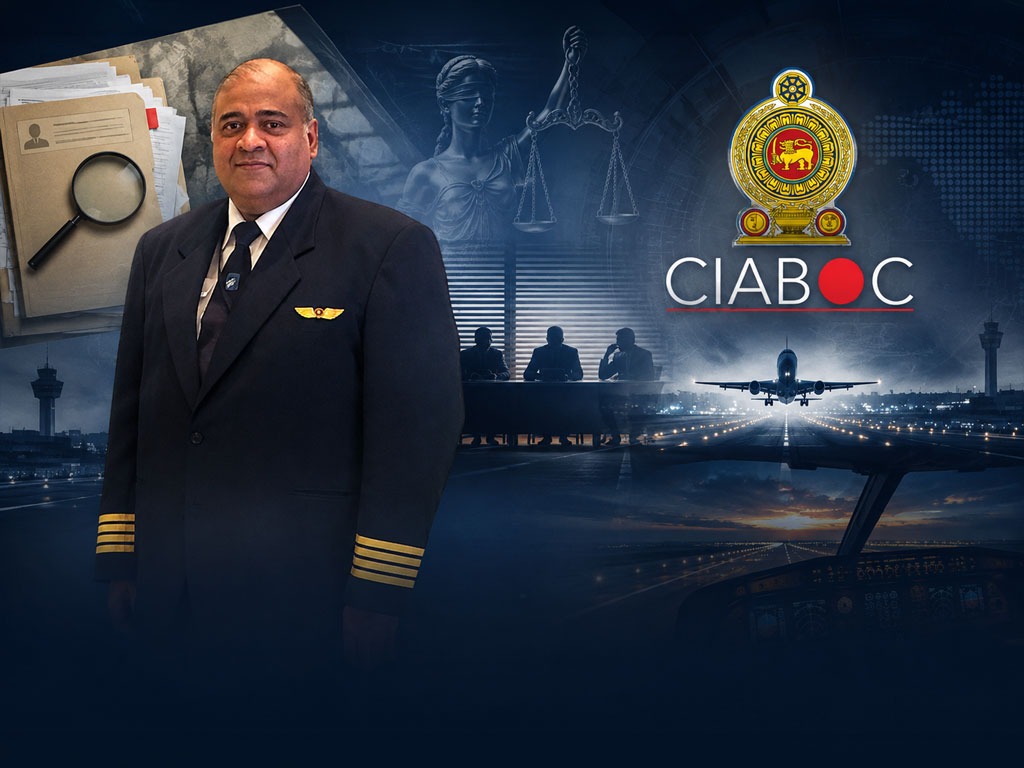
A significant legal challenge before Sri Lanka’s Right to Information Commission could reshape how public authorities respond to citizens seeking updates on corruption investigations, after former international airline captain Anil Jayasinghe accused the Commission to Investigate Allegations of Bribery or Corruption (CIABOC) of remaining silent for more than five months on a request for RTI on a complaint filed by him more than two years over a complaint involving alleged irregularities in civil aviation licensing.
The appeal does not ask the Right to Information Commission to determine whether corruption occurred. Instead, it asks firstly whether a public authority can be non-responsive and, secondly, whether a complainant who has reported alleged wrongdoing is entitled to receive a meaningful update on the progress of an investigation after repeated requests allegedly went unanswered by the CIABOC.
Get
Breaking News
First
on WhatsApp
Follow The Morning Telegraph for instant alerts, top stories and exclusive updates delivered straight to your phone.

The dispute has attracted attention because it raises broader questions about transparency, accountability and the balance between protecting ongoing investigations and preserving the public’s constitutional right to access information.
Jayasinghe argues that CIABOC has failed to fulfil its statutory obligations under Sri Lanka’s Right to Information Act 12 of 2016 by blatantly refusing to even acknowledge the request violating section 24(3) & 25(1).
CIABOC response was reactive and failed to provide more than a brief acknowledgement that an investigation remains ongoing and failed to state if it had denied the request on the status of the complaint.
This was sent by the CIABOC only after the RTI commission had summoned the two parties for a hearing in June.
CIABOC, however, maintains that disclosing information relating to an active investigation could interfere with its work and therefore falls within the exemptions contained in the Act.
Complaint Centres on Civil Aviation Licensing Allegations
According to Jayasinghe’s written submissions filed before the Right to Information Commission, he possesses more than thirty-five years of commercial aviation experience, having served as a captain with Sri Lankan Airlines before later joining Singapore Airlines, where he flew Boeing 747 aircraft until 2018.
His complaint to CIABOC was lodged on or about 30 May 2024 under reference AC/1686/2024.
The complaint alleges that former Civil Aviation Authority Director of Aircraft Operations Lushan Fernando fraudulently obtained an Airbus A320 aircraft type endorsement while serving at the Civil Aviation Authority of Sri Lanka (CAASL).
The complaint further alleges that Fernando later secured employment with FITS Aviation through what Jayasinghe describes as an alleged “quid pro quo” arrangement despite not meeting the minimum qualifications advertised for the position.
Jayasinghe further claims that these allegations form part of wider systemic irregularities affecting pilot licensing in Sri Lanka and argues that the issues could have implications for national aviation safety. These allegations remain under investigation and have not been proven before a court.
Investigation Began But Communication Stalled
The documents reveal that CIABOC formally acknowledged receipt of the complaint in July 2024 and informed Jayasinghe that an investigation would be carried out. He was subsequently summoned to provide a formal statement in August 2024 before investigators from CIABOC’s Investigation Unit IV, while additional documentary evidence had already been submitted several weeks earlier.
However, according to the appeal, communication between the parties effectively ceased after the statement was recorded.
Jayasinghe states that he wrote repeatedly throughout 2025 requesting updates on the progress of the investigation. He also states that he provided an investigation report formally ordered by the Commission of Public Enterprise (COPE) to the CAASL where he had filed a parallel complaint. His submission states that the CAASL investigation report is substantive and that it supports Jayasinghe’s alleged claims.
The documents list letters sent in February, September and October 2025, followed by additional requests in December 2025 and January 2026. He claims none of those communications received either an acknowledgement or a substantive response but a deafening silence.
Frustrated by the lack of information, Jayasinghe submitted a Right to Information request on 24 November 2025 seeking an update regarding the investigation. After again receiving no response, he appealed to the Right to Information Commission in early 2026.
CIABOC Relies on RTI Exemption
CIABOC argues that its refusal to disclose information is permitted under Section 5(1)(h) of the Right to Information Act.
In submissions filed before the Right to Information Commission, the anti-corruption body says disclosure of information relating to an ongoing investigation could impede criminal investigations by exposing investigative strategies, revealing confidential sources, influencing witnesses, facilitating destruction of evidence or prejudicing future prosecutions.
CIABOC further argues that a complainant does not acquire ownership or supervisory rights over an investigation simply because he or she initiated the complaint.
According to the Commission’s submissions, the decisive issue is not the identity of the requester but whether disclosure could interfere with the investigation itself.
The anti-corruption body therefore submits that its refusal was lawful, reasonable and proportionate under the statutory framework established by the Right to Information Act.
Appellant Says His Request Has Been Misrepresented
Jayasinghe strongly disputes CIABOC’s interpretation of his request as they remained non responsive in violation of the RTI act.
In his reply filed before the Right to Information Commission, he argues that the respondent has fundamentally misrepresented what he actually sought through the RTI application.
According to his submissions, he never requested access to witness statements, investigative reports, confidential evidence or internal files.
Instead, he says he sought only a procedural update regarding the status and progress of the investigation that he himself initiated.
He contends that CIABOC incorrectly characterised the application as an attempt to obtain the entire investigative file and then relied upon that incorrect characterisation to invoke the exemption contained in Section 5(1)(h).
Jayasinghe further argues that once the request is properly understood as seeking only a status update, many of the harms cited by CIABOC simply do not arise.
Burden of Proof at Centre of Appeal
A central legal issue before the Right to Information Commission concerns who bears the burden of proving that information should remain confidential. Jayasinghe’s submissions argue that Section 32(4) of the RTI Act places the burden squarely upon the public authority seeking to withhold information.
He contends that public authorities cannot rely upon broad, general assertions that disclosure may interfere with investigations but must instead identify precisely how releasing the specific information requested would create such harm.
The submissions cite previous Right to Information Commission decisions and Court of Appeal judgements emphasising that exemptions under the Act should be interpreted narrowly and that transparency remains the guiding principle of the legislation. Jayasinghe also argues that CIABOC only invoked the statutory exemption during the appeal process, rather than when responding to his original RTI request.
Public Interest and Aviation Safety
Another significant issue raised throughout the appeal concerns public interest. Jayasinghe argues that his complaint extends beyond an individual employment dispute and instead concerns alleged systemic irregularities in civil aviation licensing that may affect passenger safety. His submissions argue that because aviation safety involves the protection of human life, the public interest considerations supporting disclosure are especially strong, as aviation safety involves domestic and international operators.
He also contends that prolonged silence from public institutions undermines public confidence in anti-corruption investigations and weakens accountability mechanisms established by Parliament through the Right to Information Act. CIABOC, however, maintains that effective investigations require confidentiality during the investigative stage and that premature disclosure could compromise future criminal proceedings.
Broader Implications Beyond This Case
Although the appeal arises from a specific aviation-related complaint, the outcome could have implications extending far beyond the Civil Aviation Authority. If the Right to Information Commission determines that complainants are entitled to receive meaningful status updates during ongoing investigations, the decision could influence how numerous public institutions respond to similar requests in future.
Conversely, if the Commission upholds CIABOC’s interpretation of Section 5(1)(h), investigative agencies may continue withholding even basic progress information while investigations remain active. The appeal therefore represents an important test of the balance between transparency and investigative confidentiality under Sri Lanka’s Right to Information framework.
Decision Could Clarify Citizens’ Rights
At its core, the dispute is not simply about one aviation complaint. It asks a broader constitutional question: How much information should a citizen be entitled to receive after reporting alleged corruption to a public authority? The Right to Information Commission is now being asked to determine whether a public institution may rely upon ongoing investigations to refuse even basic procedural updates, or whether complainants possess a legally enforceable right to know how their complaints are progressing.
Whatever the Commission ultimately decides is likely to influence future Right to Information appeals involving corruption investigations and could shape the relationship between public authorities and citizens seeking accountability for years to come.