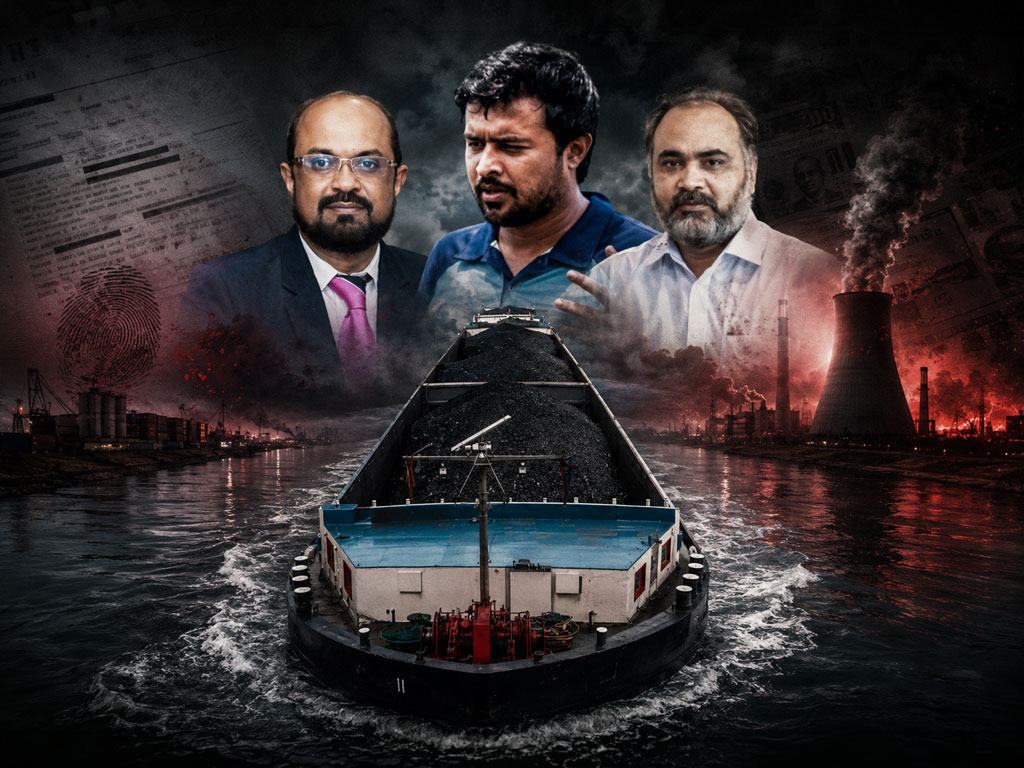
Norochcholai coal scandal raises questions over 19 shipments, quality testing, machinery damage and billions in alleged losses to Sri Lanka.
The Norochcholai coal scandal has deepened after data presented on 19 shipments supplied to the Lakvijaya Power Plant raised serious concerns over quality, financial losses and procurement controls.
The coal was supplied through Trident Chemphar under the current procurement arrangement. According to information cited in the supplied material, none of the 19 consignments met the minimum calorific-value benchmark expected under the relevant specifications.
Lakvijaya remains one of Sri Lanka’s most important electricity-generating facilities. Therefore, any sustained reduction in coal quality can affect not only operating costs, but also the stability of the wider power system.
Get
Breaking News
First
on WhatsApp
Follow The Morning Telegraph for instant alerts, top stories and exclusive updates delivered straight to your phone.

Norochcholai Coal Scandal Centres on Calorific Value
Gross Calorific Value, or GCV, is a key measure used to determine how much energy coal can produce.
According to the figures cited in the report, the required benchmark was 6,150 kcal/kg, while coal falling below 5,900 kcal/kg should face rejection under the relevant standard.
However, the supplied data states that none of the 19 shipments reached that minimum threshold.
Some consignments reportedly recorded values as low as 4,762 kcal/kg.
If those figures are confirmed through the official testing record, they would represent a major deterioration in energy density. Lower calorific value means the plant must burn more coal to generate the same amount of heat.
That can increase fuel consumption, operating costs and stress on plant equipment.
The controversy also centres on the testing process.
According to the allegations presented, internal laboratory testing at Lakvijaya identified substandard coal, while an Indian testing company referred to as “Kotkna” issued certificates stating that the material complied with required standards.
Those allegations are serious and require verification through the official test reports, contractual records and any ongoing investigation.
Payment Terms Put State Funds at Risk
The procurement structure has also attracted criticism.
Under the tender terms cited in the supplied material, 80% of the payment could be released at the shipment stage based on load-port quality reports.
The remaining 20% was payable after quality verification once the coal reached Puttalam.
Critics argue that such a structure exposes the State to greater risk if the quality certification at the loading port proves inaccurate or unreliable.
Concerns have also been raised about the relaxation of tender criteria.
The supplied account alleges that weaker eligibility requirements allowed intermediaries without sufficient qualifications to enter the energy supply chain.
Particular attention has been drawn to the vessel MV JOSCO YONGZHOU.
According to the figures cited, that shipment carried coal with an ash content of 16.8%, allegedly at a level that should have triggered rejection.
The report further claims approval to unload the vessel was granted within about 30 minutes.
Those circumstances require documentary examination before conclusions can be drawn about misconduct or corruption.
Machinery Damage and Higher Fuel Consumption
Poorer-quality coal can create problems far beyond the purchase price.
The report attributes machinery blockages and increased pyrite deposits to the coal being burned at Lakvijaya.
According to figures attributed to Electricity Generation Lanka, the extent of abnormal damage has not yet been fully calculated.
However, an additional Rs. 1.33 million in maintenance expenditure was reportedly incurred over four months for mill maintenance, pyrite removal and clearing blockages.
The larger financial impact comes from fuel efficiency.
Data reportedly provided to a Parliamentary Sectoral Oversight Committee states that lower calorific value forced the plant to consume more coal than usual to produce the required heat.
The resulting direct loss was calculated at Rs. 5.68 billion between March 1 and June 30.
The supplied analysis also estimates an additional loss of almost Rs. 10 billion because reduced generation at Lakvijaya required greater reliance on costlier diesel-powered generation.
These figures should ultimately be reconciled against official generation, fuel-consumption and procurement records.
Supplier Faces Contractual Penalties
Authorities have reportedly begun enforcing contractual remedies against the supplier.
According to the material provided, Electricity Generation Lanka moved to call the US$14.75 million performance bond lodged by Trident Chemphar.
That amount is estimated at roughly Rs. 4 billion.
The report further states that contractual mechanisms could allow approximately US$51.2 million, or around Rs. 16.9 billion, to be recovered.
If confirmed, those recoveries would offset some of the financial impact, but they would not resolve wider questions about how the coal passed through procurement, testing and acceptance procedures.
The Norochcholai coal scandal is therefore about more than poor-quality fuel.
It raises questions about procurement standards, independent testing, payment safeguards, regulatory oversight and the protection of one of Sri Lanka’s most important power assets.
If deliberate manipulation, false certification or abuse of public funds is established through investigation, those responsible should face action under the law, including the Anti-Corruption Act No. 9 of 2023 where applicable.
For Sri Lanka, the deeper issue is energy security.
A power plant as important as Lakvijaya cannot be exposed to procurement failures that increase costs, damage equipment or weaken generating capacity.
The priority now must be full disclosure of the test reports, tender evaluations, payment records and contractual decisions behind all 19 shipments.