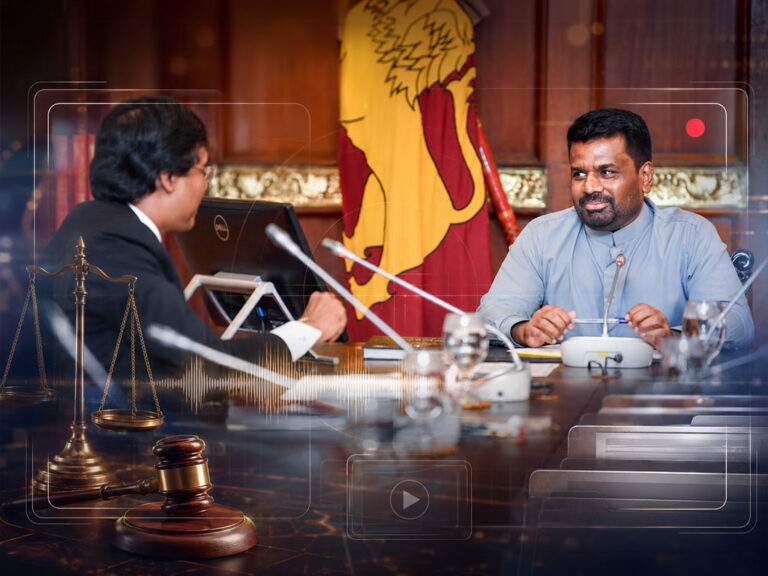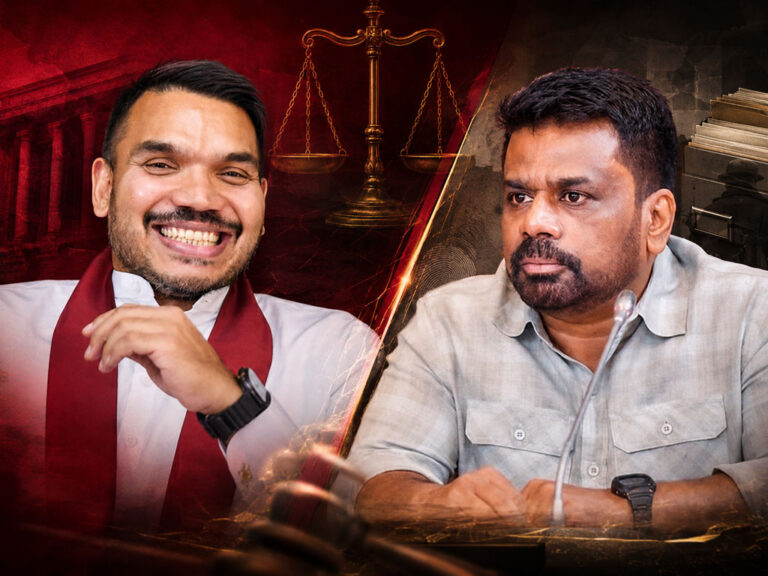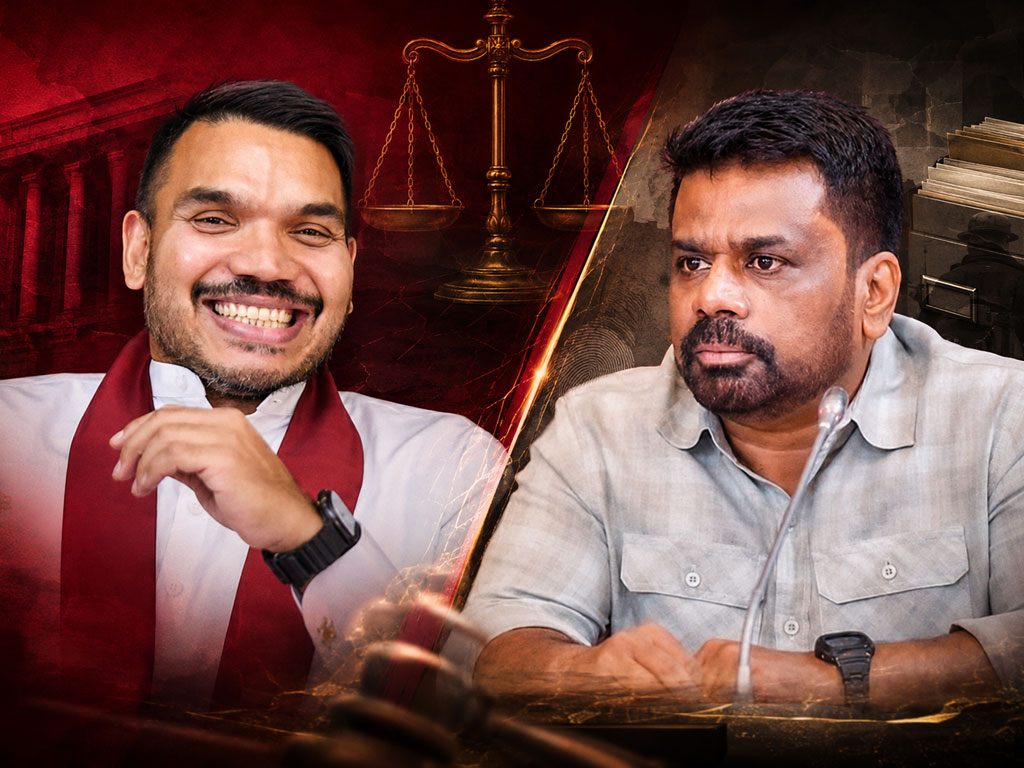
Judges retirement age debate intensifies as Namal Rajapaksa asks President Anura Kumara Dissanayake to identify the experts he consulted.
The judges retirement age debate has intensified after MP Namal Rajapaksa demanded that President Anura Kumara Dissanayake identify the senior figures and experts he says he consulted on changes affecting the judiciary.
Rajapaksa, National Organizer of the Sri Lanka Podujana Peramuna, raised the questions while speaking to journalists at the SLPP headquarters at Nelum Mawatha.
He accused the President of making what he described as an arbitrary decision on an issue that could affect judicial independence.
“The President is now clearly making an arbitrary decision regarding a matter that affects the independence of the judiciary in this country,” Rajapaksa said.
He said the President had referred to consultations with senior figures and experts. However, Rajapaksa argued that the public should know who those advisers were.
“Now we want to know who are these seniors and experts advising the President?” he asked.

Judges Retirement Age Debate and Questions Over Advisers
Rajapaksa referred to reported objections surrounding the proposal and questioned the President’s decision to proceed.
He cited opposition from the Bar Association, judges, the Commonwealth Lawyers Association, the Asian Lawyers Association and the United Nations.
According to Rajapaksa, if those institutions and individuals had warned that the proposal lacked a clear direction or could undermine judicial independence, the President was taking a significant risk.
He then claimed the President appeared determined to attract someone’s attention through the decision.
“We are watching carefully to see whose attention the President is trying to gain by doing this,” Rajapaksa said.
He also referred to the government’s parliamentary strength, using the expression that the President had brought “159 flowers” after arguing that senior or experienced figures were unnecessary.
Rajapaksa suggested that the President may now believe experienced people were needed after all.
However, he described that as the President’s political interpretation.
Rajapaksa said state institutions and the judicial system require decisions that ensure their continued functioning. He added that Sri Lanka’s legal and judicial sectors contain many people with experience, expertise and vision.
He argued that extending the judges retirement age would not, by itself, resolve vacancies.
“If the President still cannot fill vacancies, then extending time won’t fill vacancies,” Rajapaksa said.
He argued that increasing the number of lower courts and High Courts should also be considered, saying simply increasing the retirement age would not address the underlying problem.
Namal Links Judiciary Debate to Other Government Questions
Rajapaksa then broadened his criticism to several other controversies involving the government.
He referred to the disputed release of 323 containers and separately mentioned two alleged drug containers released from the port.
Rajapaksa questioned why those responsible had not been identified, while also noting that President Anura Kumara Dissanayake serves as Minister of Finance.
He also referred to an alleged incident involving money being stolen after an account was hacked.
Rajapaksa argued that if the government could not determine responsibility in such matters, extending judicial service periods would not solve wider administrative problems.
“These are just excuses,” he said, again claiming that the opposition was watching to determine whose attention the President was seeking.
Rajapaksa also acknowledged the President’s ability as a political speaker.
“The President speaks well. We have seen that from his political history,” he said.
He referred to previous political statements about Lamborghinis and gold exporters and described Dissanayake as a good orator.
However, Rajapaksa then questioned whether the President had responded to a letter from the Malwatta and Asgiriya Maha Nayaka Theras.
He argued that when the Maha Nayaka Theras raise an issue, the President has a responsibility to respond.
If a reply had been sent, Rajapaksa said, the government should disclose that. If no response had been made, he argued that this should also be clear.
Questions Raised Over Bar Association Meeting Footage
Rajapaksa also questioned the manner in which information about the President’s discussions with the Bar Association had reached the public.
He claimed that media coverage made it appear as though the President had conducted the discussion alone.
According to Rajapaksa, questions asked by the Bar Association and matters raised by its representatives had not been made public.
Instead, he said, the material released to the media appeared to contain only the President’s position.
Rajapaksa argued that if the President was committed to transparency, the government should release what the Bar Association had presented during the meeting.
He said even points that were favorable to the government should have been included.
His remarks came amid wider scrutiny surrounding the judges retirement age proposal and its possible implications for the judiciary.
Rajapaksa also referred to the President saying that he was prepared to leave office at any time.
However, he contrasted this with government parliamentarians who, he claimed, wanted to remain in Parliament for 20 years.
Rajapaksa alleged that the government had reached a stage where it was using the judiciary and the public for its political requirements and survival.
These remain political allegations made by Rajapaksa and are not established findings in the material provided.
Rajapaksa Turns Attention to Villages and Farmers
The SLPP National Organizer then widened his criticism to the government’s broader policies.
He referred to earlier political claims about “breaking Sigiriya” to build Port City and said those associated with such statements were now governing.
Rajapaksa contrasted that with what he described as the SLPP’s connection to rural communities.
“We are grounded in our village soil. We are with the sand, the canals, the threshing floors, the paddy fields, and the chenas,” he said.
He pledged to support citizens whom he believes face unfair treatment by the government, whether in villages, cities or internationally.
Rajapaksa alleged that the government was failing to listen to people’s everyday problems.
He said villagers were struggling to sell their paddy, while farmers were not receiving fertilizer on time and household incomes had fallen.
He also criticised what he described as insufficient government intervention following Cyclone Ditwa.
According to Rajapaksa, landslides, damaged canals, tank bunds and houses affected by the cyclone still required rebuilding.
He further claimed that factories were closing and people were losing employment.
Rajapaksa said the government must provide answers to those problems rather than simply criticising the Rajapaksa family.
SLPP Plans Anuradhapura Meeting Focused on Farmers
Rajapaksa said the SLPP hopes to hold a district meeting in Anuradhapura.
He said the party intends to shape the gathering into one that can contribute to what he described as the farmers’ struggle.
Rajapaksa then returned to his criticism of government thinking.
He again referred to past claims concerning Sigiriya and Port City, as well as statements about dogs being unable to cross roads after highways were constructed.
He said these were ideas that he and his political allies had not considered.
“The government thinks of many things we don’t think of,” Rajapaksa remarked.
However, he ended by supporting one area of government policy.
Rajapaksa said introducing new technology into agriculture would be a positive step.
He added that if President Dissanayake and his administration could provide farmers with the technology and knowledge required to modernise agriculture, it would be “a great thing.”
His wider challenge to the government, however, remained focused on transparency surrounding the judiciary. Rajapaksa maintained that the President should disclose who advised him and explain the reasoning behind changes to the judges retirement age, particularly when concerns have been raised about judicial independence.