The Jagath Wickramaratne no-confidence motion includes 50 allegations as political sources claim the President has urged the Speaker to resign.
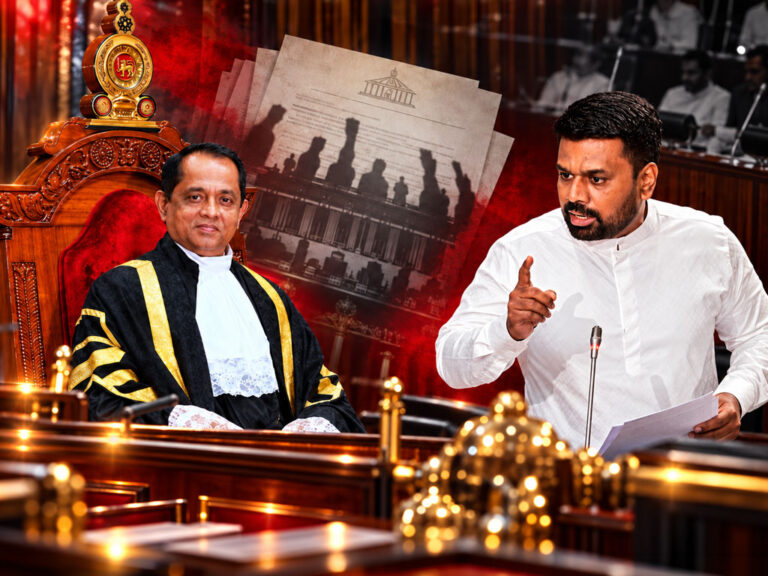
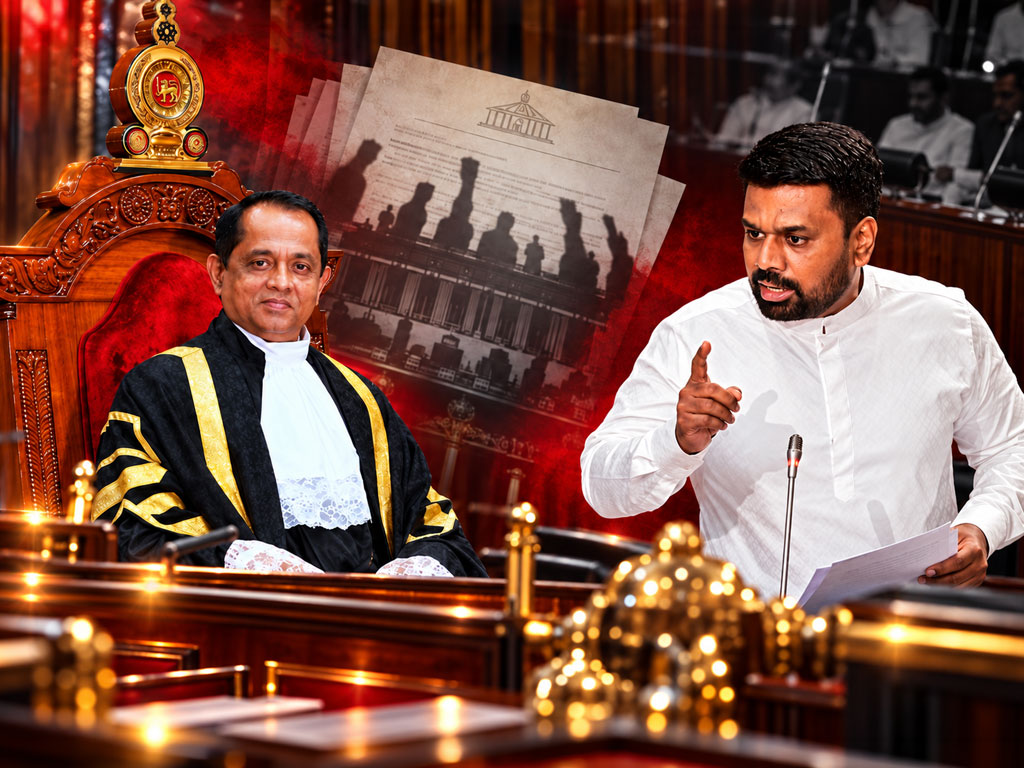
COLOMBO — Political sources claim President Anura Kumara Dissanayake has told Speaker Dr. Jagath Wickramaratne that he should resign as pressure intensifies over an opposition no-confidence motion containing 50 allegations against him.
The claim has not been independently confirmed by the Presidential Secretariat or the Speaker in the material supplied to The Morning Telegraph.
Wickramaratne, who as Speaker is expected to preside over Parliament impartially, is facing allegations involving State property, official residences and vehicles, public expenditure, interference with investigations and the manner in which he has conducted parliamentary proceedings.
The accusations are contained in a no-confidence motion submitted to the Secretary General of Parliament with the signatures of opposition MPs.
None of the allegations cited in the motion amounts, by itself, to a finding of wrongdoing. They remain allegations unless established through the relevant parliamentary, investigative or judicial processes.

Claims of Presidential Pressure to Resign
According to political sources cited in the original report, President Dissanayake has taken the position that Wickramaratne should no longer remain as Speaker.
The source describes the alleged presidential intervention as a response to the growing political pressure surrounding the office.
No direct quotation from the President, written instruction or official statement confirming such an order was included in the material supplied.
Any claim that the President has formally demanded the Speaker’s resignation therefore requires independent confirmation.
The controversy nevertheless places Wickramaratne under significant political pressure because the Speaker occupies one of the most important constitutional and procedural positions in Parliament.
Questions Over Reported Foreign Travel
The original report also claims that Wickramaratne is preparing to travel overseas for a forthcoming conference while the no-confidence motion remains pending.
Political sources cited in the article allege that he may announce a decision on his future only after completing the foreign visit.
There is no documentary evidence in the supplied material establishing that the trip is intended to avoid the no-confidence motion, and that interpretation should therefore be treated as political speculation rather than fact.
The reported travel plans have nevertheless become part of the wider political debate over whether the Speaker should remain in office while serious allegations are being considered.
No-Confidence Motion Contains 50 Allegations
The opposition-led no-confidence motion is said to contain 50 allegations against Wickramaratne.
Among the principal accusations highlighted in the source are:
- Official residences and State property: The motion alleges that Wickramaratne improperly obtained an additional official residence at Loris Lane in Colombo despite already having been provided official accommodation, and raises questions over the use of furniture connected with the official residence in Battaramulla.
- Bribery Commission investigation: The opposition alleges that the Speaker improperly intervened in investigations being conducted by the Commission to Investigate Allegations of Bribery or Corruption and sought to influence witnesses.
- Media units and public expenditure: The motion accuses him of maintaining unauthorised media units without approval and using substantial public funds for their operation.
- Conduct of parliamentary proceedings: Opposition MPs allege that Wickramaratne has failed to act impartially, claiming that he has favoured the Government while restricting opposition privileges and parliamentary questions.
These allegations have not been established as facts in the source material and should be assessed through the relevant institutional processes.
Speaker’s Neutrality Under Scrutiny
The political significance of the controversy extends beyond the individual accusations.
The Speaker is expected to safeguard parliamentary procedure, protect the rights of both Government and opposition MPs and maintain the authority and dignity of the legislature.
For that reason, allegations that a Speaker has misused State resources or acted politically inside the chamber can carry consequences beyond an ordinary dispute involving a government office-holder.
At the same time, the seriousness of an allegation does not remove the requirement for evidence or due process.
Wickramaratne should therefore be judged on established facts, formal findings and the parliamentary process surrounding the no-confidence motion rather than on political rhetoric alone.
What Happens Next
The immediate question is whether the no-confidence motion will proceed to debate and whether Wickramaratne will remain in office while that process unfolds.
Any overseas travel by the Speaker, if confirmed, is also likely to attract further scrutiny because of the timing of the motion.
The reported intervention by President Dissanayake will remain equally significant if officially confirmed.
For now, three matters remain separate: the allegations contained in the no-confidence motion, the opposition’s political demand for accountability, and the unconfirmed claim that the President has instructed the Speaker to resign.
How Parliament handles those issues will determine whether the controversy develops into a formal challenge to Wickramaratne’s position or remains primarily a political confrontation.