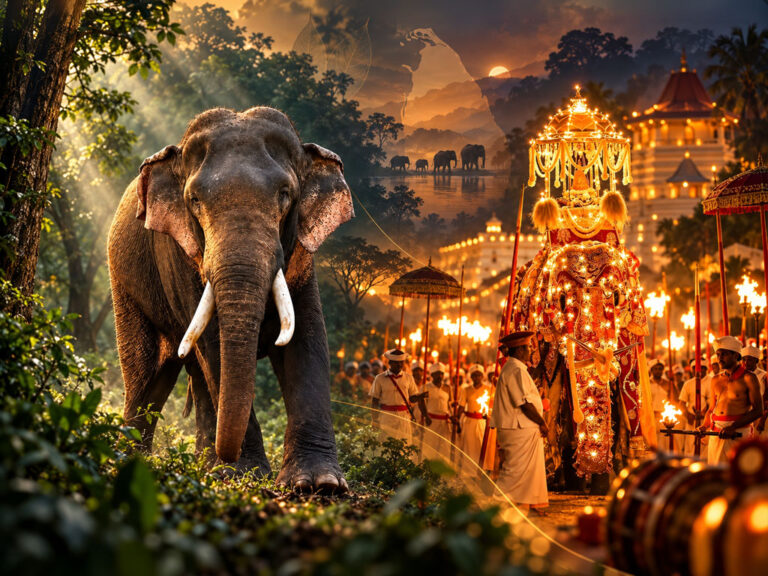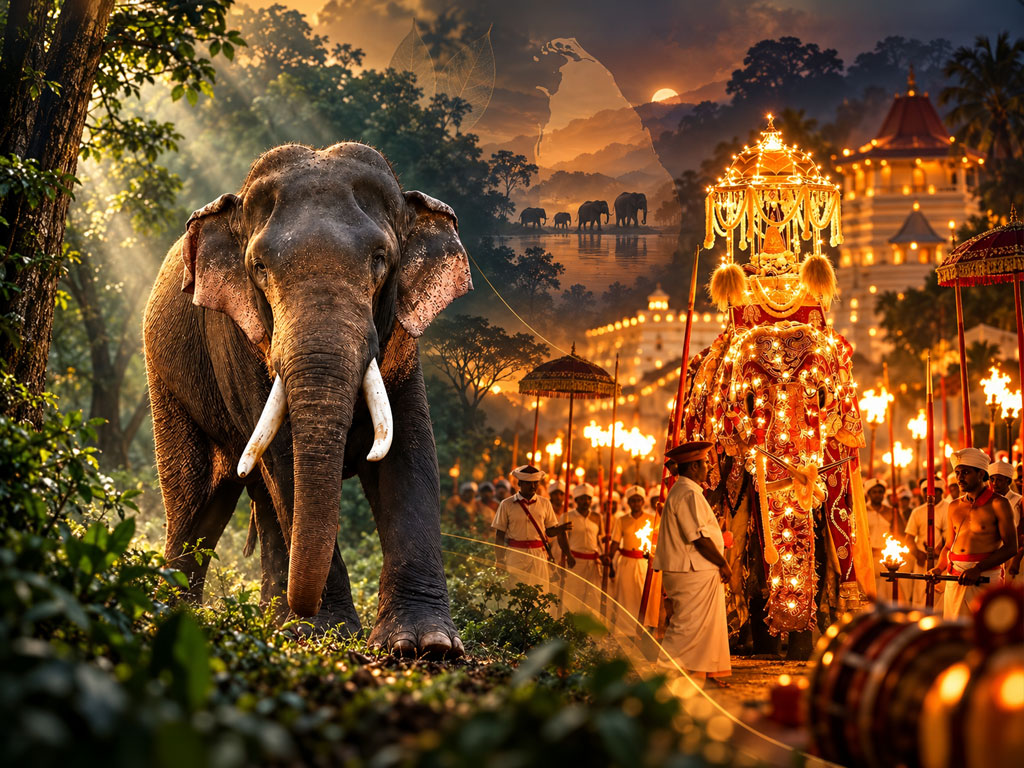
The loss of one of Sri Lanka’s celebrated tuskers has revived a difficult debate over the dangers facing wild elephants, the welfare of captive elephants and the place of these animals in the country’s cultural traditions.
The death of the majestic tusker Kavantissa has saddened Sri Lankans who regarded him as part of the country’s natural heritage. Beyond the grief, his loss offers an opportunity to examine a question that is too often overshadowed by arguments surrounding elephants used in religious and cultural pageants.
Are Sri Lanka’s wildlife protection priorities adequately addressing the dangers facing elephants in the wild?
The author of the original commentary argues that some animal-rights campaigns devote considerable attention to elephants participating in traditional processions while failing to give sufficient prominence to the threats faced by wild populations.
It is a criticism that deserves examination, although it should not obscure the legitimate welfare concerns surrounding captive elephants or the work undertaken by conservation organisations to protect those living in the wild.

Wild Elephants Face Threats Beyond Captivity
Elephants living in Sri Lanka’s forests and rural landscapes face serious challenges as human settlements, agricultural activity and competition for natural resources bring people and wildlife into increasingly close contact.
Habitat loss, restricted movement, difficulties accessing food and water, shootings and dangerous traps all threaten their survival.
In some areas, elephants enter villages and cultivated land in search of resources, exposing both the animals and nearby communities to potentially fatal encounters.
The original commentary asks whether these dangers receive the same public attention as the treatment of elephants used in cultural events.
It argues that the freedom enjoyed by wild elephants offers limited protection when their habitats are threatened and their lives are endangered by human activity.
Yet freedom and safety are not mutually exclusive conservation objectives. Protecting elephants requires preserving their natural habitats while reducing the risks that bring them into conflict with people.
Kavantissa’s death is a reminder of how vulnerable even the country’s most recognisable wild tuskers can become.
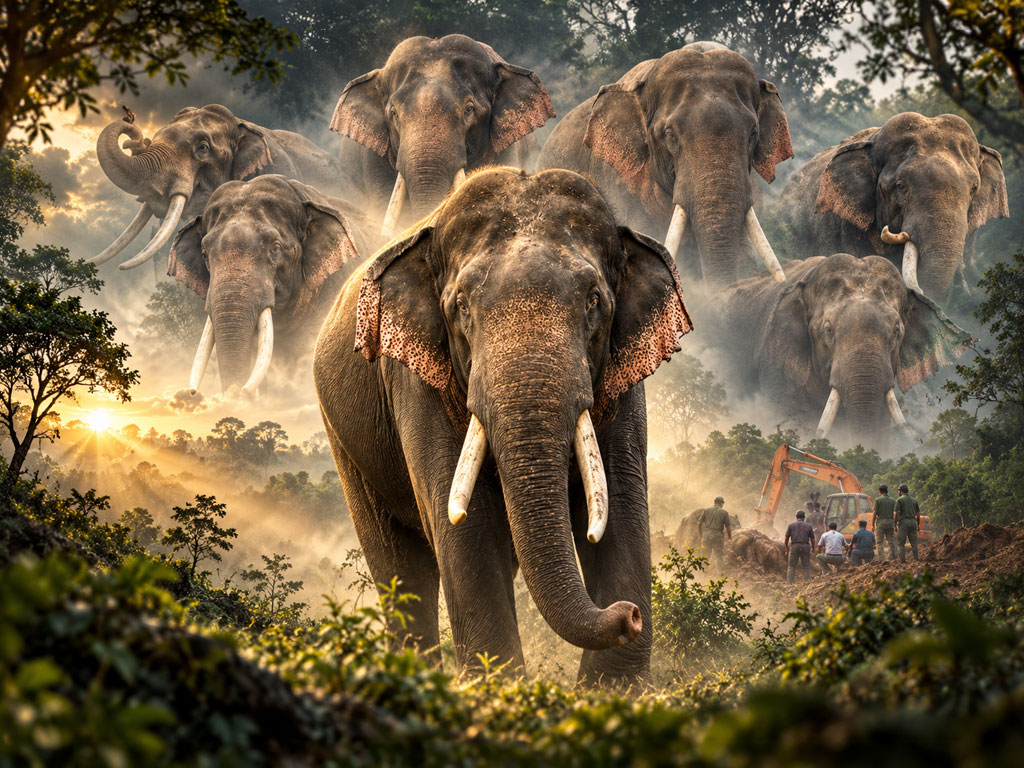
From the legendary Parakrama and Deegadanthu to Bathiya, Unicorn and Kavantissa, Sri Lanka has lost some of its most extraordinary wild elephants to shootings, electrocution, injuries and failed human interventions. Their stories reveal the growing cost of human-elephant conflict and the urgent need to protect the country’s remaining tuskers.
Read MoreCaptive Elephants and the Question of Welfare
The commentary draws a distinction between the circumstances of wild elephants and those maintained in captivity.
It argues that domesticated elephants generally have access to food, water, bathing and veterinary attention, whereas wild elephants may struggle to obtain essential resources in degraded or contested habitats.
From that perspective, the author regards the immediate threats facing wild elephants as a more urgent conservation priority.
However, access to food and veterinary care does not, by itself, establish that an elephant’s welfare needs are being adequately met.
Captive elephants also require appropriate movement, social interaction, suitable living conditions and protection from physical and psychological distress.
Concerns over restraint, prolonged standing, demanding procession schedules and other management practices deserve proper examination.
Similarly, the threats faced by wild elephants cannot be used to dismiss legitimate questions about the treatment of those kept in captivity.
A credible animal-welfare approach must address both populations without assuming that protecting one requires neglecting the other.
Animal-Rights Campaigns and Cultural Disagreements
Much of the original commentary criticises activists who campaign against the use of elephants in traditional pageants.
The author contends that some campaigns concentrate on the loss of freedom experienced by captive elephants while failing to demonstrate sufficient concern for wild elephants exposed to shootings, habitat destruction and other dangers.
The commentary also suggests that certain campaigns are influenced by funding, ideological commitments or opposition to Buddhist cultural traditions.
These are the author’s interpretations, not established findings about animal-welfare organisations or the individuals involved.
No evidence is provided to demonstrate that particular organisations are motivated by hostility towards Buddhism or that their campaigns are primarily driven by financial interests.
Animal welfare advocacy encompasses different positions. Some campaigners oppose captivity, while others focus on improving conditions for captive elephants, conserving habitats or reducing human-elephant conflict.
Criticism of their priorities is legitimate. Claims about their motives, however, require evidence.
A more productive debate would examine whether conservation resources, public campaigns and institutional responses are proportionate to the actual threats facing Sri Lanka’s elephant population.
Elephants Hold an Important Place in Sri Lankan Culture
Elephants have occupied a prominent place in Sri Lanka’s religious, historical and cultural life for centuries.
Their association with Buddhist processions and ceremonial traditions forms an important part of the country’s cultural identity.
The original author argues that elephants are not regarded merely as another animal species, but as symbols deeply embedded in national heritage.
For many communities, the presence of elephants in traditional pageants carries religious and ceremonial significance.
Concerns about the future of these traditions are therefore understandable, particularly among those who believe they should be preserved for succeeding generations.
Preserving cultural heritage, however, need not prevent changes to practices where evidence demonstrates that improvements are necessary for animal welfare.
Traditions can retain their significance while adapting to higher standards of care and protection.
Equally, those advocating reform should recognise the importance these ceremonies hold for the communities that observe them.
Respectful dialogue is more likely to produce lasting improvements than portraying either cultural participants or animal-welfare campaigners as enemies.
Protecting Elephants and Preserving Heritage
The original commentary uses the image of a great elephant to symbolise Sri Lanka’s cultural inheritance.
Its central argument is that cultural values, once lost, may be difficult to recover.
That concern extends beyond the use of elephants in processions to the preservation of traditions that communities regard as part of their identity.
Yet the continued survival of Sri Lanka’s elephants is itself essential to that heritage.
A country cannot meaningfully celebrate the elephant as a cultural symbol while failing to protect the animals living in its forests.
Nor should the importance of tradition prevent serious consideration of the welfare of elephants maintained for ceremonial purposes.
The death of Kavantissa should therefore encourage a broader discussion about conservation priorities, wildlife protection, responsible animal care and the future of traditional pageants.
The central challenge is not to choose between elephants and culture. It is to develop an approach that protects wild elephants, ensures appropriate welfare standards for captive animals and recognises the cultural significance these animals hold.
If Kavantissa’s death helps bring greater attention to the threats facing Sri Lanka’s remaining elephants, his loss may yet contribute to meaningful changes in their protection.