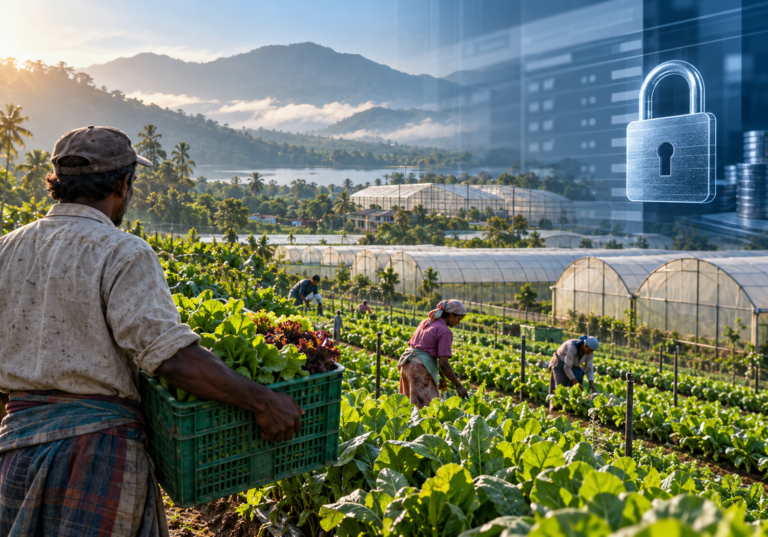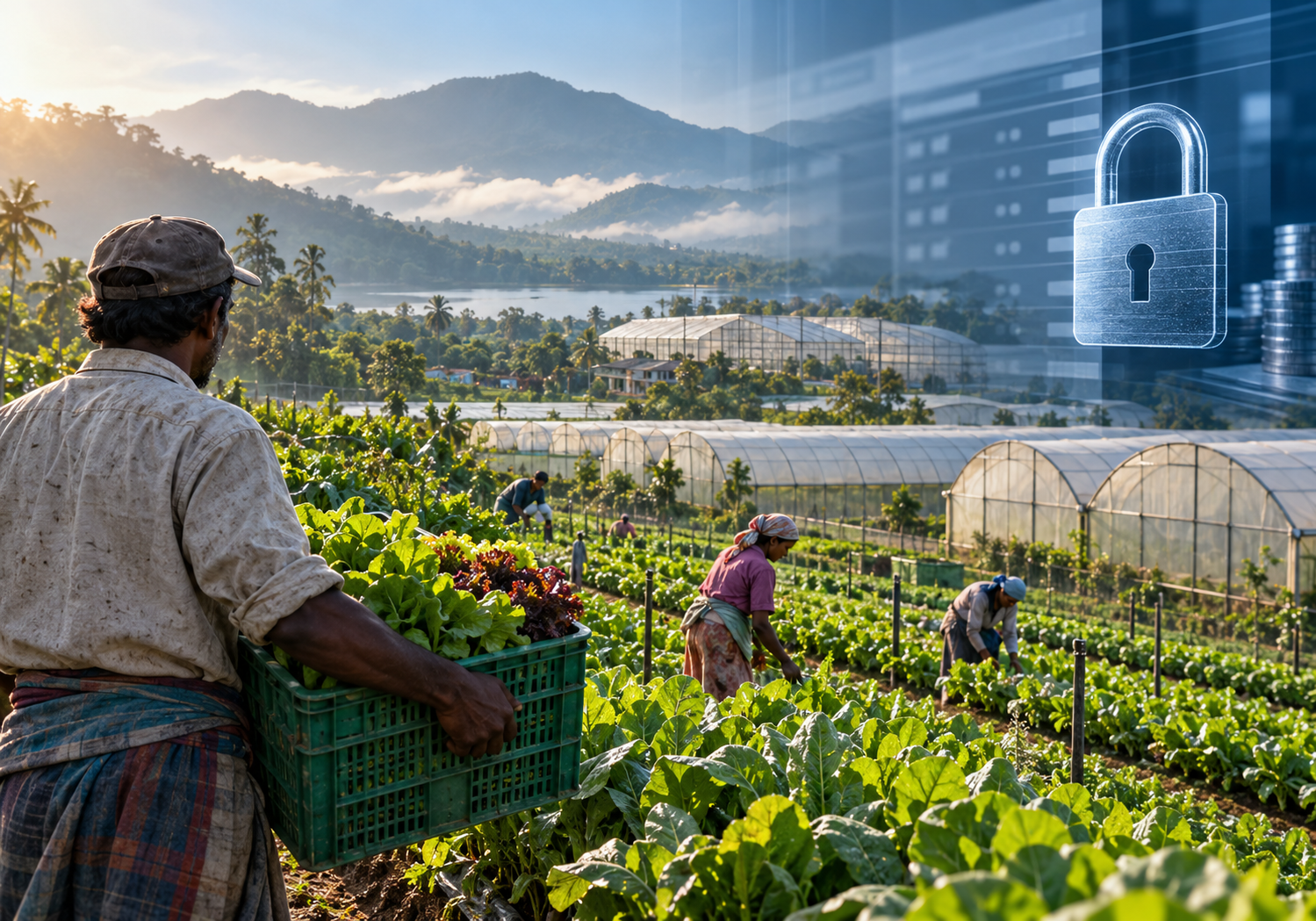
Company chairman and CEO warn that thousands of employees, farmers and customers face mounting financial difficulties as they seek urgent intervention to maintain essential operations amid an ongoing Central Bank investigation.
COLOMBO – Ceylon Green Life Plantation (Pvt) Ltd has appealed to President Anura Kumara Dissanayake for urgent intervention following the suspension of its banking facilities, warning that the livelihoods and financial interests of more than 40,000 employees, farmers and customers could be affected if its operations remain paralysed.
In a written appeal dated October 23, 2026, company Chairman Malan Francis Petersay and Chief Executive Officer Udara Kothalawala outlined what they described as an escalating humanitarian and economic crisis following restrictions on the company’s bank accounts, which they say began on August 14.

The company maintains that the restrictions have severely disrupted its agricultural operations, prevented salary and supplier payments, and created uncertainty for thousands of individuals connected to its plantation and land development activities.
However, the appeal comes against the backdrop of an ongoing investigation by the Central Bank of Sri Lanka (CBSL) into whether the company has engaged in unauthorised finance business or deposit-taking activities.
Central Bank Investigation and Court-Approved Asset Freeze
On September 22, the Central Bank publicly confirmed that Ceylon Green Life Plantation was among six companies subjected to freezing orders under Section 44 of the Finance Business Act, No. 42 of 2011.
The orders prohibit the companies and their directors from disposing of, transferring or otherwise dealing with specified property and assets. The Colombo High Court subsequently confirmed and extended the restrictions.
The Central Bank stated that investigations involving Ceylon Green Life Plantation and Kasagala Green Plantation remained ongoing.
Importantly, the regulator’s announcement distinguished these two companies from four other entities against which it had already reached determinations concerning unauthorised finance business or deposit-taking.
The investigation into Ceylon Green Life Plantation should therefore not be interpreted as a final finding of wrongdoing.
Nevertheless, the regulatory measures raise important questions about how the financial interests of customers, employees and agricultural suppliers can be protected while investigations proceed.
4,000 Employees and Their Families Reportedly Affected
According to the company’s submission to the Presidential Secretariat, more than 4,000 employees depend on its operations for their livelihoods.
Management claims that restrictions on its banking facilities have prevented the regular payment of salaries, placing substantial financial pressure on employees and their families.
For households relying on monthly wages to meet essential expenses, including food, education, healthcare and loan repayments, prolonged salary disruptions could create serious financial hardship.
The company has therefore requested a mechanism that would allow essential employee payments to continue without interfering with the ongoing regulatory investigation.
These employment figures and the extent of unpaid salaries have been provided by the company and have not been independently verified.
More Than 1,000 Farmers Face Disrupted Payments
The company’s appeal also highlights the potential impact on more than 1,000 farmers reportedly connected to its agricultural purchasing and cultivation network.
Ceylon Green Life Plantation says it purchases fruits and vegetables from farmers across several districts while providing agricultural inputs and supporting commercial cultivation.
According to management, the freezing of banking facilities has interrupted purchases, delayed payments and disrupted the distribution of fertiliser and agricultural equipment.
Such interruptions could have consequences beyond the company itself.
Agricultural producers often depend on uninterrupted purchasing arrangements to maintain cash flow, finance future cultivation and meet obligations to workers and suppliers.
Where crops are perishable, prolonged disruptions could also increase the risk of post-harvest losses.
The company argues that restoring limited operational banking facilities under appropriate regulatory supervision could help protect these farmers without compromising the authorities’ investigations.
Uncertainty Surrounds 35,000 Customers
Perhaps the largest group identified in the appeal comprises approximately 35,000 customers reportedly connected to the company’s agricultural and land development projects.
Management claims that restrictions on banking operations have prevented it from fulfilling certain contractual obligations and maintaining agreed services.
The situation raises significant concerns regarding the rights and financial interests of individuals who have entered into arrangements with the company.
While Ceylon Green Life Plantation maintains that it is an agricultural and commercial enterprise rather than a financial institution accepting public deposits, the precise nature of its customer agreements is relevant to the Central Bank’s ongoing investigation.
The company has expressed willingness to cooperate with regulatory authorities and provide the documentation necessary for their inquiries.
The interests of customers and investors must remain central to any proposed resolution, particularly where contractual payments or financial commitments are involved.
Company Claims Extensive Agricultural Assets and Operations
Established in March 2023, Ceylon Green Life Plantation describes itself as an agricultural enterprise involved in commercial cultivation, plantation management and related development projects.
In its latest submission, the company claims to operate across approximately 1,800 acres of agricultural land, comprising:
- 900 acres of freehold agricultural property.
- 900 acres cultivated through lease and traditional agricultural partnership agreements.
The company identifies operations in Kurunegala, Polpithigama, Haldummulla, Tangalle, Anuradhapura, Embilipitiya, Passara, Wellawaya, Siyambalanduwa and several other locations.
It also reports having nearly 500,000 square feet of polytunnel greenhouse facilities, together with modern agricultural infrastructure.
Management cites ISO 9001:2015 quality certification, SL-GAP certification and relevant agricultural and environmental licences as evidence of its operational activities.
The company further claims to have pursued export opportunities involving China and Malaysia.
However, the exact extent of its landholdings, operating assets, export activities and workforce has not been independently established.
Factory Investments and Expansion Plans Under Threat
Beyond its existing agricultural operations, Ceylon Green Life Plantation says it had planned additional investments designed to strengthen domestic production and create employment.
Among the projects identified are a proposed spice-processing factory in Kandy and a water and beverage manufacturing facility in Alawwa.
According to management, construction activities, transportation payments, supplier settlements and other essential transactions have been disrupted by the restrictions.
The company argues that prolonged operational paralysis could undermine investments already made and jeopardise future employment opportunities.
However, questions surrounding the company’s financial activities remain subject to regulatory examination, and the existence of agricultural assets does not, by itself, determine whether all its financial arrangements comply with applicable legislation.
Chairman and CEO Seek Presidential Discussion
In their October 23 appeal, Chairman Malan Francis Petersay and CEO Udara Kothalawala have requested an opportunity to discuss the crisis with the President.
Their submission emphasises respect for the Central Bank’s regulatory responsibilities and expresses a willingness to cooperate with lawful investigations.
Rather than seeking an end to regulatory scrutiny, the company says it is requesting a practical arrangement through which essential commercial operations could continue under appropriate supervision.
Such an arrangement, management argues, would permit salary payments, agricultural purchases and other necessary expenditure while preserving the integrity of the investigation.
The proposal would require consideration within the applicable legal framework, including the existing freezing orders confirmed by the Colombo High Court.
Protecting Financial Integrity While Safeguarding Livelihoods
The controversy presents a difficult public policy question.
Sri Lanka’s financial regulators have a responsibility to protect the public against unauthorised deposit-taking, unlawful financial schemes and activities that could threaten financial stability.
At the same time, employees, farmers and customers who may have acted in good faith should not be overlooked when regulatory action affects a company’s ability to operate.
The company’s appeal brings these competing concerns into sharp focus.
Any decision to permit essential payments would need to ensure that assets remain protected, that affected customers are treated fairly and that the ongoing investigation is not compromised.
Independent verification of the company’s financial obligations, employment figures, agricultural activities and contractual commitments would also be important in assessing the scale of the reported crisis.
Will the Presidential Secretariat Intervene?
As of October 25, no independently verified public announcement has established whether the Presidential Secretariat has agreed to the company’s request for discussions or proposed any operational relief.
Likewise, the latest public information reviewed does not establish that the Central Bank has withdrawn its freezing orders or concluded its investigation into Ceylon Green Life Plantation.
The company’s leadership maintains that urgent engagement is necessary to prevent further hardship among those dependent on its activities.
For thousands of employees, farmers and customers, the central concern is now how their livelihoods and financial interests can be protected while the legal process continues.
The broader issue extends beyond one plantation company: how can Sri Lanka enforce financial regulations rigorously while ensuring that ordinary workers, agricultural producers and customers are not left carrying the consequences of prolonged operational uncertainty?
For Ceylon Green Life Plantation and those connected to its operations, the answer could have significant financial and humanitarian consequences.
Sources
- Central Bank of Sri Lanka — September 22 freezing orders.
Central Bank of Sri Lanka
- EconomyNext — Colombo High Court extends freezing orders.
EconomyNext
- Ceylon Green Life Plantation — Company profile.
Ceylon Green Life Plantation