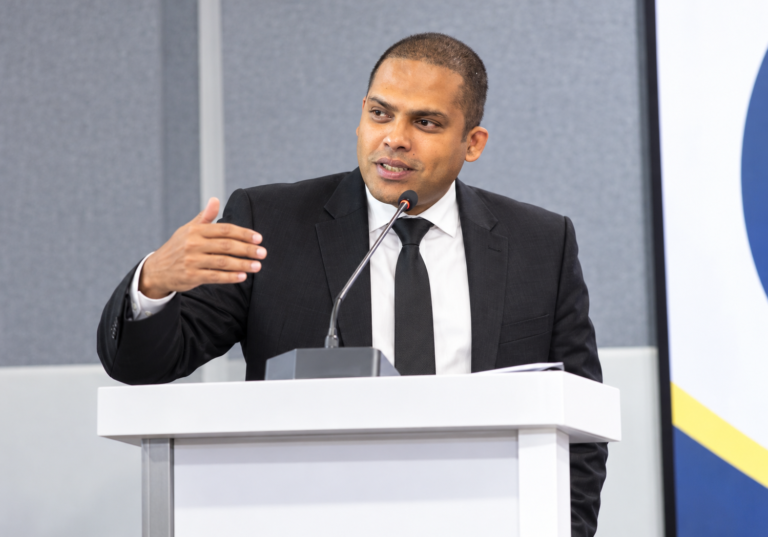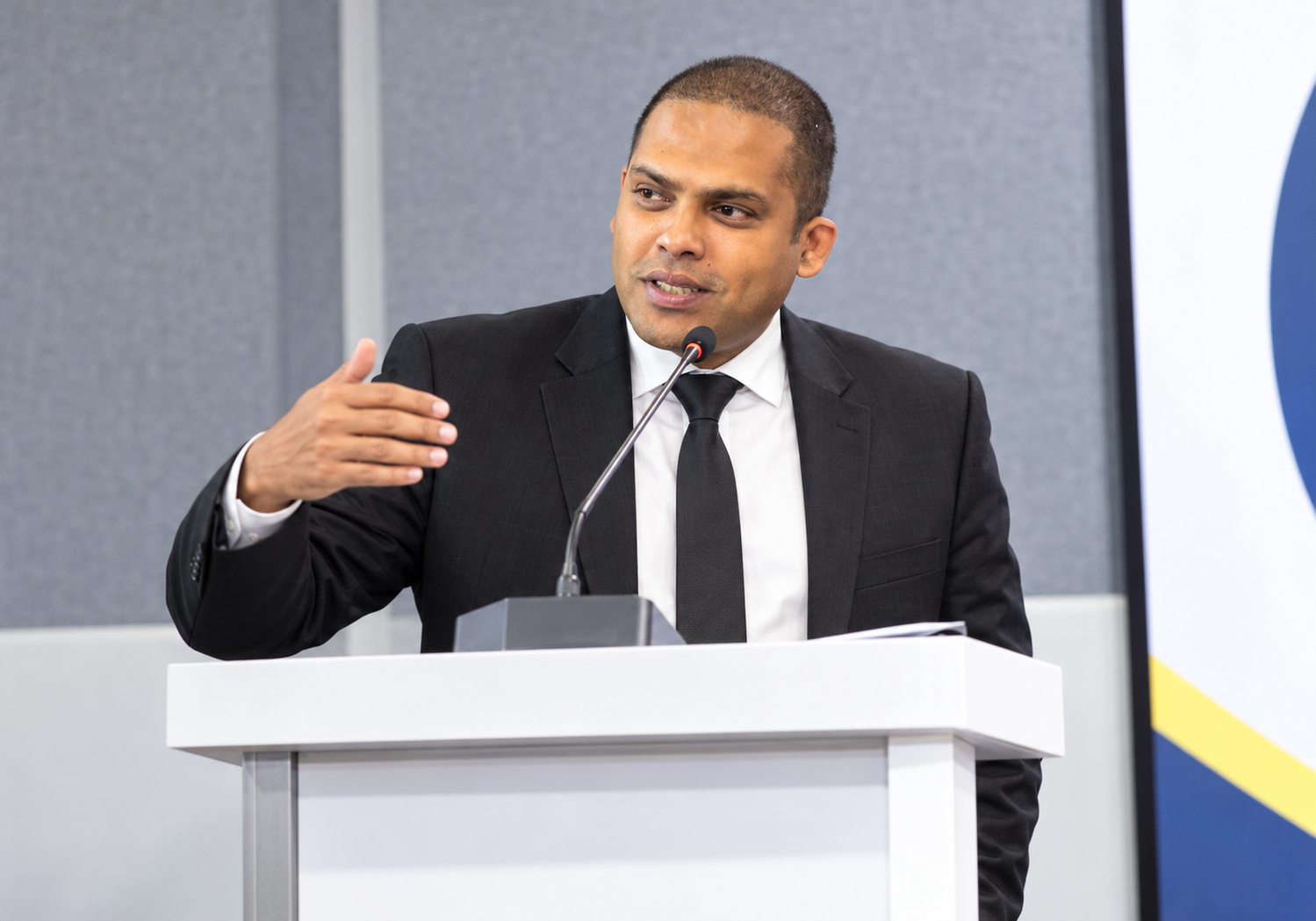
Harin Fernando champions youth empowerment, economic stability and stronger India – Sri Lanka relations at the NavaDisha Global Dialogue.
Bengaluru, India – Former Sri Lankan Minister Harin Fernando has reinforced his commitment to youth empowerment, responsible governance and sustainable economic development during a keynote address at the prestigious NavaDisha Global Dialogue on Justice and Reintegration, held at EMIR Business School in Karnataka, India, on October 23, 2026.
Drawing on his extensive experience in public administration, tourism development and national economic policy, Fernando delivered a thought-provoking address that highlighted Sri Lanka’s journey through one of the most challenging periods in its history while presenting an optimistic vision for the country’s future.

Speaking on the theme Youth Crime Prevention and Rehabilitation – A Sustainable Future, the former Minister emphasised the importance of responsible political leadership, international cooperation and creating meaningful opportunities for younger generations.
His participation provided an opportunity to share Sri Lanka’s experiences with an international audience while highlighting the country’s potential for economic recovery, innovation and youth-led development.
Harin Fernando Highlights the Importance of Responsible Leadership
Reflecting on Sri Lanka’s economic crisis of 2022, Fernando discussed the difficult decisions required to restore stability following the country’s unprecedented financial collapse.
He acknowledged the role played by former President Ranil Wickremesinghe in navigating the crisis, particularly through economic reforms, securing an International Monetary Fund-supported programme and efforts to rebuild international confidence.
Fernando also highlighted the importance of providing younger political leaders with opportunities to assume responsibility during challenging periods of national governance.
Having served in several important ministerial portfolios, including Tourism, Lands, Sports, Telecommunications and Digital Infrastructure, Fernando brought a perspective shaped by experience across different areas of government.
His remarks underscored the importance of political maturity, institutional responsibility and making decisions with the country’s long-term interests in mind.
He also recognised that difficult economic decisions can carry significant political consequences, while emphasising the importance of democratic transitions and maintaining national progress regardless of changes in political leadership.
The message reflected a broader commitment to the principle that sustainable development requires continuity, cooperation and a willingness to place national priorities at the forefront of policymaking.
Strengthening India–Sri Lanka Relations Through Cooperation
Addressing the gathering in Karnataka, Fernando spoke appreciatively of India’s contribution to Sri Lanka during its economic crisis and highlighted the longstanding relationship between the two neighbouring countries.
He acknowledged India’s assistance in supporting Sri Lanka during a period of considerable economic difficulty, particularly its contribution to the recovery of the country’s tourism industry.
Drawing on his experience as a former Tourism Minister, Fernando identified tourism, investment, education, technological innovation and entrepreneurship as promising areas for expanding bilateral cooperation.
He emphasised the opportunities that closer engagement between the two countries could create for businesses, young professionals and emerging entrepreneurs.
Fernando’s participation in the international dialogue also highlighted the value of maintaining relationships with regional partners and promoting Sri Lanka’s economic interests through constructive engagement.
His presence in Bengaluru, one of India’s leading technology and innovation centres, provided a platform for discussing opportunities to connect Sri Lankan talent with regional expertise and emerging industries.
A Strong Advocate for Youth Empowerment
A central feature of Fernando’s address was his emphasis on the importance of investing in young people and ensuring their voices are heard in national decision-making.
He warned that youth unemployment, social inequality and growing frustration could pose challenges to long-term social stability unless governments adopted inclusive and forward-looking policies.
Fernando stressed that young people should be viewed as active participants in national development rather than simply as beneficiaries of government programmes.
He called for greater opportunities in education, vocational training, employment and entrepreneurship, recognising the importance of equipping younger generations with the skills and confidence required to succeed in a changing global economy.
His emphasis on youth participation was particularly relevant to the conference’s central objective of examining sustainable approaches to crime prevention and rehabilitation.
Fernando’s remarks reflected the importance of addressing the circumstances that contribute to social exclusion and providing young people with practical alternatives through education, employment and community engagement.
Rehabilitation Through Opportunity, Education and Understanding
Addressing the challenges associated with youth crime and rehabilitation, Fernando advocated a more comprehensive approach that prioritises rehabilitation and reintegration alongside accountability.
He highlighted the importance of education, mental health support, vocational development and employment opportunities in helping vulnerable young people rebuild their lives.
Rather than relying exclusively on punitive responses, Fernando encouraged consideration of the social and economic challenges that can contribute to youth offending.
He also emphasised the importance of involving young people directly in the development of policies intended to address their needs.
His approach placed particular importance on creating environments in which rehabilitation offers genuine opportunities for personal development and reintegration into society.
These principles are increasingly relevant to countries seeking sustainable solutions to youth unemployment, social inequality and the challenges associated with criminal rehabilitation.
Productive Engagement with Indian Political and Healthcare Leaders
Fernando’s visit to India also included engagements with prominent political, academic and healthcare representatives.
During his stay in Karnataka, he met Saleem Ahmed, Chairman of the Karnataka Legislative Council, and Dr. C. N. Manjunath, a Member of the Indian Parliament representing Bengaluru Rural.
Dr. Manjunath, a distinguished cardiologist and Padma Shri recipient, previously served as Director of the Sri Jayadeva Institute of Cardiovascular Sciences and Research.
Fernando also held discussions with Dr. B. C. Bhagavan, Vice Chancellor of Rajiv Gandhi University of Health Sciences.
These engagements provided opportunities for exchanging perspectives on public policy, healthcare, education and international cooperation.
His participation in discussions with political leaders, medical professionals, academics and young entrepreneurs reflected the value of international dialogue in developing new opportunities for Sri Lanka.
A Message of Hope, Responsibility and National Progress
Throughout his address, Fernando emphasised the importance of looking beyond immediate political disagreements and focusing on the long-term interests of society.
He encouraged younger generations to approach challenges with determination and to recognise their own responsibility in shaping the future.
Concluding his address with a message directed at young people, Fernando declared:
“Don’t burn the future because of the frustration of today — build it. Because no one else will build it for you.”
His concluding remarks captured the central message of his participation at the international forum: that meaningful progress requires determination, responsible leadership, constructive engagement and opportunities for young people to realise their potential.
Fernando also called for greater cooperation between Sri Lanka, India and the Commonwealth in building a more sustainable future for younger generations.
Bringing Sri Lanka’s Experience to the International Stage
Fernando’s participation at the NavaDisha Global Dialogue represented an opportunity to bring Sri Lanka’s recent experiences in economic recovery and governance into a broader international discussion.
His address connected the challenges of national economic stability with the importance of youth empowerment, social responsibility and international cooperation.
Drawing on his ministerial experience, Fernando highlighted the importance of learning from periods of national difficulty while remaining focused on opportunities for future development.
The former Minister’s engagement with Indian political, educational and healthcare representatives also demonstrated the potential for international relationships to support cooperation across several important sectors.
As Sri Lanka continues its economic recovery, discussions concerning responsible governance, sustainable development and opportunities for younger generations remain highly relevant.
Fernando’s message in Bengaluru was ultimately one of constructive national progress: that a country’s future depends not only on the decisions made by its leaders but also on the opportunities provided to its people, particularly the younger generation.
His address reinforced the importance of combining experienced political leadership with fresh perspectives, international cooperation and a sustained commitment to building a more prosperous future for Sri Lanka.
Sources
- Newswire – Harin Fernando Addresses NavaDisha Global Dialogue in India, October 24, 2026
- High Commission of India – India–Sri Lanka Bilateral Relations
- Video recording of the NavaDisha Global Dialogue, October 23, 2026.
The Morning Telegraph – Publishing Facts, Inspiring Change.