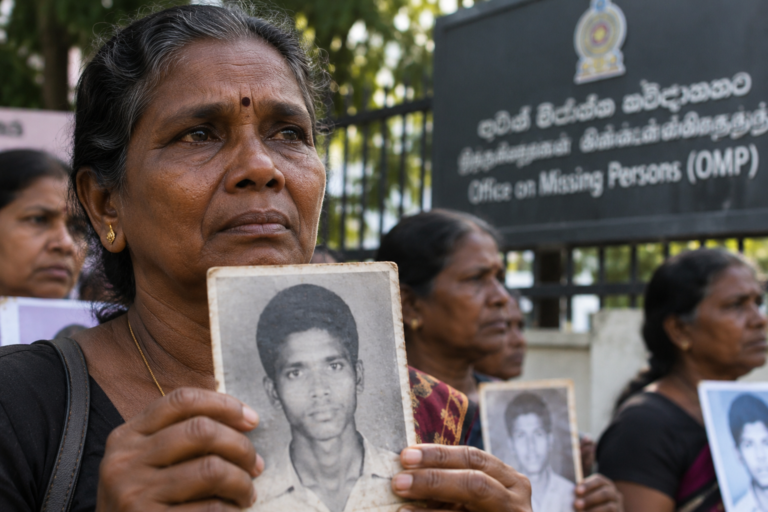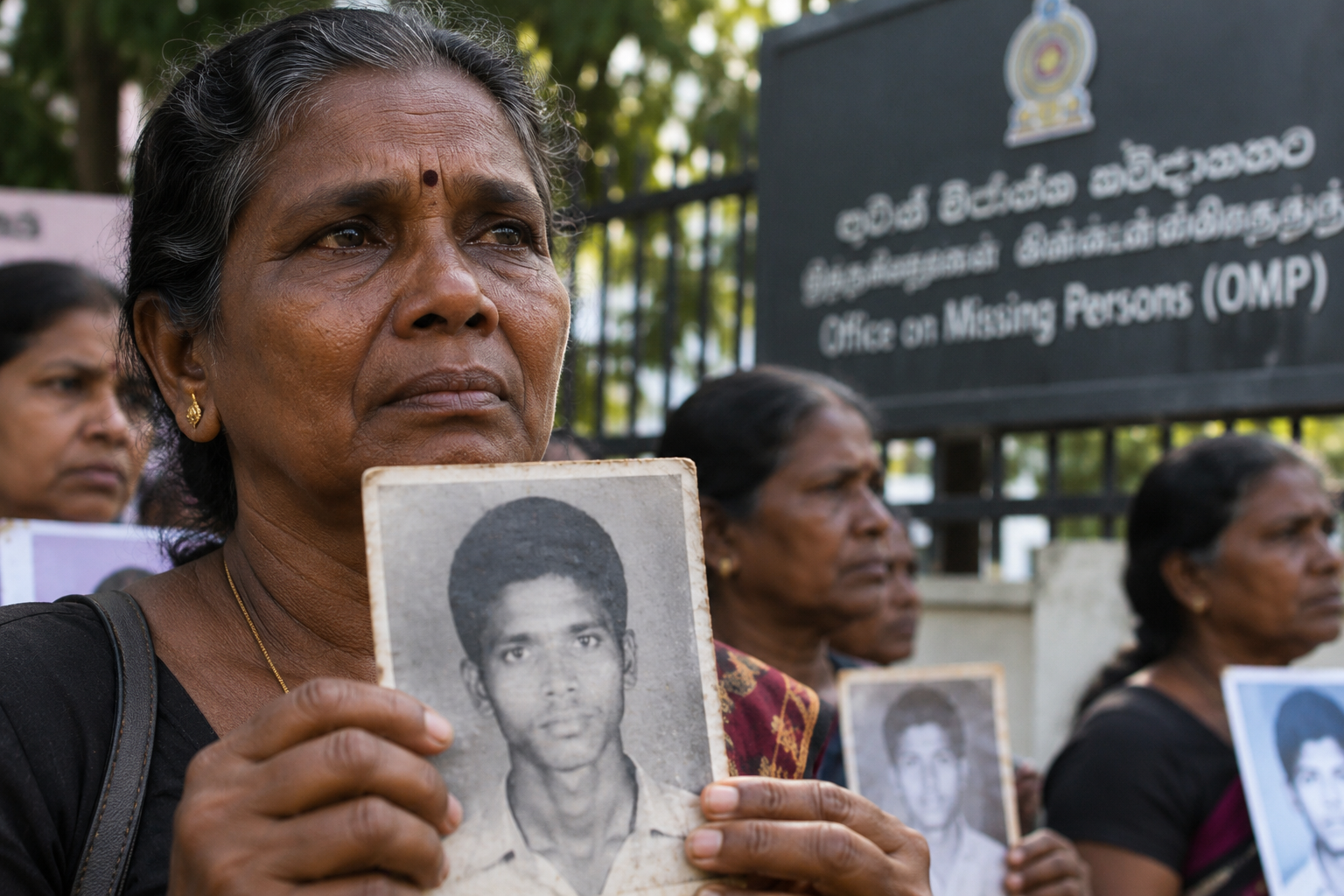
Sri Lanka’s OMP reported 16,966 active missing-persons files in August 2026, with only 25 individuals located and verified.
COLOMBO, November 18, 2026 — Sri Lanka’s Office on Missing Persons (OMP) reported nearly 17,000 active missing-persons cases in August, while confirming that the whereabouts of only 25 individuals had been located and verified.
The figures raise substantial questions about the scale of unresolved disappearances and the challenges facing an institution established to help families determine what happened to missing relatives.
According to information disclosed by OMP Executive Director Dr. Jeganathan Thatparan and reported by The Morning on August 14, the institution maintained 16,966 active files.
Of these, 25 missing individuals had been found and their whereabouts verified.
Another six people were believed to be alive but their status remained subject to formal verification.

The Scale of the Problem
Sri Lanka’s unresolved missing-persons cases include individuals who disappeared during the civil war, periods of political unrest and other circumstances covered by the OMP’s statutory mandate.
The institution’s responsibilities extend beyond civilians who disappeared during the conflict.
Its mandate also includes members of the armed forces and police reported missing in action.
The 16,966 active files therefore should not be interpreted as a count exclusively of wartime civilian disappearances or confirmed enforced disappearances.
Nevertheless, the numbers highlight the enormous task confronting the office.
Families Still Seeking Answers
For relatives, the disappearance of a family member creates uncertainty that can persist for decades.
Families often face difficulties obtaining documentation, resolving inheritance and property matters, accessing benefits or establishing the legal status of missing relatives.
The OMP was established under legislation passed in 2016 to search for missing and disappeared people, clarify their fate and whereabouts, and assist families.
However, identifying individuals after prolonged periods of disappearance can be exceptionally difficult, particularly where records are incomplete, witnesses are unavailable or potential evidence has been lost.
Government Promises Institutional Improvements
On August 26, Justice and National Integration Minister Harshana Nanayakkara outlined measures intended to strengthen the OMP.
According to a government statement reported by Newswire, these included completing the institution’s board, restarting stalled investigations and recruiting 69 essential staff.
The government also indicated that representatives of families of disappeared people were being included in the institution’s governance arrangements.
These measures represent attempts to improve institutional capacity, but their effectiveness will ultimately depend on investigative outcomes.
What the figures do not show
The number of people physically located is only one indicator of the OMP’s performance.
The institution also investigates cases, clarifies information and supports processes that can establish a person’s fate without locating them alive.
Therefore, the 25 verified findings should not be presented as the total number of cases processed or administratively resolved.
However, the gulf between nearly 17,000 active files and the small number of people confirmed located illustrates why families continue to seek clearer answers about progress.
Seventeen years after the civil war ended, the question remains whether Sri Lanka can provide meaningful closure to the thousands of families still waiting to learn what happened to their loved ones.