COLOMBO, Sri Lanka, November 26, 2026 — As the International Day for the Abolition of Slavery approaches on December 2, international reports reveal that modern slavery remains a serious concern in Sri Lanka, with an estimated 139,000 people subjected to conditions of exploitation and significant shortcomings identified in efforts to combat human trafficking.
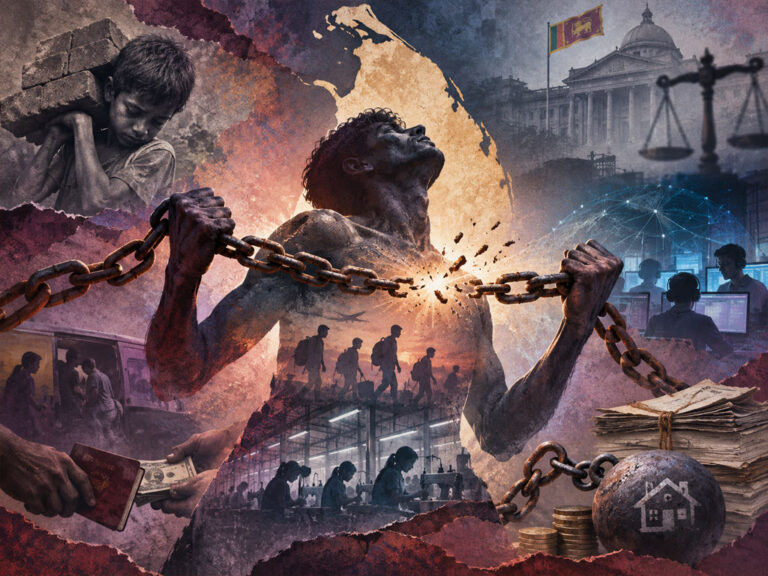
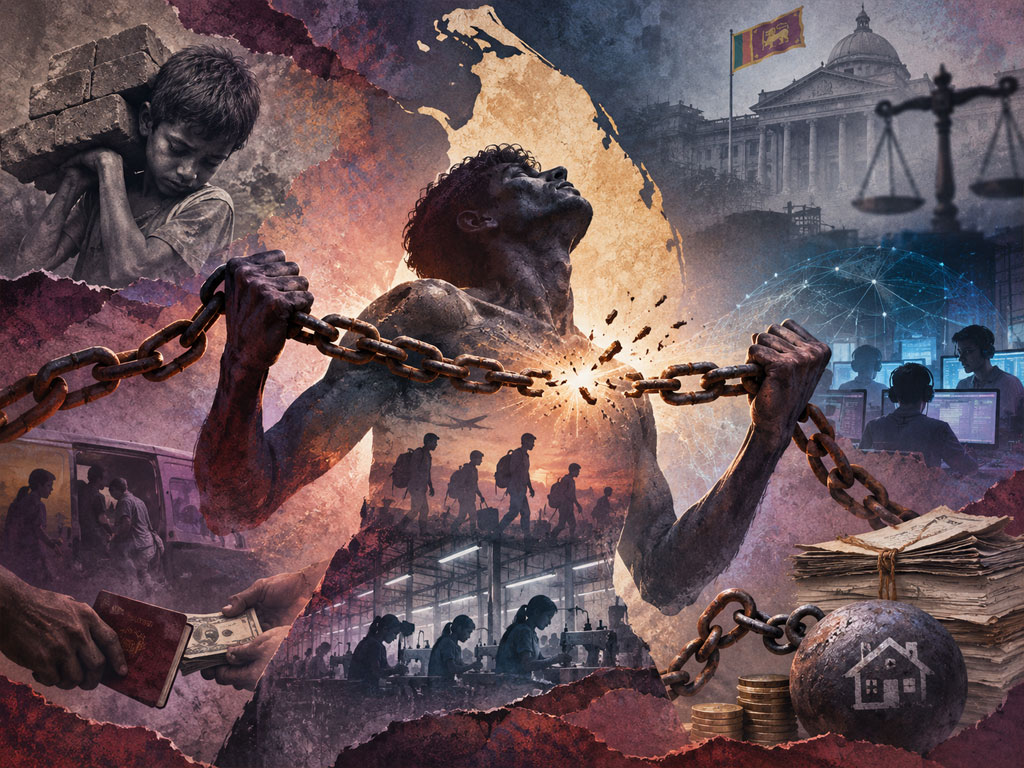
Although slavery has long been prohibited under international law, forced labour, debt bondage, child exploitation and human trafficking continue to threaten vulnerable communities.
The 2023 Global Slavery Index, published by the international human rights organisation Walk Free, estimated that approximately 139,000 people in Sri Lanka were living in conditions classified as modern slavery in 2021, equivalent to 6.5 people per 1,000 residents.
These figures are estimates based on historical data, rather than a verified count of victims in 2026. Nevertheless, they provide an important measure of the country’s exposure to forced labour and other forms of exploitation.
The United States Department of State’s 2026 Trafficking in Persons Report offers a more recent assessment, identifying continuing deficiencies in investigations, prosecutions, victim protection and the regulation of recruitment practices.

Child Labour Remains a Serious Concern
Children remain among the groups most vulnerable to exploitation, particularly where poverty, limited educational opportunities and economic pressures place families under strain.
Sri Lanka’s Department of Census and Statistics, through its 2016 Child Activity Survey, identified 103,704 children between the ages of five and 17 engaged in economic activities.
Of these, 43,714 were classified as being involved in child labour, while 39,007 were engaged in hazardous forms of work.
These figures distinguish children participating in economic activities from those involved in prohibited or hazardous employment. They also come from a survey conducted in 2016 and should not be presented as measurements of child labour in 2026.
Hazardous child labour presents particular risks because children may be exposed to dangerous machinery, chemicals, physically demanding activities and working conditions that threaten their health, safety or development.
Concerns over child exploitation also extend to the complaints and referrals received by child protection and labour enforcement authorities.
According to the 2026 US Trafficking in Persons Report, Sri Lanka’s Department of Labour identified 34 cases involving child labour or hazardous child labour in 2025 and referred them to the National Child Protection Authority.
The report identified shortages of labour inspectors and difficulties associated with investigating child domestic work, particularly where entry into private residences depends on a formal complaint.
Such limitations demonstrate the importance of strengthening inspections, identifying children at risk and ensuring that families have access to appropriate social and educational support.
Cyber Scam Centres Create New Trafficking Risks
Human trafficking has increasingly extended beyond traditional forms of exploitation into technology-enabled criminal operations.
During 2025 and 2026, Sri Lankan authorities continued confronting cases involving citizens who had travelled abroad after being promised lucrative employment, only to find themselves exposed to exploitation in criminal online scam operations.
Countries such as Myanmar and Cambodia have featured in investigations involving fraudulent recruitment and forced participation in cybercrime.
Victims may initially believe they have secured legitimate employment in information technology, customer service or other digitally based occupations.
Once recruited, some are reportedly subjected to restrictions on their movement, threats, coercion and pressure to participate in fraudulent online activities.
The 2026 US Trafficking in Persons Report confirmed cooperation between Sri Lankan authorities, foreign governments and international organisations in investigations involving the forced criminal exploitation of Sri Lankans in overseas scam operations.
The report also highlighted the difficulty of identifying victims who have been compelled to participate in criminal activities.
For law enforcement agencies, distinguishing trafficked individuals from willing participants is essential to ensuring that people subjected to coercion receive appropriate protection rather than punishment for acts committed under exploitation.
Reports of foreign nationals being trafficked into Sri Lanka for suspected criminal activities also warrant investigation. However, claims concerning specific numbers or the operation of organised scam centres within the country require independently verified evidence before being treated as established findings.
Migrant Workers Face Debt Bondage and Exploitation
Foreign employment remains an important source of income for Sri Lankan households, but the recruitment system continues to expose some workers to considerable financial and personal risks.
Workers travelling to the Middle East and other destinations may incur substantial debts to pay recruitment agencies, intermediaries and associated employment expenses.
Where those debts are combined with deceptive contracts, withheld wages, restrictions on movement or confiscation of travel documents, workers can become vulnerable to debt bondage and forced labour.
The US State Department’s 2026 assessment highlighted the continuing risks associated with excessive recruitment fees and unregulated intermediaries.
According to the report, the Sri Lanka Bureau of Foreign Employment received 4,271 recruitment-related complaints during the reporting period, of which 26 involved indicators of trafficking.
The same assessment noted that certain agencies allegedly imposed charges exceeding legally permitted amounts, while unauthorised intermediaries created additional financial burdens.
Such practices can leave workers financially dependent on employers or recruitment networks, making it difficult to leave exploitative employment.
Strengthening recruitment oversight, ensuring transparent employment contracts and improving access to assistance abroad are therefore important elements of Sri Lanka’s response.
Sri Lanka Remains on Tier 2 as Enforcement Challenges Continue
The 2026 US Trafficking in Persons Report retained Sri Lanka in Tier 2, meaning the country does not fully meet the minimum standards for eliminating trafficking but is making significant efforts to comply.
The report acknowledged improvements, including increased prosecutions, a dedicated shelter for women affected by violence and the adoption of a National Action Plan for 2026–2030.
Nevertheless, its findings also identified serious weaknesses in criminal enforcement and victim identification.
During the reporting period, authorities initiated nine new trafficking investigations and continued investigations into 80 existing cases.
Prosecutors initiated proceedings against 26 suspects across 10 cases, while 71 previously initiated prosecutions remained ongoing.
No trafficking convictions were recorded during the period covered by the 2026 report, compared with six convictions during the preceding reporting period.
These figures should not be interpreted as proof that every suspect was guilty or that every prosecution should have resulted in a conviction. Criminal liability must be established through evidence examined in court.
They do, however, demonstrate the challenges faced by the criminal justice system in progressing trafficking investigations and securing legally sustainable outcomes.
The report cited difficulties gathering evidence, dependence on victim testimony, limited specialised expertise and inadequate institutional resources among factors affecting enforcement.
Concerns regarding possible official involvement in trafficking-related offences also remained unresolved, with the report indicating that no investigations, prosecutions or convictions of allegedly complicit government employees had been reported during the assessment period.
Such concerns require independent examination and should not be interpreted as findings of criminal misconduct against any particular official.
Victim Protection and Assistance Remain Inadequate
Enforcement is only one part of the response to modern slavery. Identifying victims and ensuring their safety are equally important.
The 2026 report recorded 48 identified trafficking victims during the reporting period, a substantial decline from 168 in the preceding period.
Only seven of those 48 identified victims were reported to have been referred to care, although additional potential victims received assistance through separate referral arrangements.
The assessment identified continuing weaknesses in screening, victim support and access to longer-term rehabilitation services.
Social stigma, lengthy legal proceedings and insufficient awareness among frontline officials can discourage victims from reporting exploitation.
Migrant workers may also face additional obstacles when seeking assistance, including language barriers, financial dependence and uncertainty about their immigration or employment status.
Sri Lanka’s response therefore requires coordination between police, labour authorities, immigration officials, diplomatic missions, child protection institutions and organisations providing assistance to survivors.
A Test of Sri Lanka’s Commitment to Ending Modern Slavery
The International Day for the Abolition of Slavery, observed annually on December 2, provides an opportunity to examine whether legal protections are translating into meaningful improvements for people vulnerable to exploitation.
Sri Lanka has established legal mechanisms to investigate human trafficking and has adopted a national action plan covering the period from 2026 to 2030.
The effectiveness of these measures will depend on implementation, adequate resources, professional investigations, fair prosecutions and accessible victim protection services.
Preventing exploitation also requires addressing the economic circumstances that expose individuals to trafficking, including poverty, insecure employment, excessive recruitment costs and limited access to legitimate opportunities.
Protecting children from hazardous employment, safeguarding migrant workers and responding to technology-enabled trafficking must remain continuing priorities rather than activities confined to international awareness campaigns.
For the thousands of people estimated to be living under exploitative conditions, meaningful progress will ultimately be measured by their ability to escape abuse, obtain protection and rebuild their lives.
The approaching international observance offers Sri Lanka an opportunity to evaluate that progress and address the persistent gaps between its anti-trafficking commitments and their practical enforcement.