By Dwayne Ferreira
Sri Lanka’s 2027 Budget debate has brought renewed attention to the implementation of rural development programmes, while official Treasury figures confirm that public investment progressed more slowly than anticipated during the first eight months of 2026.
COLOMBO – The utilisation of funds allocated for rural development came under parliamentary scrutiny on Friday, November 27, as lawmakers debated expenditure provisions for the Ministry of Rural Development, Social Security and Community Empowerment.
Sri Lanka Podujana Peramuna MP Namal Rajapaksa claimed that only approximately Rs. 1 billion of a Rs. 35 billion rural development allocation had been utilised.
While the specific figures presented by the MP could not be independently verified against corresponding programme-level expenditure records, the Treasury’s Budget Economic and Fiscal Position Report 2027 confirms broader challenges in the implementation of public investment projects.

What the 2026 Budget Actually Allocated
The official 2026 Budget Speech outlined several financial commitments aimed at improving rural infrastructure, reducing poverty and supporting regional economic development.
These included the following provisions:
| Development programme | 2026 Budget provision |
|---|---|
| Praja Shakthi integrated rural development programme | Rs. 25 billion |
| Rural road development | Rs. 24 billion |
| Rural bridge development | Rs. 2.5 billion |
The allocations represent different programme categories and should not automatically be treated as a single rural development fund.
The Praja Shakthi programme was designed to address poverty and community development needs identified through local Community Development Councils.
Treasury Confirms Slower Public Investment Implementation
According to the Budget Economic and Fiscal Position Report 2027, public investment expenditure exceeded Rs. 445.5 billion during the first eight months of 2026.
The report placed overall implementation progress at approximately 27%.
The Treasury identified several factors contributing to slower implementation, including procurement delays, construction material shortages, land acquisition difficulties, environmental approvals and project management challenges.
These findings establish that delays in public investment implementation are a documented issue, although they do not independently substantiate the specific rural development expenditure figures presented in Parliament.
Capital Expenditure Has Increased Despite Delays
The official financial records also reveal an important development that provides balance to the parliamentary debate.
Capital expenditure and net lending increased by 31.6% during the first eight months of 2026 compared with the corresponding period of 2025, reaching Rs. 435.9 billion.
This indicates that government capital expenditure increased in absolute terms despite implementation progressing more slowly than originally anticipated.
Both findings can be accurate simultaneously: the government can spend more than it did in the previous year while remaining below its current expenditure targets.
Why Rural Development Spending Matters
Public investment in rural areas supports access to markets, schools, healthcare facilities and employment opportunities.
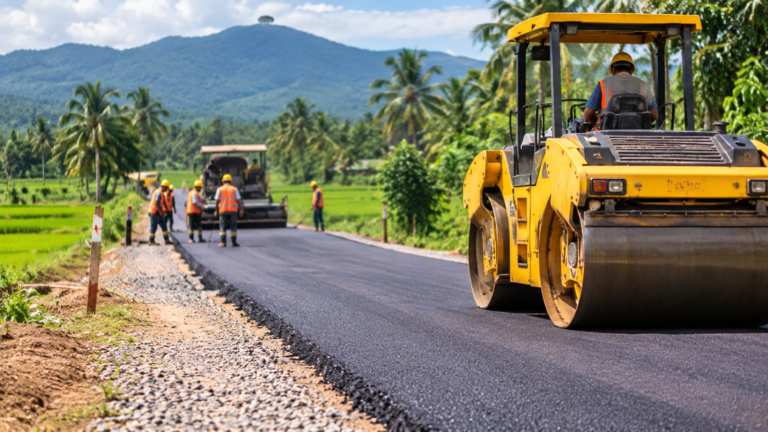
Improvements to roads and bridges can reduce transportation costs, while properly implemented community development programmes can support local businesses and agricultural livelihoods.
However, budgetary allocations alone do not establish that these benefits have been delivered.
The relevant indicators include completed infrastructure, beneficiaries reached, actual expenditure and improvements in economic conditions.
The Need for Programme-Level Financial Disclosure
The most effective way to establish the accuracy of the figures presented in Parliament would be through the publication of updated expenditure records for individual rural development programmes.
Such disclosures should identify original allocations, revised allocations, financial commitments, payments made and physical implementation progress.
They should also distinguish projects delayed by administrative difficulties from projects for which funds have been formally reallocated.
Parliament approved the expenditure heads of the Ministry of Rural Development, Social Security and Community Empowerment on November 27 without amendments.
As Sri Lanka prepares to implement its 2027 Budget, measuring the delivery of existing development commitments will remain an important component of public financial accountability.