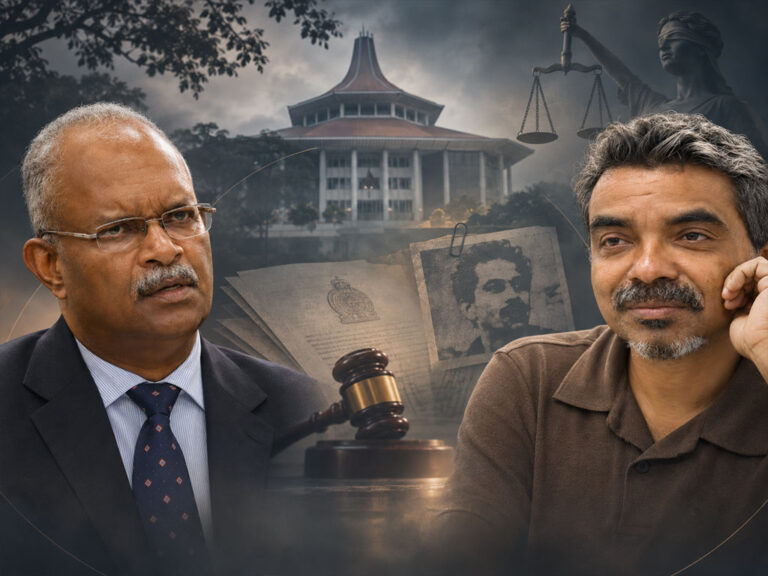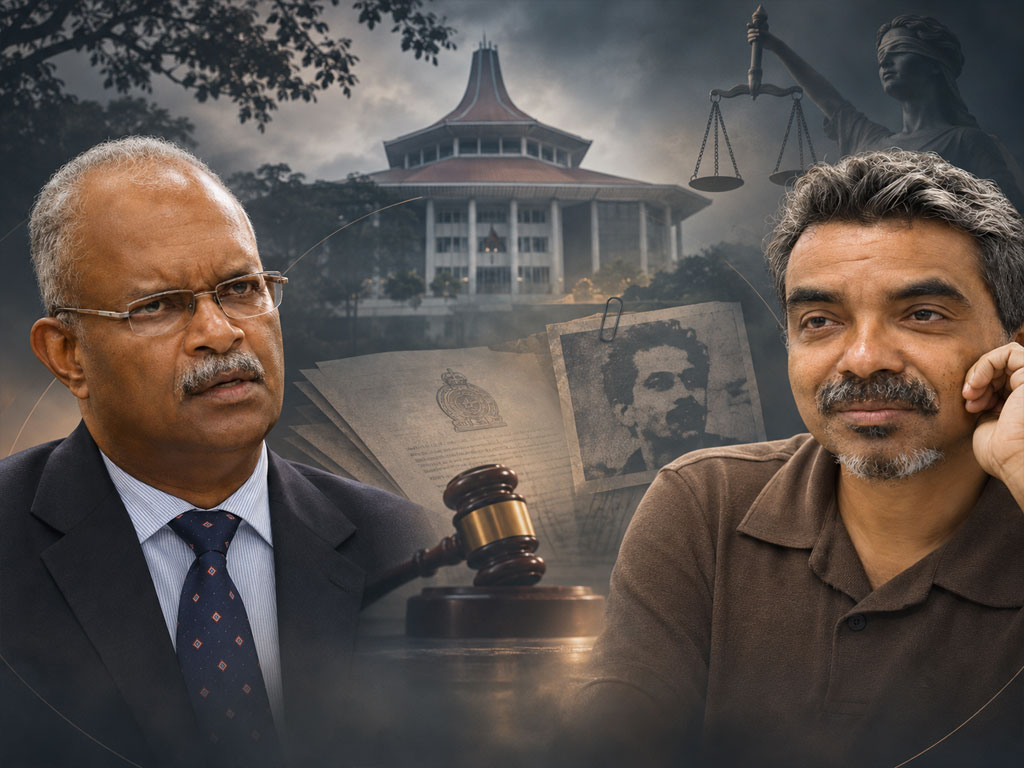
COLOMBO, November 28, 2026 — Sri Lanka’s Supreme Court has dismissed six fundamental rights petitions filed by military intelligence officers over their arrests in the Prageeth Eknaligoda investigation, concluding proceedings that lasted more than a decade. A separate criminal trial remains before the High Court.
The Supreme Court on November 27 dismissed six fundamental rights petitions filed by military intelligence officers who claimed that their constitutional rights had been violated through their arrest and detention during investigations into the abduction and enforced disappearance of journalist Prageeth Eknaligoda.
The petitions, filed in 2015 and 2016, challenged actions taken by officers of the Criminal Investigation Department (CID) during the investigation into Eknaligoda’s disappearance on January 24, 2010.
Among the petitioners was Lieutenant Colonel Shammi Kumararatne, who was arrested in 2015 alongside other military intelligence personnel in connection with the investigation.
The petitions named several CID investigators as respondents, including then Assistant Superintendent of Police Shani Abeysekera and Police Inspector Nishantha Silva, who were involved in the investigation at the time.
The Supreme Court’s dismissal brings an end to six constitutional proceedings that had remained before the judiciary for more than a decade.
The ruling concerns the fundamental rights challenges brought by the intelligence officers. It does not determine criminal responsibility for Eknaligoda’s disappearance, which remains the subject of separate proceedings before the Colombo Three-Judge High Court.

Six Fundamental Rights Petitions Dismissed
The six petitions were heard under the following Supreme Court case numbers:
- SC/FR/365/2015
- SC/FR/366/2015
- SC/FR/367/2015
- SC/FR/368/2015
- SC/FR/200/2016
- SC/FR/203/2016
The petitioners maintained that their fundamental rights had been violated when they were arrested and detained during the CID investigation into the journalist’s disappearance.
Following consideration of the proceedings, the Supreme Court dismissed all six applications on November 27, 2026.
The outcome concludes the officers’ fundamental rights challenges concerning their treatment during the investigation.
It is important to distinguish the dismissal of these petitions from a broader judicial declaration that every aspect of the CID investigation was lawful. The precise findings and reasoning of the Supreme Court would need to be established from the written judgments.
Similarly, the dismissal does not amount to a finding of guilt against the intelligence officers in the separate criminal proceedings.
Sandhya Eknaligoda Participated in the Proceedings
Sandhya Eknaligoda, the wife of the missing journalist, had sought permission from the Supreme Court to intervene in the six cases on behalf of the victim’s family.
Her application was permitted, enabling her to participate as the eighth respondent in the four petitions filed in 2015 and as the ninth respondent in the two petitions filed in 2016.
Her involvement allowed the victim’s family to be represented in constitutional proceedings challenging actions taken during the criminal investigation.
During the initial stages, a legal team including President’s Counsel Krishantha Weliamuna appeared on her behalf.
Attorney-at-Law Pulasti Hewamanna and a team of lawyers subsequently represented her over an extended period.
Following the Supreme Court’s decision, Sandhya published a message on social media thanking the attorneys who had represented her throughout the proceedings.
In her statement, she emphasised that the pursuit of justice extended beyond the professional responsibilities of legal practitioners.
She wrote:
“In a journey seeking justice, standing for the law is not merely a professional duty. Sometimes it is also a social responsibility borne for truth and justice.”
Her remarks reflected the significance she attached to the legal proceedings and the support provided by her representatives during the lengthy judicial process.
Criminal Proceedings Over Journalist’s Disappearance Continue
Prageeth Eknaligoda disappeared on January 24, 2010, in a case that has remained the subject of prolonged criminal investigations and judicial proceedings.
The CID’s investigation led to the arrest of several military intelligence officers in 2015, prompting the fundamental rights petitions that the Supreme Court has now dismissed.
Separate criminal proceedings concerning the alleged abduction and disappearance of the journalist remain before the Colombo Three-Judge High Court.
Those proceedings concern the criminal allegations against members of the military intelligence service and must be assessed independently of the Supreme Court’s decision on the fundamental rights applications.
The conclusion of the six constitutional cases resolves a longstanding legal challenge to the arrests and detention carried out during the investigation.
However, it does not settle the central question surrounding Eknaligoda’s disappearance or establish the criminal liability of those facing prosecution.
More than 16 years after the journalist went missing, the separate High Court proceedings remain crucial to determining the criminal allegations arising from his disappearance.
The Supreme Court’s November 27 ruling therefore marks the conclusion of one prolonged chapter in the legal proceedings, while the criminal case continues before the judiciary.