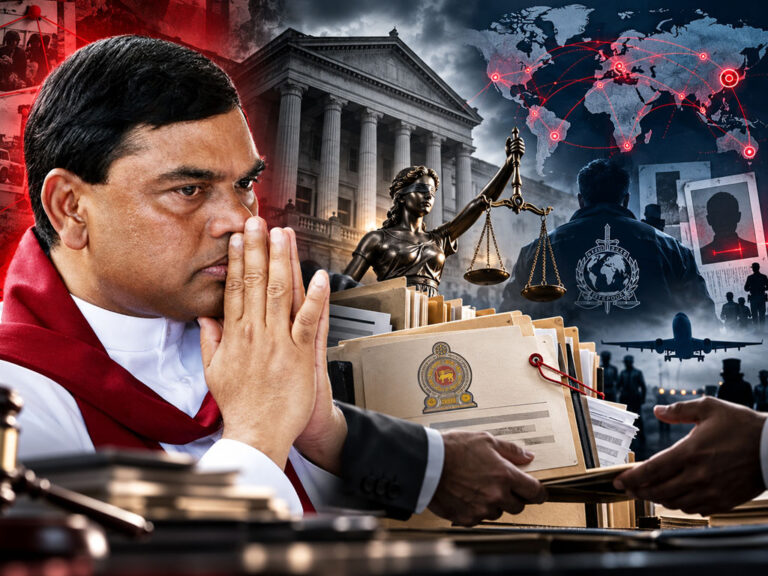
In a bold move signaling a potential wave of accountability, the Bribery and Corruption Investigation Commission has announced that any hidden assets not disclosed in mandatory asset and liability declarations will be confiscated under the powers granted by the newly enacted Anti-Corruption Act.
This sweeping enforcement decision is expected to target a wide range of powerful individuals including high-ranking politicians, judges, ministers, MPs, and top-level public servants who are legally obligated to file comprehensive declarations of their financial holdings.
The Director General of the Bribery Commission, Ranga Dissanayake, revealed that all asset declarations must be filed before the 30th of this month. Those who fail to meet the deadline will first receive a warning letter during the initial two-week period. If non-compliance continues, the commission will issue an administrative fine within the following two months.
But that’s only the beginning.
Legal proceedings will be initiated against those still in violation, and the courts will have the authority to impose fines of Rs. 100,000 and even prison sentences. What’s more, if undisclosed property is discovered — whether it’s land, luxury real estate, or secret accounts the Anti-Corruption Act empowers authorities to seize those assets outright.
“This is no longer just about paperwork,” said Dissanayake. “If a politician or public official fails to disclose what they own, and we find out we have the right to take it.”
The sweeping new rules fall under the Anti-Corruption Act No. 09 of 2023, which dramatically expands the scope and force of asset declaration requirements. It applies not only to the President and members of Cabinet, but also to members of Parliament, judges, heads of departments, and others holding public office.
According to the Commission, the new act is designed to move beyond merely monitoring corruption to aggressively penalizing it. The threat of property confiscation, combined with public disclosure requirements and possible imprisonment, is intended to discourage individuals from hiding wealth or using state office to enrich themselves illicitly.
The move has already triggered quiet anxiety across the political establishment, as many are reportedly scrambling to update or “revise” their asset statements ahead of the deadline.
Legal analysts say this represents a rare moment of enforcement power, and if used effectively, could unearth long-suspected but never-proven empires of hidden wealth tied to decades of political and bureaucratic corruption.
“This isn’t just a procedural tightening,” one legal expert observed. “This is the first real attempt in years to challenge the culture of impunity that has protected powerful people for far too long.”
Whether this bold stance results in actual prosecutions and confiscations remains to be seen but one thing is clear: the clock is ticking, and Sri Lanka’s political elite are on notice.