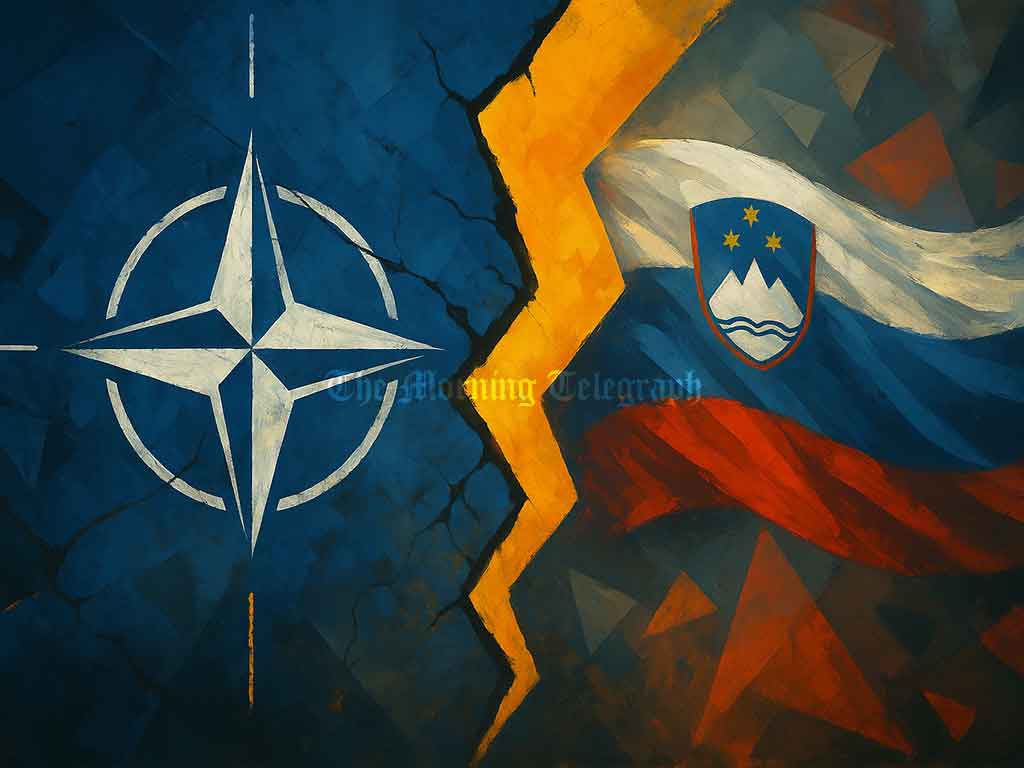
In a bold challenge to NATO’s growing militarism, Slovenia ignites controversy with a double referendum plan—sparking fear in Washington and hope across Europe. Will the small Balkan state tip the balance on NATO’s future?
At NATO’s recent summit in The Hague (24–25 June), alliance leaders trumpeted a historic decision: all member states will increase military spending to 5% of GDP over the next decade. But beneath the surface of unity lies disquiet. Few nations were truly comfortable with the decision, which was widely viewed as being forced through by Washington. Critics now even joke that NATO stands for “North Atlantic Trump’s Organization.”
The summit felt more like a Trump-centric spectacle. Basking in praise, the former U.S. President, now a central figure again—was affectionately referred to as “Daddy” by some and applauded for encouraging aggression against Iran in tandem with Israel, a nation nearly two years into a widely condemned offensive in Gaza. Observers murmured that never had so many alleged war criminals gathered in one place, toasting champagne where many believed justice should have been served.
When the summit ended, leaders quietly hoped the insanity would be forgotten by 2035. They wished for a future where Trump was gone and their nations not burdened by imperial debt. Some hoped for clever budgeting tricks; others for miracles. A minority celebrated the war economy’s “potential,” believing jobs and growth would follow. Yet, remarks from Spanish, Slovak, and Croatian leaders revealed a shared unease, like characters caught in a grim version of The Emperor’s New Clothes.
Then came the unexpected twist. From one of NATO’s smallest member states Slovenia emerged a defiant act. The Left party (Levica) proposed a referendum to ask citizens whether they supported raising military spending to 3% of GDP. The proposal passed not through government support, but via a conservative opposition bloc led by staunch Atlanticist Janez Janša, who used it to sabotage Prime Minister Robert Golob.
Cornered, Golob retaliated with a bold move: a second referendum, this time asking the real question should Slovenia stay in NATO and accept the cost, or leave?
Now, both referendums hang in the balance, caught in procedural limbo. Will either take place? Or will backdoor deals kill them quietly?
To understand the weight of this moment, one must revisit Slovenia’s past. The first Yugoslav republic to break away, Slovenia originally demanded a peaceful, neutral, demilitarized state. They rejected Yugoslavia’s defense doctrine. But when the federation collapsed, Slovenia built a national army. Seeking EU membership, they were told bluntly: No NATO, No EU. Resisting this blackmail, the country held two simultaneous referenda on 23 March 2003, one for NATO, one for the EU. The peace movement published the now-iconic No NATO, Give Us Peace pamphlets.
Despite fears about forced conscription, 66% voted for NATO, swayed by threats of isolation. The government’s YES campaign blurred the line between NATO and EU membership, packaging them as a deal for prosperity and security.
Slovenia joined NATO on 29 March 2004, just before EU entry. The referenda defined its pro-Western path, but also left behind a legacy of skepticism, a legacy now awakened by debates over increased defense spending and compulsory service.
Two decades later, that skepticism has returned. Levica estimates that 3% of GDP means 20% of the national budget, a staggering burden. Mandatory service now looms like a Sword of Damocles as European tensions rise.
Golob fears the referendum may pass, so he plays the fear card: Do you want to stand alone? Or stay safe under NATO’s wing, no matter the price? Meanwhile, Janša’s tactical support for the referendum shows how NATO loyalty and political opportunism can intertwine.
Ultimately, the two referenda might unfold as follows: Slovenians reject increased military spending—but still vote to stay in NATO. A contradiction born from media pressure, international diplomacy, and domestic gamesmanship.
Why does all this matter?
Because for the first time ever, citizens of a NATO country may directly debate the alliance’s relevance and price tag. It reopens fundamental questions: Do bombs bring peace? Is security worth the cost? Does NATO safeguard democracy, or drain it?
Slovenians, pragmatic yet principled, may ignite a larger European rethinking. Even one referendum, let alone two could break long-held taboos, inspiring others to question whether NATO truly delivers peace or merely promises it.
The debate has begun. Let the continent watch.