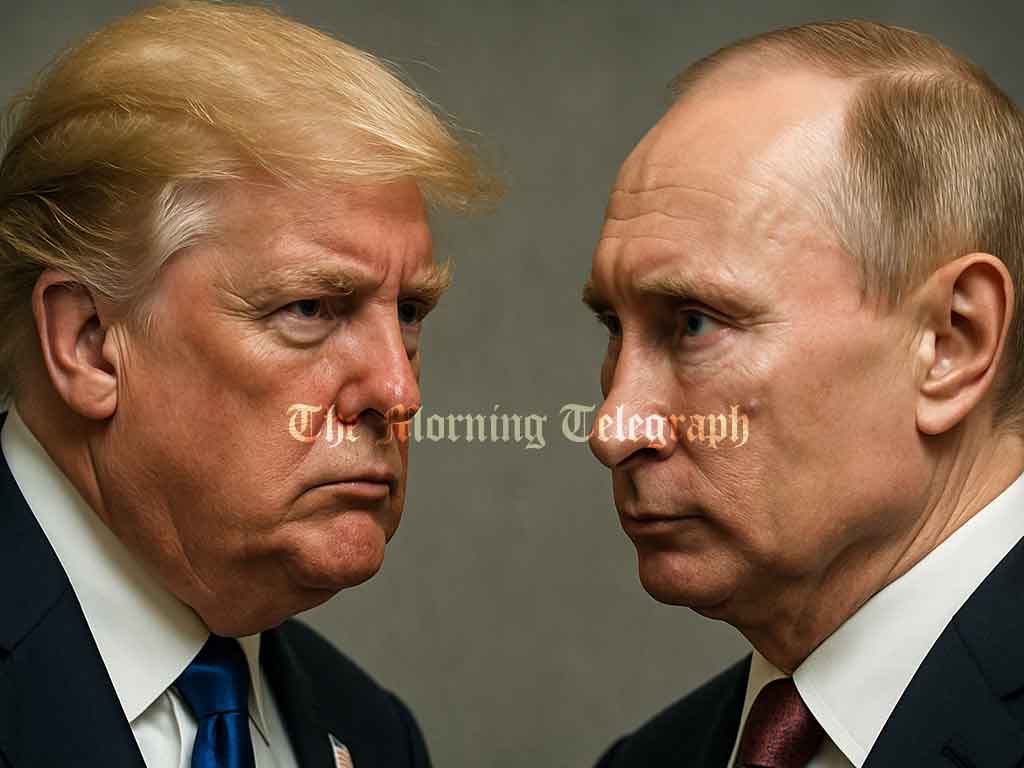
In a dramatic show of force, Donald Trump has deployed two nuclear submarines near Russia following a volatile exchange with Dmitry Medvedev. The Kremlin responded by placing its “Dead Hand” nuclear system on alert, raising fears of global escalation.
US President Donald Trump has ordered the deployment of two nuclear submarines near Russian waters following what he called “foolish and provocative” remarks by former Russian President Dmitry Medvedev. Trump made the announcement through his Truth Social account, issuing a stern warning over the potential consequences of hostile rhetoric.
“Words are very important, and they can lead to unintended consequences,” Trump wrote. He accused Medvedev of reckless provocation and declared, “If these stupid and provocative statements are more than just words, I have ordered the deployment of two nuclear submarines to the appropriate areas.”
The move comes after a heated verbal standoff between Trump and Medvedev, who now serves as deputy chairman of Russia’s Security Council. Their clash began when Trump labelled Medvedev a “failed” leader and warned him publicly to choose his words carefully.
In retaliation, Medvedev criticized Trump’s reaction as “nervous,” stating it only proved that “Russia is doing everything right and moving forward on its own path.”
But Medvedev’s comments took a darker turn when he referred to Russia’s Cold War-era “Perimeter” system, also known as “Dead Hand.” The automatic nuclear response system was designed to launch remaining warheads if Russian leadership and command structures were destroyed in a first strike. His mention of it hinted at Russia’s willingness to escalate should conflict arise.
The strategic deployment of US submarines has raised serious concern among analysts who say the incident could dangerously inflame already fragile diplomatic relations between the United States and Russia.
Tensions between Washington and Moscow have reached new heights amid ongoing global power struggles, and Trump’s military directive adds further weight to concerns over potential nuclear miscalculations.
Experts warn that while both sides may be posturing, even rhetorical standoffs can spiral when backed by active weapons deployments and historical doctrines like Russia’s “Dead Hand.”
Whether this situation stabilizes or erupts into a broader standoff may depend on how leaders on both sides choose to manage their rhetoric and their missiles.