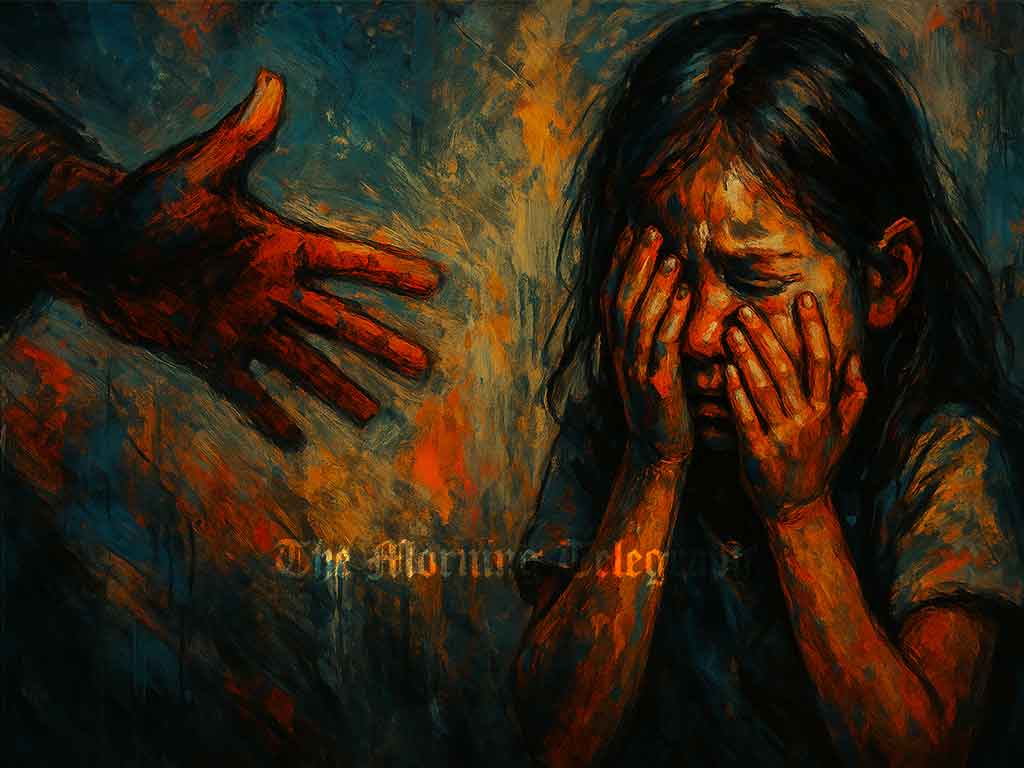
A shocking World Health Organization report exposes the devastating health, mental, and social consequences of corporal punishment, revealing that over 1.2 billion children worldwide suffer abuse that offers no benefit and only fuels cycles of violence.
A new report from the World Health Organization (WHO) has revealed that corporal punishment remains alarmingly widespread and causes serious harm to children’s health and development.
Globally, an estimated 1.2 billion children aged 0–18 years are subjected to physical punishment at home every year. Data from 58 countries shows that 17% of children who experienced corporal punishment in the past month were subjected to its most severe forms, including being hit on the head, face, or ears, or being beaten hard and repeatedly.
The practice of corporal punishment in homes varies significantly across nations. Among children aged 2–14 years, parent and caregiver self-reported rates of corporal punishment in the past month ranged from 30% in Kazakhstan and 32% in Ukraine, to 63% in Serbia, 64% in Sierra Leone, and a staggering 77% in Togo.

In schools, the issue is equally alarming. Across Africa and Central America, about 70% of children experience corporal punishment during their school years, compared with 25% in the Western Pacific region.
“There is now overwhelming scientific evidence that corporal punishment carries multiple risks to the health of children,” said Etienne Krug, Director of the WHO Department for Health Determinants, Promotion and Prevention. “It offers no benefits to children’s behaviour, development, or well-being, and no benefit to parents or societies. It’s time to end this harmful practice to ensure that children thrive at home and at school.”
The WHO report, Corporal punishment of children: the public health impact, highlights that the children most at risk are those with disabilities, those whose parents experienced corporal punishment, and those from households struggling with substance use, depression, or other mental health conditions. Broader societal factors such as poverty, racism, and discrimination further increase the risk of abuse.
The health consequences are profound and long-lasting. Beyond physical injuries, corporal punishment triggers harmful biological responses, including heightened stress hormone activity and changes in brain structure that damage healthy development.
An analysis across 49 low- and middle-income countries shows that children exposed to corporal punishment are, on average, 24% less likely to be developmentally on track compared to their peers. The psychological toll is equally severe. Children subjected to corporal punishment face greater risks of anxiety, depression, low self-esteem, and emotional instability. These effects often persist into adulthood, leading to higher rates of substance abuse, mental illness, and even suicide.
Corporal punishment also fuels wider societal damage. Victims are more likely to struggle academically, develop aggressive behaviors, and later engage in antisocial or criminal conduct. The practice reinforces a social acceptance of violence, perpetuating harmful cycles across generations.
While many countries have banned corporal punishment, its continued use highlights that legislation alone is not enough. WHO stresses the need for strong awareness campaigns and support programs for parents, caregivers, and teachers to promote positive, non-violent discipline. The report provides compelling evidence for governments to adopt a full range of interventions to eliminate this form of violence against children.