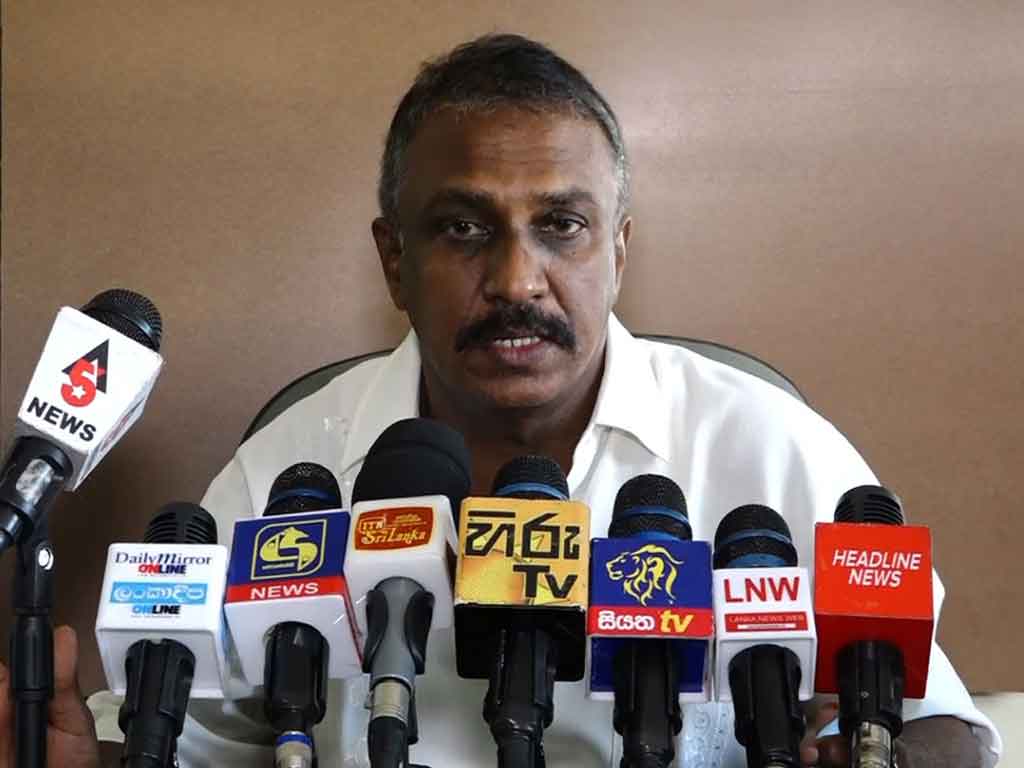
The battle between private bus owners and the government is heating up, with LPBOA Chairman Gemunu Wijerathne warning that reckless policies could soon bring the nation’s transport system to a standstill.
The Lanka Private Bus Owners’ Association (LPBOA) has issued a strong warning to the government, accusing it of engaging in “continuous revenge” against the private bus sector. Chairman Gemunu Wijerathne, speaking to the media, claimed that the private bus industry is reaching breaking point due to punitive regulations, heavy taxation, and attempts to phase out their services entirely.
Wijerathne recalled how private buses were heavily utilized during the government’s election campaigns, even receiving substantial financial support from operators. Now, he alleges, the same government is attempting to dismantle the very industry that helped it gain power. “Trying to remove the private bus culture from the country is like playing with fire,” he warned, noting the frustration growing among operators.

Criticizing government narratives that blame private buses for road accidents, Wijerathne pointed to a recent incident at Gerandi Ella involving a Sri Lanka Transport Board (SLTB) bus. He argued that private operators, especially those on challenging routes like Ella–Wellawaya, ensure better safety standards, knowing the terrain and maintaining their vehicles accordingly.
One of the biggest grievances, Wijerathne highlighted, is the government’s tax policy on importing new buses. “We cannot even import a bus without paying massive taxes. Previous governments did not impose such taxes. This is like forcing someone to breathe while tightening his neck,” he said. For the past five years, no new buses have entered the country, leaving operators with no choice but to repeatedly repair old vehicles. Even when buses are ordered, he said, the process now takes over six months to complete.
Wijerathne further criticized the introduction of new regulations without proper infrastructure or financial support. He stressed that before imposing restrictions and additional burdens on operators, the government should prioritize providing facilities, subsidies, and a supportive framework for the industry.
He warned that if the government fails to act, an islandwide private bus strike could become inevitable. “Before implementing new laws and regulations, the government must provide proper facilities to the bus service in the country. Without this, a strike is inevitable,” he reiterated.
The looming crisis highlights a broader conflict between public and private transport in Sri Lanka, with private buses making up nearly 80 percent of the country’s daily commuter services. Analysts warn that a nationwide strike would paralyze economic activity, disrupt tourism, and cause massive hardship to millions of passengers who rely on private buses every day.
As tensions rise, Wijerathne’s remarks serve as both a warning and a reminder: the government’s handling of the transport sector could soon drive the nation into chaos unless urgent reforms and compromises are made.