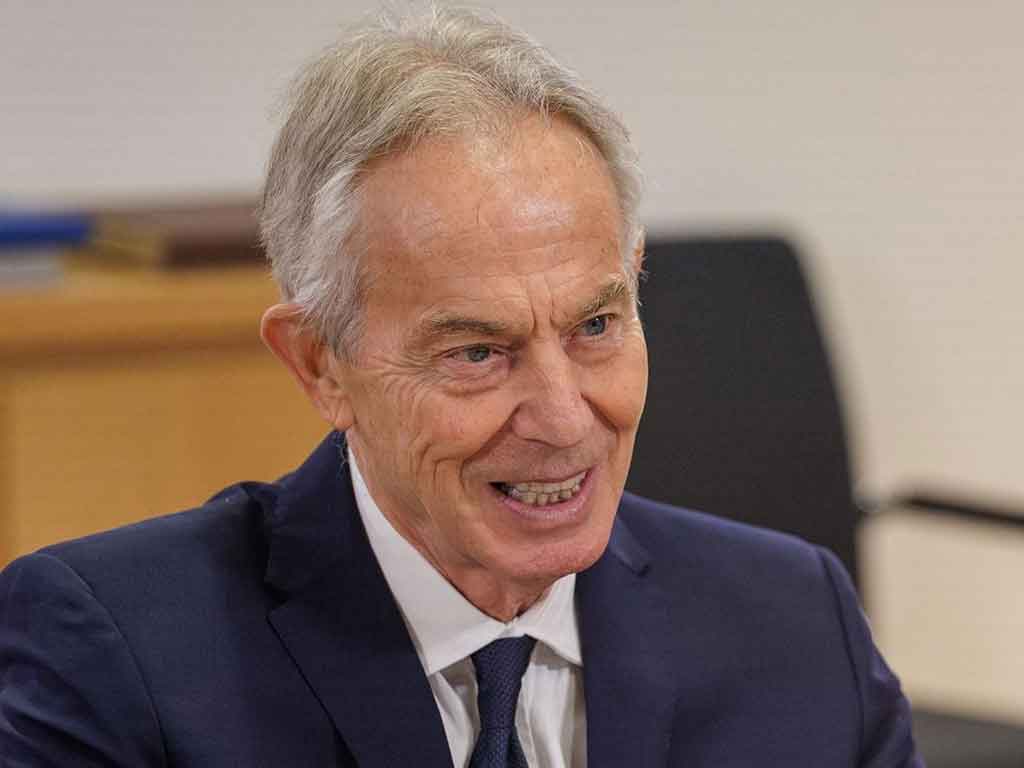
Former UK Prime Minister Tony Blair is being considered to head a transitional authority in Gaza after the war, under a plan backed by Washington, the UN, and Gulf states. The proposed Gaza International Transitional Authority would govern for up to five years, supported by a multinational security force, before handing control back to the Palestinians. Blair’s potential role revives debate over his legacy in the Middle East, balancing his experience as a negotiator against the shadow of Iraq and the deep divisions his name still carries.
Former UK Prime Minister Sir Tony Blair is reported to be in discussions about leading a transitional authority in Gaza once the conflict ends. The plan, which has support from Washington, would involve Blair heading a governing body with backing from the UN and Gulf nations, with the eventual goal of handing control back to the Palestinians. Blair’s office has made clear that he would not support any proposal that involved displacing people from Gaza.

The proposed body, which may be called the Gaza International Transitional Authority, would act as Gaza’s supreme political and legal power for up to five years. Reports suggest the model would be based on earlier international administrations that managed transitions in places such as East Timor and Kosovo. Initially, the authority would be based in Egypt near the Gaza border before moving into the territory once conditions allowed, supported by a multinational security force.
Blair’s possible role reflects his continued involvement in Middle Eastern politics. Since leaving office in 2007, he has worked as a Middle East envoy, focusing on economic development and building conditions for a two-state solution. While serving as Prime Minister, he committed Britain to the Iraq War in 2003, a decision heavily criticised in the subsequent Chilcot Inquiry. His record in the region continues to divide opinion, with some seeing him as an experienced negotiator and others regarding him as compromised by past decisions.
Discussions about Gaza’s future remain contested. Palestinian President Mahmoud Abbas recently voiced willingness to work with international partners on a two-state peace plan while rejecting Hamas as part of any future government. Several competing proposals for transitional governance have been floated by the US, Arab nations, and international conferences, though no consensus has yet emerged. Blair’s involvement highlights the urgency—and difficulty—of shaping Gaza’s post-war future.