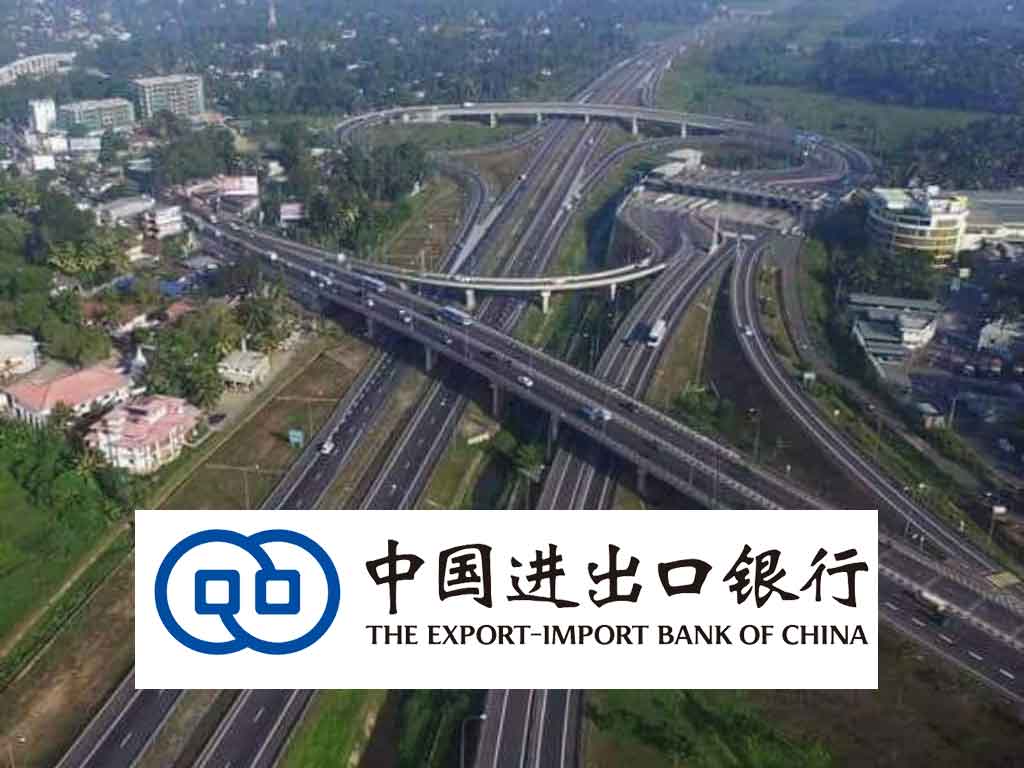
Sri Lanka’s Central Expressway project faces new financial hurdles as the Chinese EXIM Bank raises loan rates from 2.5% to 3.5%. The Committee on Public Finance warns this could worsen debt risks unless urgent re-negotiations are secured.
Sri Lanka’s efforts to advance the long-delayed Central Expressway project have been hit with fresh financial strain after the EXIM Bank of China increased the interest rate on a crucial loan. The Committee on Public Finance (COPF) has revealed that the Bank has revised the terms of the $500 million loan for the Kadawatha–Mirigama stretch, raising the rate from an initially agreed 2.5% to as much as 3.5%.

The move has raised alarms among legislators, with COPF Chairman Dr. Harsha de Silva questioning why officials agreed to such terms when the original proposal was based on a fixed 2.5% rate. Addressing officials from the Ministry of Transport, Highways, and Ports, he pressed for answers on how such a shift was allowed. The officials explained that the EXIM Bank had refused to maintain the 2.5% fixed rate under current global market conditions. Instead, it offered a floating rate capped at 3.5%.
Dr. de Silva insisted that Sri Lanka must urgently re-negotiate the loan, warning that higher rates would create additional financial stress at a time when the country is already grappling with heavy debt repayments. The 36.475 km Kadawatha–Mirigama expressway section is a key part of Sri Lanka’s highway network, but its financing has now become a point of contention.
Beyond the EXIM Bank loan, the COPF also examined supplementary budget requests for 2025 under the Ministry of Transport, Highways, Ports, and Civil Aviation. Officials revealed that the Road Development Authority (RDA) has borrowed more than Rs. 310 billion from local banks to fund road construction. The ministry sought Rs. 36 billion in supplementary allocations to help repay part of this debt, which Parliament is expected to approve.
The wider debt picture remains troubling. Officials from the State Debt Management Office disclosed that Sri Lanka must repay foreign debt worth $37 billion alongside domestic debt obligations of Rs. 19.6 trillion. Yet when questioned on the exact instalments due this year, officials were unable to provide precise figures. Dr. de Silva expressed dissatisfaction at this lack of clarity, stressing the urgent need to hire skilled professionals for debt management, rather than leaving the process to a handful of under-resourced staff.
The warning comes as Sri Lanka struggles to balance major infrastructure ambitions with its debt obligations. The IMF programme continues to push for fiscal discipline and better management of public borrowing, but rising interest rates on external loans threaten to undermine these efforts. For Dr. de Silva and his colleagues, the EXIM Bank’s new terms serve as a reminder of the risks in over-reliance on costly foreign credit.
Parliamentarians Ravi Karunanayake, Sunil Rajapaksa, and Nishantha Jayaweera also participated in the COPF meeting, underscoring the political sensitivity of the issue. With billions in repayments looming and interest rates climbing, the demand for immediate renegotiation with the Chinese EXIM Bank is likely to grow louder.