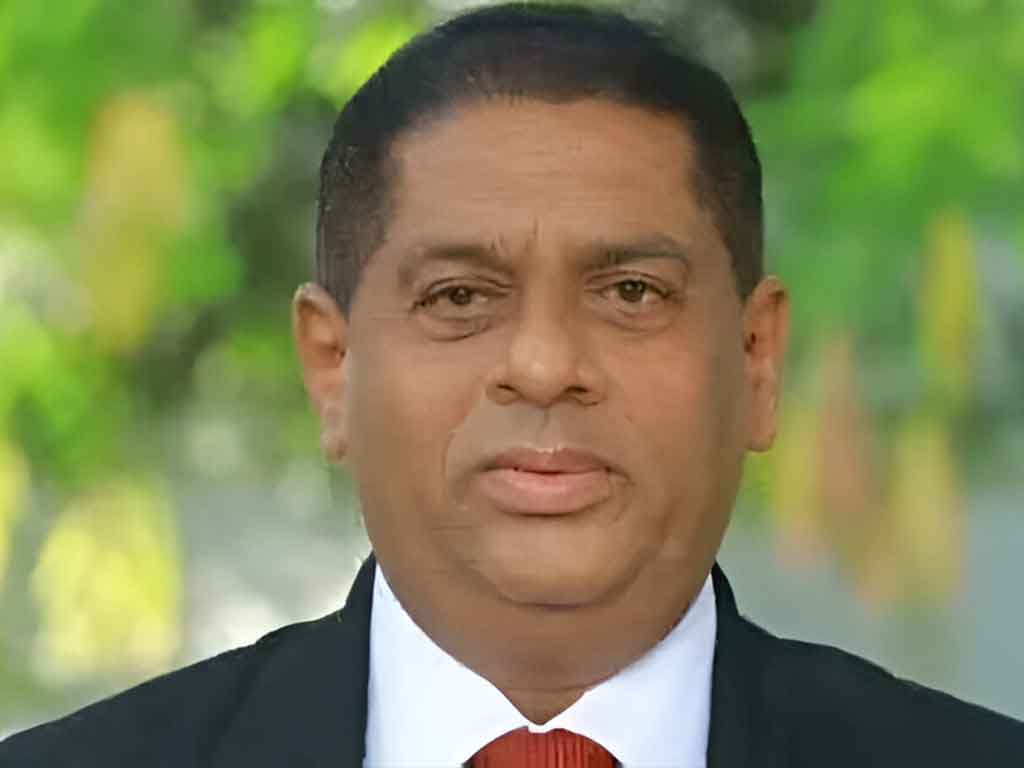
Former presidential bodyguard Lt. Col. Neville Wanniarachchi has been arrested by the Bribery Commission on suspicion of amassing illegal assets worth Rs. 28 million. His deep ties to Mahinda Rajapaksa and a string of past asset disclosure cases place this investigation at the center of Sri Lanka’s anti-corruption drive.
The Colombo Magistrate’s Court has ordered the remand of Lt. Col. Neville Wanniarachchi, the longtime bodyguard of former President Mahinda Rajapaksa, following his arrest by the Bribery Commission on charges of illegally acquiring properties and assets worth Rs. 28 million. The order, issued by Colombo Chief Magistrate Asanka S. Bodaragama, will keep him in custody until October 17.
Wanniarachchi, arrested on October 2 after recording a statement, was presented to court by Bribery Commission officials. His arrest comes after years of stalled investigations and mounting allegations of unexplained wealth.

What Did the Bribery Commission Tell the Court?
Officials told the court that the investigation began in July 2014, following a written complaint. Despite being notified as far back as December 2016 to provide financial details, Wanniarachchi allegedly failed to comply. Over seven years, he is accused of deliberately avoiding inquiries, ignoring phone calls, and providing only incomplete details in August this year. Investigators allege that his income shows a suspicious Rs. 28 million excess over his legitimate earnings.
The Bribery Commission outlined a list of assets allegedly belonging to Wanniarachchi. These include a three-acre fuel station in Walasmulla, houses in Pallekele, Nawinna, and Dematagoda, a hotel property in Tissamaharama, a prime land plot in Madiwela valued at Rs. 4 billion, shops leased in Beliatta and Weeraketiya, as well as buses and tippers operated by his relatives. Officials stressed that further inquiries are needed to calculate his actual income from these holdings.
Assistant Director General Sulochana Hettiarachchi told the court that Wanniarachchi consistently failed to assist the investigation. She warned that granting bail could allow him to intimidate witnesses, and therefore strongly opposed his release.
Defense Request for Bail
Appearing for Wanniarachchi, President’s Counsel Sampath Mendis argued that the Bribery Commission’s claim of non-cooperation was inaccurate. He noted that the suspect had already submitted seven affidavits and had previously pleaded guilty in five cases of non-disclosure of assets, for which fines were paid. Mendis emphasized that despite the 11-year duration of the probe, no witness had complained of intimidation. He argued that the suspect had cooperated fully and urged the court to grant bail.
The Magistrate, however, observed that while Wanniarachchi had pleaded guilty to earlier cases, the current investigation into alleged illegal wealth accumulation was a separate matter. Given the suspect’s history of non-cooperation, the court rejected the bail plea and ordered his continued remand.
Who is Neville Wanniarachchi?
Wanniarachchi began his career in the Sri Lanka Army’s Other Ranks Service Corps before being assigned to Mahinda Rajapaksa’s personal security detail. His proximity to Rajapaksa saw his career accelerate, rising to commissioned officer status and eventually being promoted to Major in 2014 with effect from 2011. By the time of his retirement in 2019, he held the rank of Lieutenant Colonel.
His name has long been associated with controversy. In 2010 and 2014, he was fined Rs. 5,000 after pleading guilty to non-disclosure of assets. In 2016, media reports claimed that military personnel excavated land linked to his wife in Weeraketiya, reportedly searching for buried cash and gold. These allegations, though unproven, added to public suspicions of hidden wealth.
His Relationship with Mahinda Rajapaksa
Wanniarachchi’s loyalty to Mahinda Rajapaksa earned him prominence. As a close bodyguard, his political and personal ties to the Rajapaksa family have always been noted. Critics argue that his wealth and influence expanded in parallel with Rajapaksa’s political dominance, raising questions about the blurred lines between state power and personal enrichment.
Implications of the Case
For Sri Lanka, this case is more than an inquiry into one man’s assets. It underscores systemic challenges in addressing corruption tied to political elites. The Bribery Commission’s persistence after years of delays signals an effort to demonstrate independence under the Anti-Corruption Act of 2023.
The outcome of Wanniarachchi’s case could be a watershed moment. If the investigations uncover solid evidence of corruption, it could open a broader reckoning with past abuses of power. If the case stalls, however, it risks reinforcing public skepticism about whether powerful figures are ever truly held accountable.
For now, the Colombo court has demanded a detailed report on Wanniarachchi’s alleged properties. His remand until October 17 ensures the inquiry will continue, keeping both the Bribery Commission and his political ties under intense scrutiny.