As India’s real weddings spiral into billion-dollar spectacles, a new subculture is taking root: “fake weddings” where there is no bride, groom, or vows — only music, glitter, and pure celebration. This investigative feature explores how urban youth are flocking to these surreal parties to escape tradition, embrace community, and redefine joy.
In a country where weddings can bankrupt families and stretch across multiple days, a striking new trend is reshaping how India’s youth approach celebration. Across Delhi, Bengaluru, and Hyderabad, a growing number of young people are spending their evenings at “fake weddings” — ticketed parties designed to mimic the glamour of a real Indian wedding without the vows, rituals, or staggering expense.
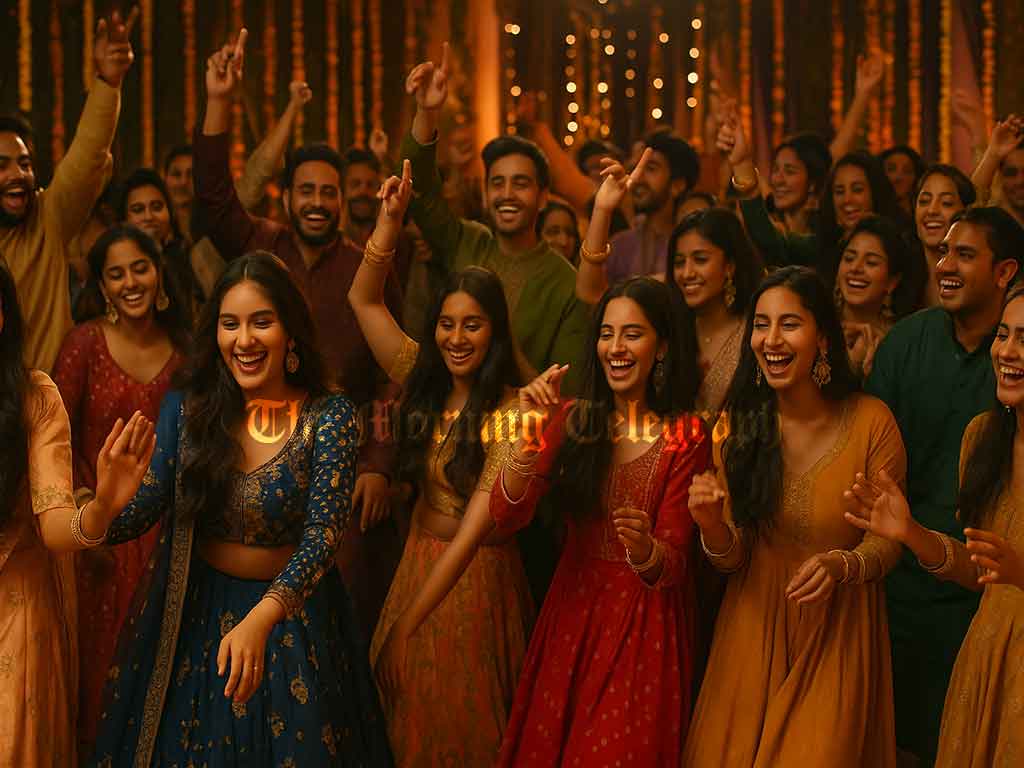
These events feature everything one might expect at a traditional wedding: marigold garlands, glittering sarees, Bollywood playlists shaking the dance floor, and endless food and drink. But what is missing is the central act of matrimony. There is no couple tying the knot, no sacred vows, no priestly rituals. For the price of a ticket, ranging from £4 to £60, guests step into a fantasy world of music, décor, and color, stripped of the emotional weight and financial burden that typically come with India’s massive wedding industry.

The phenomenon first sparked earlier this year in Delhi when event organiser Jummaa Ki Raat hosted a “Fake Sangeet” night. With floral backdrops, a stage resembling a wedding mandap, and invitations encouraging people to dress up as if attending a real wedding, the event was designed as satire but quickly took on a life of its own. Hundreds showed up, not to witness vows but to revel in the collective joy weddings are famous for. “You dress up like you’re going to a wedding, dance to the songs, decorate like a wedding — that’s about it,” explained co-founder Sahib Gujral. What began as a playful experiment soon went viral, sparking similar events in other cities.
For many young Indians, the appeal lies in rejecting the pressures of real weddings. With more than ten million weddings held annually, and an industry worth nearly £75 billion, Indian weddings are a colossal economic machine. Families often spend years saving to host celebrations that can last up to a week and involve thousands of guests. Lavish nuptials like the 2023 marriage of billionaire heir Anant Ambani to Radhika Merchant — featuring global stars such as Rihanna, Katy Perry, and Andrea Bocelli — are reported to have cost hundreds of millions of dollars. Such weddings have come to symbolize wealth and aspiration, but also excess and unsustainable expectations.
Fake weddings offer an alternative. They flip the cultural script, transforming the wedding from a financial burden into a collective celebration. Attendees come dressed in bright lehengas and sherwanis, pose for staged photos, and invent playful roles. Guests divide themselves into a “bride’s side” or “groom’s side,” even though no couple exists. By midnight, the dance floor is a blur of laughter, colors, and choreographed moves indistinguishable from a real reception.
For 21-year-old Arjun, a student from Delhi, the experience was liberating. “It felt more inclusive than a nightclub. People don’t just stick to their groups. Everyone’s there to celebrate together,” he said. This sense of inclusivity is a major draw for young professionals seeking fun without the suffocating formality of tradition.
Beyond entertainment, the trend has also taken on unexpected social meaning. In Bengaluru and Hyderabad, curators Vaibhav Kumar Modi and Ashish Chopra launched Shadi Mubarak, a queer-centered fake wedding event for LGBTQ+ communities. For many participants, it was the first time they could experience the symbolism of marriage in a country where same-sex unions remain unrecognized. “It was nothing less than magic,” said Chopra. “It was a glimpse of the marriage I couldn’t legally have in India.” Modi added that his mother, who had never stepped inside a nightclub, attended and felt entirely at home among the lights, music, and décor. “It didn’t feel like an event,” he said. “It felt like we had come home.”
Despite the positivity, not all reactions have been supportive. Authorities in Maharashtra recently raided a “fake marriage party” where minors were caught drinking, leading to charges under child protection laws. Some critics dismiss the trend as a fleeting social media fad, comparing it to other viral entertainment crazes that burn bright and fade quickly. Others argue it trivializes the sanctity of marriage. Yet most events continue to flourish, drawing both young professionals and older attendees who missed out on wedding celebrations during the pandemic.
Event organisers, however, see longevity in the idea, particularly in smaller towns where immersive entertainment is scarce. For Gujral and his peers, the fake wedding is more than just escapism. It is satire, social commentary, and celebration all rolled into one. “The wedding industry has sold us the idea that the bigger the wedding, the better,” Gujral reflected. “We’ve just decided to take that fantasy and turn it into something anyone can experience.”
As India’s wedding industry continues to expand into a global spectacle of opulence, the fake wedding phenomenon reveals a counter-current of cultural reinvention. In these staged but joyous gatherings, young Indians are redefining what it means to celebrate. They are reclaiming the joy of weddings without the debt, stress, or social obligations that have long defined them.
In a society where weddings often blur the line between sacred duty and financial performance, these faux ceremonies may represent something refreshingly authentic: a celebration of music, color, and community. A wedding stripped of its burdens, but not its beauty.