A disaster-struck nation, a strategic harbour, and a familiar pattern of humanitarian language masking geopolitical intent.
The question of whether Trincomalee is being quietly prepared for an Indo–US–Sri Lanka joint military command no longer sits in the realm of internet speculation or fringe paranoia. It now occupies an uneasy space between rumour and reality, between what diplomats publicly deny and what they discuss behind closed doors, and between Sri Lanka’s deepening fragility and the long-standing strategic appetites of powerful nations that have never stopped circling the island.

If the history of Trincomalee teaches anything, it is that foreign powers rarely show interest in Sri Lanka out of generosity. They arrive when the island is weak, distracted, or overwhelmed. Cyclone Ditwah did not merely expose the inadequacies of Sri Lanka’s disaster response. It revealed the extent to which vulnerability invites opportunism, and how assistance can arrive carrying both relief and quiet ambition.
Sri Lanka’s military decline has now reached a point that borders on the absurd. The Air Force’s admission that it possesses only two operational helicopters, with dozens awaiting overhaul, is not a minor embarrassment. It is a national security failure. That repair tenders were awarded to private entities lacking even basic technical capacity exposes how corruption has hollowed out defence institutions from within. An armed force once presented as disciplined and formidable, capable of defeating one of the world’s most ruthless insurgencies, now resembles a shell weighed down by rusting equipment, procurement failures, and internal decay.
Cyclone Ditwah did not create this vulnerability. It simply stripped away the illusion that it did not exist.
Into this vacuum stepped India and the United States with remarkable speed and coordination. Their aircraft, naval vessels, and military personnel were presented as humanitarian responders, and undoubtedly some of that assistance was genuine. But assistance delivered at this scale, with this level of visibility, is never merely humanitarian. It is always an entry point.
Sri Lankan television networks, some of which were transported on US military aircraft during relief operations in the North and Hambantota, began airing glowing reports of “extraordinary humanitarian missions.” Journalists unfamiliar with geopolitical strategy or psychological operations treated foreign military deployments as acts of benevolence rather than strategic positioning. The same public that once panicked over Chinese labourers wearing uniforms that “looked military” now welcomes foreign soldiers, aircraft, and command teams with little critical scrutiny. Something fundamental has shifted, and not in Sri Lanka’s favour.
The most troubling development was the discreet deployment of the C-130J Super Hercules under the justification of “emergency airlifting of victims.” Lockheed Martin does not describe the C-130J merely as a transport aircraft. It is a modular, network-enabled platform designed for advanced intelligence, surveillance, and reconnaissance operations. Its capabilities include terrain-following radar, synthetic aperture radar, secure satellite communications beyond line of sight, real-time data links with joint command structures, and roll-on, roll-off mission systems used for signals intelligence, battlespace management, and pattern-of-life surveillance.
These are not speculative features. They are core capabilities emphasised by the manufacturer for special operations and theatre-level situational awareness.
Yet none of the areas most severely affected by Cyclone Ditwah possess airstrips capable of accommodating a C-130J landing. This renders the stated justification of victim airlifting operationally implausible. When an aircraft optimised for surveillance, command integration, and rapid force projection is introduced into an environment where it cannot credibly perform its declared humanitarian function, the issue ceases to be logistical. It becomes strategic.
What arrived was not relief tailored to Sri Lanka’s terrain. It was a platform configured for access, mapping, and presence.
In private diplomatic discussions, the shape of what is emerging becomes clearer. A senior diplomat involved in Indo-Pacific affairs recently confirmed that a proposal is under development to establish a joint military presence in Trincomalee, framed publicly as a rapid response hub for natural disasters and maritime emergencies. She stated plainly that the proposal “was initiated by India” and subsequently supported by the United States, describing it as a design for “joint military bases” justified through emergency preparedness.
The language is gentle. The intention is not.
India and the United States are not aligning on Trincomalee out of humanitarian sentiment. They are aligning because both nations have, for decades, sought influence over one of the most strategic harbours in the Indian Ocean.
India’s ambition regarding Trincomalee stretches back generations. US intelligence documented this as early as 1951, when the CIA’s Daily Digest reported that senior Indian military officers had “repeatedly and frankly” told Ceylon’s Inspector General of Police that India needed and must have access to the Trincomalee naval base. The Inspector General concluded that India harboured expansionist designs, while the CIA noted that Trincomalee was among the finest naval bases in the Indian Ocean region.
These were not passing observations. They formed the foundation of Indian strategic thinking. When India intervened in Sri Lanka during the 1980s, armed Tamil militants, negotiated the Indo–Lanka Accord, and deployed the IPKF on Sri Lankan soil, it did so with Trincomalee firmly in its strategic sightline.
US intelligence recognised this dynamic during the Cold War. In a 1988 CIA assessment titled “India’s Navy and Its Indian Ocean Strategy,” analysts noted that New Delhi feared rival powers including Pakistan, China, the United States, or the United Kingdom gaining access to Trincomalee. The assessment concluded that India’s long-term objective was to restrict and ultimately eliminate foreign military presence in the region.
Today, India’s strategy has evolved. New Delhi recognises that it cannot exclude all external powers from Sri Lanka. China is already embedded deeply in the island’s economy, infrastructure, and political imagination. Faced with this reality, India appears willing to accept an American presence in Trincomalee not as a concession, but as a safeguard.
Better the Americans than the Chinese. Better a partner than a rival. Better shared access than total exclusion.
The proposed joint command, framed innocently as a disaster response hub, represents a geopolitical compromise. India retains influence. The United States gains access. Sri Lanka receives the illusion of partnership.
The United States, for its part, has never concealed its interest in Trincomalee. Declassified documents spanning more than seventy years consistently point to the same conclusion. Washington views Trincomalee as a critical node in its Indian Ocean strategy. In a 1956 CIA Current Intelligence Bulletin, the agency expressed concern over how long Trincomalee would remain available to Western powers following Britain’s withdrawal. Later intelligence warned that the Soviet Union might seek base rights at the port.
American strategy in Sri Lanka has always been subtle rather than overt. In 1983, US envoy Vernon Walters publicly avoided visiting Trincomalee to prevent speculation. Yet shortly thereafter, reports revealed that Walters and Defence Secretary Caspar Weinberger had raised the possibility of increased US naval use of the base. Denial was not absence of ambition. It was strategic theatre.
Local actors understood this reality as well. During the civil conflict, both Tamil and Sinhalese factions believed control over Trincomalee would grant leverage over Washington. A CIA assessment in 1984 noted that both communities viewed the harbour as a bargaining chip in dealings with the United States, and that Indian leadership believed Washington sought port facilities there.
All of this history now collides with Sri Lanka’s present weakness. Cyclone Ditwah devastated the country, and the efficiency displayed by foreign militaries highlighted the extent of Sri Lanka’s institutional decay. This is where humanitarianism becomes a tool of influence. Disaster cooperation creates an acceptable entry point for establishing logistics chains, communication systems, supply depots, and integrated command mechanisms. Over time, these cease to be emergency assets and evolve into operational footholds.
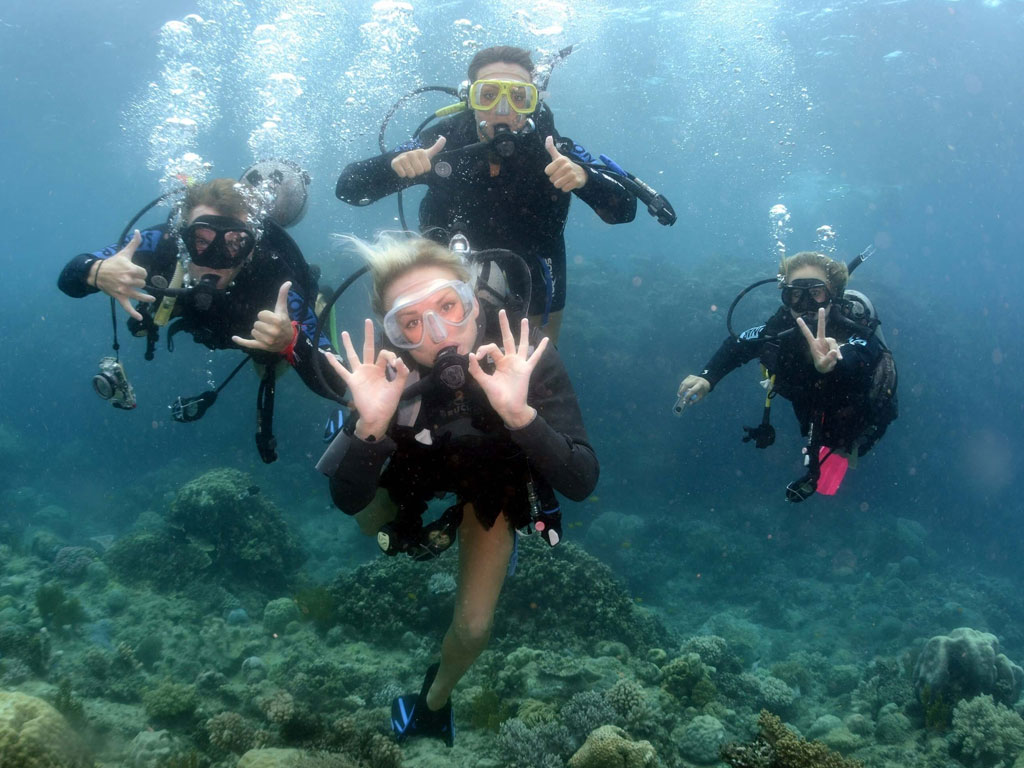
This context makes the visit of US Ambassador Julie Chung to Trincomalee significant. Her highly publicised dive with Sri Lanka’s first female naval diver, and her statement that “the US Navy and the Sri Lanka Navy will continue to maintain that cooperation,” was not casual diplomacy. It was symbolic alignment. Her remarks about the “beautiful seabed off the coast of Trincomalee” were not tourism. They were an assertion of familiarity with contested space.
The arrival of US Under Secretary of State Allison Hooker days after strategic meetings in India further reinforces this trajectory. Her language about deepening economic ties and strengthening defence cooperation mirrors patterns used in fragile states across the globe. References to a “free, open and resilient Indo-Pacific” follow a familiar script of American power projection, always wrapped in democratic rhetoric.
Sri Lanka is not resisting these developments because it lacks the capacity to do so. Economic collapse has weakened political resolve. Military decay has eroded bargaining power. Elites remain divided, indebted, and dependent on foreign goodwill. In such conditions, a joint Indo–US presence will not arrive through treaties or ceremonies. It will arrive incrementally through capacity building, emergency drills, logistics staging, and humanitarian positioning.
It will become reality long before it becomes public knowledge.
The historical record is clear, yet Sri Lanka’s leaders repeatedly ignore it in favour of political survival. Influence is exerted not only through diplomacy but through NGOs, funding streams, selected individuals, and media narratives that shape public perception.
Every major power wants Trincomalee. Every major power fears another will secure it first.
Sri Lanka alone appears unaware of what is unfolding.
Cyclone Ditwah provided the justification. Humanitarian language softened public resistance. Media coverage normalised foreign military presence. Political leaders, desperate for assistance, accepted inevitability. The proposed joint command, whether framed as disaster management or maritime safety, is the logical next step.
The tragedy is that Sri Lanka is drifting toward this outcome not through negotiation, but through incapacity. Sovereignty is rarely lost through invasion. It is surrendered through weakness.
And the most uncomfortable truth remains this.
They did not seize the opportunity.
Sri Lanka handed it to them.