As the promise of clean governance collides with old habits of power, Sri Lanka faces a defining test over the independence of one of its most critical watchdog institutions.
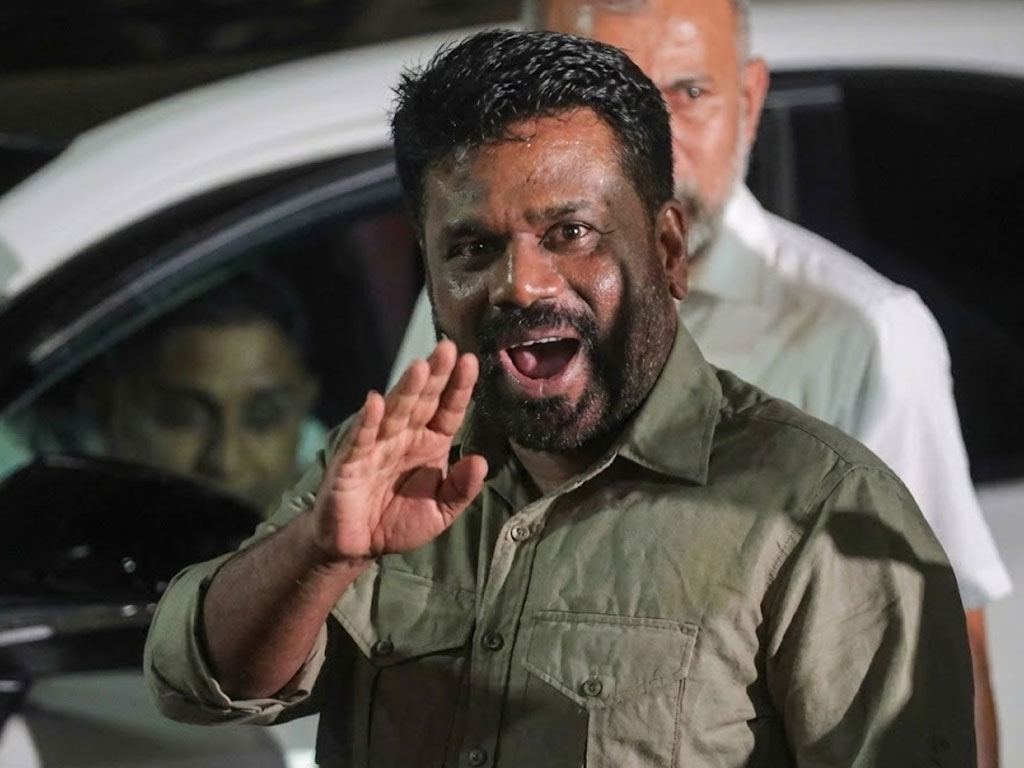
President Anura Kumara Dissanayake appears determined to have one of his loyalists appointed as Auditor General, even though the Constitutional Council has so far blocked such a move. With that obstacle in place, the government now seems to be playing a waiting game, allowing the post to remain vacant while political calculations continue behind the scenes.

Sri Lanka has never lacked self-proclaimed saviours who rise to power on promises of ending suffering and restoring dignity. Elections are won on hope, reform, and moral authority. Yet, history shows that it is only after leaders are firmly entrenched in office that their true priorities often become visible. The public is then left with a familiar dilemma: protest loudly and be ignored, or quietly accept the status quo. Despite pride in high literacy levels, Sri Lankans have repeatedly fallen prey to political manoeuvring and carefully crafted narratives.
Only last year, many believed the country was finally on the brink of a genuine political transformation. Voters, civil society groups, and good governance advocates placed immense trust in the JVP-led National People’s Power, which launched a highly publicised campaign against bribery, corruption, abuse of power, and waste. The JVP and NPP presented themselves as the vanguard of a movement that would dismantle rotten systems, usher in a new political culture, and uplift ordinary citizens in ways previous governments had failed to do. They even framed the last general election as a shramadana, a collective cleansing of Parliament. Today, however, disappointment with the current administration is increasingly evident.
Former Director of Parliament and former Secretary to the Presidential Commission on Corruption, Lacille de Silva, has openly criticised the NPP government for keeping the Auditor General’s post vacant with what he describes as an ulterior motive. Speaking to the media, he alleged that President Dissanayake is attempting to catapult one of his cronies into the powerful position, which has remained unfilled since April 2025. According to de Silva, the government may deliberately delay filling the post until early 2026, when the Constitutional Council is due to be reconstituted, thereby smoothing the path for a preferred appointment.
De Silva also pointed to recent actions by the government as evidence of a broader pattern. He highlighted the decision to bring Shani Abeysekera, a member of the Retired Police Collective, out of retirement and appoint him Director of the Criminal Investigation Department. Under this leadership, the CID is accused of pursuing the NPP’s political opponents aggressively while showing leniency towards government politicians and their supporters. To critics, this reinforces concerns about selective enforcement and politicisation of state institutions.
Drawing historical parallels, de Silva noted that Mahinda Rajapaksa, after winning the 2005 presidential election, filled key state institutions with loyalists who catered to his personal preferences. He argues that President Dissanayake is now following a similar path, bluntly dubbing him Mahinda II. For a government that built its identity on opposing the Rajapaksa era, such comparisons are deeply damaging.
Indeed, successive governments have allowed stooges to rise through the system, reducing independent state institutions to extensions of the ruling party. Critics argue that the NPP is attempting to push this practice even further. For the self-righteous leadership of the JVP and NPP, being likened to the Rajapaksas they routinely condemn is perhaps the ultimate political insult.
The independence of the Auditor General is central to eliminating corruption in the public sector. Only a truly independent Auditor General can scrutinise government spending without fear or favour, ensure public funds are used in accordance with the law, issue credible audit reports, prevent political interference, strengthen accountability, enhance parliamentary oversight, build public trust, deter corruption, and promote good governance. A politically appointed Auditor General, by contrast, risks becoming beholden to political masters and serving as a puppet advancing the interests of those in power.
To avoid being bracketed with the very political culture he once denounced, President Dissanayake still has a clear choice. He can abandon any attempt to install a loyalist and instead appoint a qualified individual of integrity to the post. The most credible path forward would be to elevate a senior professional from within the Auditor General’s Department itself.
There is no shortage of experienced, capable, and honest officers within the department who understand its mandate and value its independence. Appointing one of them would send a powerful signal that the government remains committed to its reformist promises.
The long-standing and discredited practice of parachuting loyalists into top public offices, while bypassing qualified internal candidates, must finally come to an end. This was, after all, one of the core pledges made by the NPP before last year’s elections. If the government fails to live up to that promise, it risks proving that, like its predecessors, it too lacks the sense of shame it once claimed to oppose.