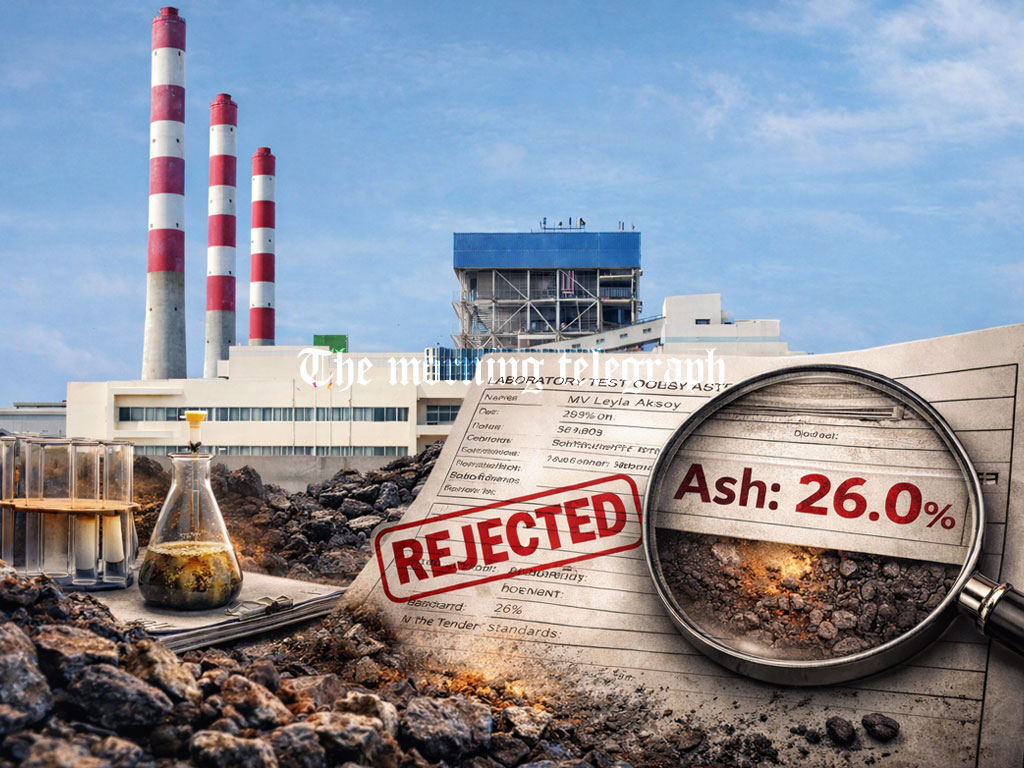
Independent laboratory reports reveal that six coal shipments to Norochcholai allegedly failed tender standards, raising serious questions about quality control and power sector transparency.
Laboratory test reports have confirmed that the coal imported through six separate shipments for the Norochcholai Lakvijaya Power Plant falls significantly below the approved tender specifications, according to energy analyst Vidura Ralapanawa.

He states that coal classified at reject level under the official procurement conditions has been continuously accepted for power generation, raising fresh concerns about fuel quality, procurement oversight and electricity sector accountability.
Mr. Ralapanawa explains that all three primary quality indicators have reportedly failed in these shipments. The tender requirement clearly specifies that the Gross Calorific Value should exceed 5900 kCal per kilogram. However, laboratory findings indicate values ranging only between 5078 kCal per kilogram and 5689 kCal per kilogram, well below the required standard.


Moisture levels also show inconsistencies. While the minimum acceptable benchmark is 25 percent, test results from the six ships reportedly ranged between 22 percent and 25.4 percent, reflecting deviations from tender conditions.
The most alarming parameter is ash content. Although the maximum permissible limit is 16 percent, the tested coal reportedly contains ash levels between 21 percent and 26.9 percent. Such high ash content directly affects combustion efficiency, increases operational costs and accelerates equipment wear at the coal power plant.
These findings raise critical questions about compliance, procurement integrity and whether substandard coal is burdening Sri Lanka’s already fragile power generation system.