A fierce political warning claims a powerful inner circle is manipulating Sri Lanka’s economy, sidelining businesses and deepening corruption within the energy sector.
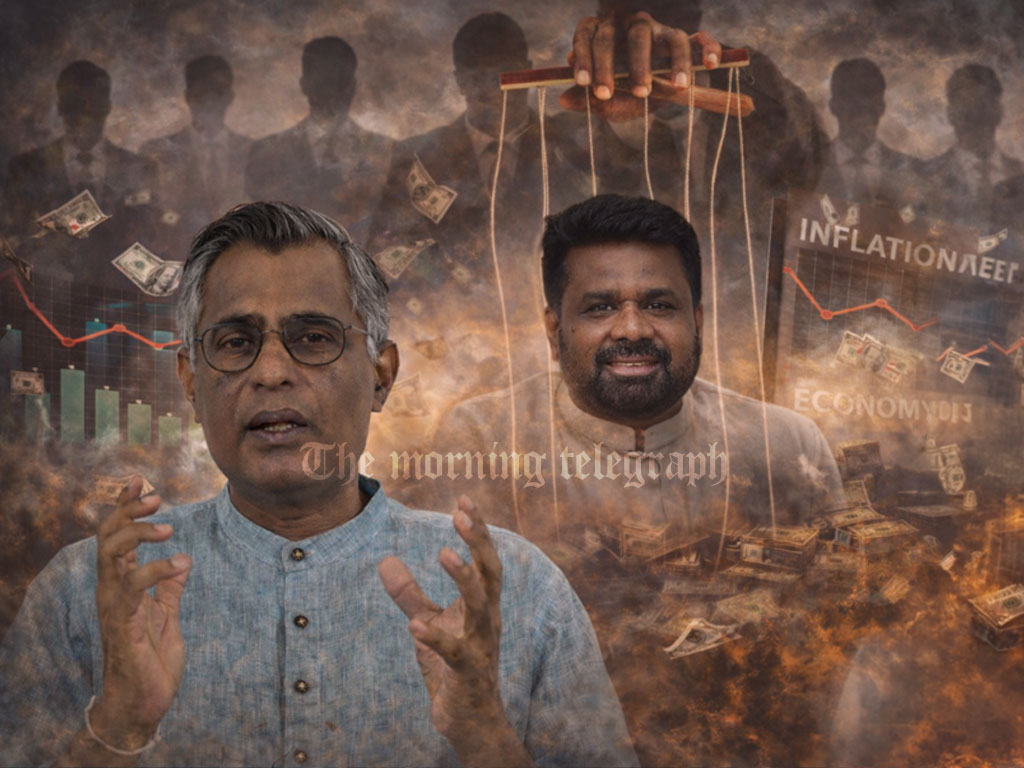
Former Minister and United Republic Front leader Patali Champika Ranawaka has leveled a serious allegation that a powerful network of racketeers operating around the current President is actively manipulating Sri Lanka’s economy, raising concerns about governance, transparency, and economic control.
He describes the current situation as a ‘Kuvera regime’, claiming that a very limited group of individuals is influencing key economic decisions through the Presidential Secretariat, while small and medium-sized enterprises are being neglected and pushed aside.

Speaking during a discussion on a YouTube channel, Ranawaka stated that large-scale fraud is taking place, particularly within the energy sector, where even tender conditions are allegedly being altered to favor a select group, undermining fair procurement practices.
The former minister strongly criticized the government’s coal supply policy, arguing that the rejection of structured procurement processes has placed Sri Lanka’s energy security at significant risk, especially during a period of economic vulnerability.
He dismissed the government’s claim that coal procurement is complex, stating that the argument that “coal cannot be bought like bread” is misleading, and emphasized that even the spot tender system introduced in 2015 has now been distorted.
Highlighting the financial impact, Ranawaka pointed out that over 676,000 liters of diesel are being used daily to compensate for reduced electricity generation caused by substandard coal, resulting in a heavy financial burden that is ultimately passed on to the public.
He also acknowledged that attempts to manage the public uprising in 2022 and implement democratic reforms were insufficient, leading to a shift in political power dynamics within the country.
Although the Janatha Vimukthi Peramuna emerged as a significant force, Ranawaka alleged that the current administration lacks space for professionals and experienced individuals, relying instead on politically aligned appointments.
He stressed the urgent need to create a new political platform that brings together experienced leaders and the younger generation, focusing on clean governance, economic reform, and a future free from corruption.